

How to Think About Race Goals When Your Body Becomes Less Predictable
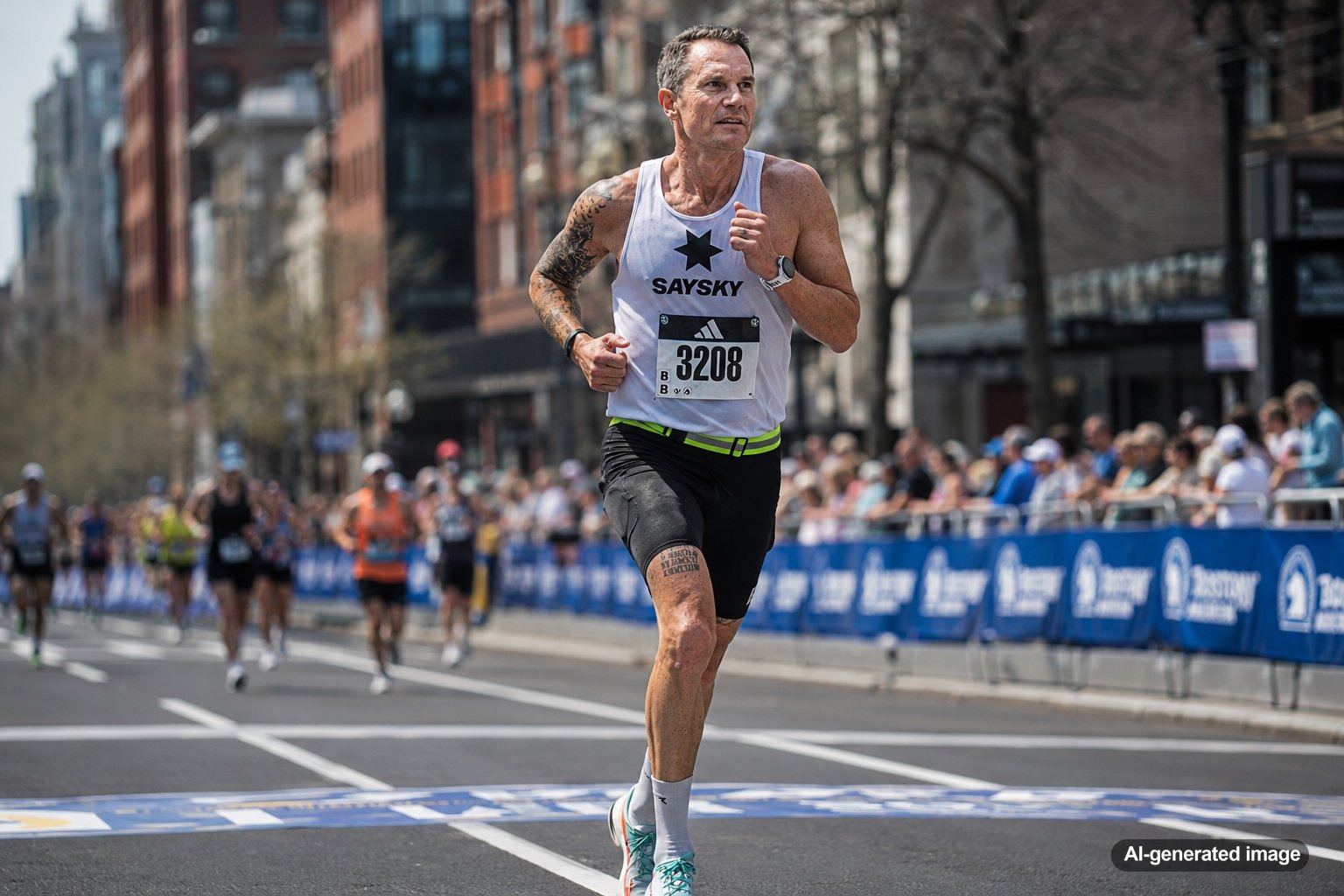
Race goals usually depend on a simple assumption: if you prepare well, your body will respond in a reasonably familiar way. But when symptoms, energy, coordination, medication timing, sleep, or recovery become less predictable, that assumption no longer feels reliable. The answer is not to stop setting ambitious goals. It is to build goals that can hold meaning even when the day does not unfold according to plan.
For an athlete living with a condition such as Parkinson’s, this shift can be emotionally difficult. A finish time may once have felt like the clearest measure of success. Now, the strongest goal may involve preparation, judgment, adaptability, courage, or simply reaching the start line ready to work with the body that arrives. Greg’s broader story, shared on his About page, reflects the intersection of endurance, family, leadership, adversity, and the decision to keep moving forward.
Quick answer
- Keep an outcome goal, but do not let it become the only definition of a successful race.
- Create process goals that remain within your influence, such as pacing patiently, fueling consistently, and responding honestly to symptoms.
- Build several acceptable race-day scenarios before the event rather than improvising emotionally when conditions change.
- Separate adaptation from surrender. Changing a plan can be a disciplined performance decision.
- Evaluate the race by the quality of your decisions, not only by the clock.
Start by admitting that the old goal system may no longer fit
Many endurance athletes learn to think in precise numbers: target pace, power, heart rate, split time, placement, or finishing time. Those measures can be valuable. They create structure and make progress visible. The problem begins when a narrow performance number becomes the only result that counts.
A less predictable body can introduce variables that are difficult to model perfectly. Fatigue may appear earlier than expected. Movement may feel smooth during one session and labored during another. Sleep, stress, heat, travel, nutrition, medication schedules, and the demands of the course may interact differently from day to day. Parkinson’s experiences also vary widely from person to person, and symptoms can include both visible movement changes and less visible challenges such as fatigue.
Holding yourself to a rigid standard built for a different season of life can turn every adaptation into evidence of failure. A more useful approach is to update the goal system without abandoning the athlete inside it.
Use a three-layer goal instead of one finish-line number
A resilient race plan can include three layers: an outcome goal, a process goal, and a meaning goal. Each serves a different purpose.
1. The outcome goal
This is the traditional target: finish under a certain time, complete the distance, reach a specific placement, or execute a strong final segment. It gives the race direction and can still be ambitious. The important distinction is that it represents one desired result, not a verdict on your value or preparation.
2. The process goal
This focuses on actions you can influence throughout the day. Examples might include starting conservatively, fueling at planned intervals, staying present at aid stations, using safe form, communicating clearly with your support team, and reassessing your condition at predetermined checkpoints.
Process goals remain useful even when pace or power begins to vary. They give you something constructive to execute instead of leaving you trapped between forcing the original plan and feeling as though the day has been lost.
3. The meaning goal
This answers a deeper question: Why does this race matter now? The answer might involve showing your children what commitment looks like, returning to competition after a difficult year, supporting a cause, honoring the people who helped you reach the start, or proving that your identity is still larger than a diagnosis.
A meaning goal does not replace performance. It gives performance context. When the clock becomes uncertain, meaning can keep the effort connected to something durable.
Build race-day scenarios before emotions take over
Flexible goals work best when they are defined before race morning. Instead of creating one perfect script, build several legitimate versions of the day.
- Green scenario: The body feels responsive, familiar, and stable. Follow the primary pacing plan while remaining patient.
- Yellow scenario: Symptoms, fatigue, coordination, or perceived effort are noticeably different. Adjust pace, simplify decisions, increase monitoring, and protect the later stages of the race.
- Red scenario: Safety, balance, cognition, hydration, pain, or another serious concern changes the nature of the event. Slow down, seek race support, or stop when appropriate.
These scenarios are not predictions. They are decision frameworks. Their purpose is to reduce the chance that pride, frustration, or fear will make an important choice for you in the middle of the race.
It also helps to define what would justify a shift between scenarios. That decision should be discussed with qualified healthcare and coaching professionals when medical symptoms or safety considerations are involved. A clear plan is especially valuable because determination can make it tempting to reinterpret every warning sign as something to push through.
Do not confuse adaptation with lowering your standards
Endurance culture often celebrates the ability to follow a plan despite discomfort. That mindset can build toughness, but it can also become too simplistic. There is a difference between tolerating the ordinary discomfort of competition and ignoring information that should change your strategy.
Adaptation can require more discipline than stubbornness. It may mean walking briefly before a problem compounds, changing a fueling plan when the stomach stops cooperating, reducing intensity when coordination changes, or accepting assistance earlier than your ego prefers. These are not automatically signs of weakness. They can be signs that the athlete is still thinking clearly.
The standard does not need to become easier. It needs to become more complete. Instead of asking only, “Did I hit the number?” ask, “Did I race intelligently with the information I had?”
Measure execution across the entire race
A finish time compresses hours of choices into one number. It cannot show whether you remained patient early, corrected a mistake, handled an unexpected symptom, treated volunteers well, communicated with family, or made a difficult safety decision.
After the race, review several dimensions of execution:
- Preparation: Did the training plan respect both ambition and recovery?
- Awareness: Did you notice meaningful changes without catastrophizing every uncomfortable moment?
- Decision quality: Did you respond to conditions rather than race the plan blindly?
- Consistency: Did you keep fueling, moving, and solving the next manageable problem?
- Safety: Did you honor the boundaries established with your medical and training team?
- Character: Did the way you competed reflect the person you want to be?
This broader review is not an attempt to manufacture a moral victory. It is a more accurate account of endurance performance when the athlete is managing variables that a standard results sheet cannot capture.
Protect your athlete identity without letting it trap you
When physical performance has been central to your identity, unpredictability can feel like more than a training problem. It may feel like a threat to who you are. You may compare every current session with a previous personal best or interpret a slower race as evidence that the athlete you knew is disappearing.
But an athlete is not only a pace, a podium, or a collection of finish times. Athletic identity also includes preparation, curiosity, discipline, teamwork, resilience, restraint, and the willingness to return after disappointment. Those qualities can remain present even as the expression of performance changes.
The goal is not to pretend that lost speed or reliability does not hurt. The grief can be real. The stronger move is to let the definition of athletic excellence expand enough to include the demands of the present.
What people often miss
A flexible race goal is not vague. It can be highly specific. You can define target ranges, symptom checkpoints, fueling actions, communication plans, safety boundaries, and several acceptable outcomes. Flexibility means the plan contains branches. It does not mean the plan has no standards.
Questions to ask before choosing your next race goal
- What part of this goal is truly within my influence?
- What variables have become harder to predict?
- What would a strong day look like if the original time goal became unrealistic?
- Which symptoms or changes require an adjustment, medical guidance, or a stop?
- Who needs to know the plan, including family, coaches, clinicians, or race support?
- What would make the race meaningful even if the result looks different from the one I imagined?
These questions do not eliminate uncertainty. They help you meet uncertainty with preparation rather than denial.
Frequently asked questions
Should I stop setting time goals if my performance varies?
Not necessarily. A time goal can remain motivating, but it may be more useful as one layer of a broader plan. Add process targets, pacing ranges, adjustment points, and a definition of success that accounts for decision quality.
Is changing a race plan the same as giving up?
No. A thoughtful adjustment can protect safety, preserve the chance to finish, or prevent a temporary problem from becoming a larger one. The key is to establish decision criteria before the race and involve qualified professionals when medical considerations are relevant.
How should I handle a disappointing result?
Allow the disappointment to be honest, then review the whole performance. Separate factors you could influence from those you could not. Look for lessons in preparation, execution, communication, and recovery before deciding what the result means.
Can endurance exercise still be valuable for someone living with Parkinson’s?
Exercise can be an important part of living well with Parkinson’s, and reputable organizations describe potential benefits for mobility, strength, balance, mood, and other aspects of health. The appropriate type, duration, and intensity can vary, so personalized guidance from qualified healthcare and rehabilitation professionals matters.
What is the best next goal after a difficult race?
The best next goal may not be another finish time. It could be rebuilding consistency, improving recovery, testing a new pacing approach, completing a shorter event, or returning to training with confidence. Choose a goal that creates useful momentum rather than one designed only to erase the previous result.
Thinking differently about race goals does not make the work less serious. It makes the goal strong enough to survive contact with reality. The result may still matter deeply. It simply no longer carries the entire weight of the journey.
That approach reflects the larger idea behind Forward Motion: progress is not always predictable, but the next honest step still matters.
Interested in bringing Greg’s message to your event or organization?
Learn more about Greg’s speaking work or get in touch to start the conversation.
Contact Greg or learn more about the Forward Motion Fund.
This article is for educational purposes only and is not medical advice. For diagnosis, treatment, or personalized medical guidance, please speak with a qualified healthcare professional.


