

How To Stay Mentally Strong Before The Ironman Swim Start
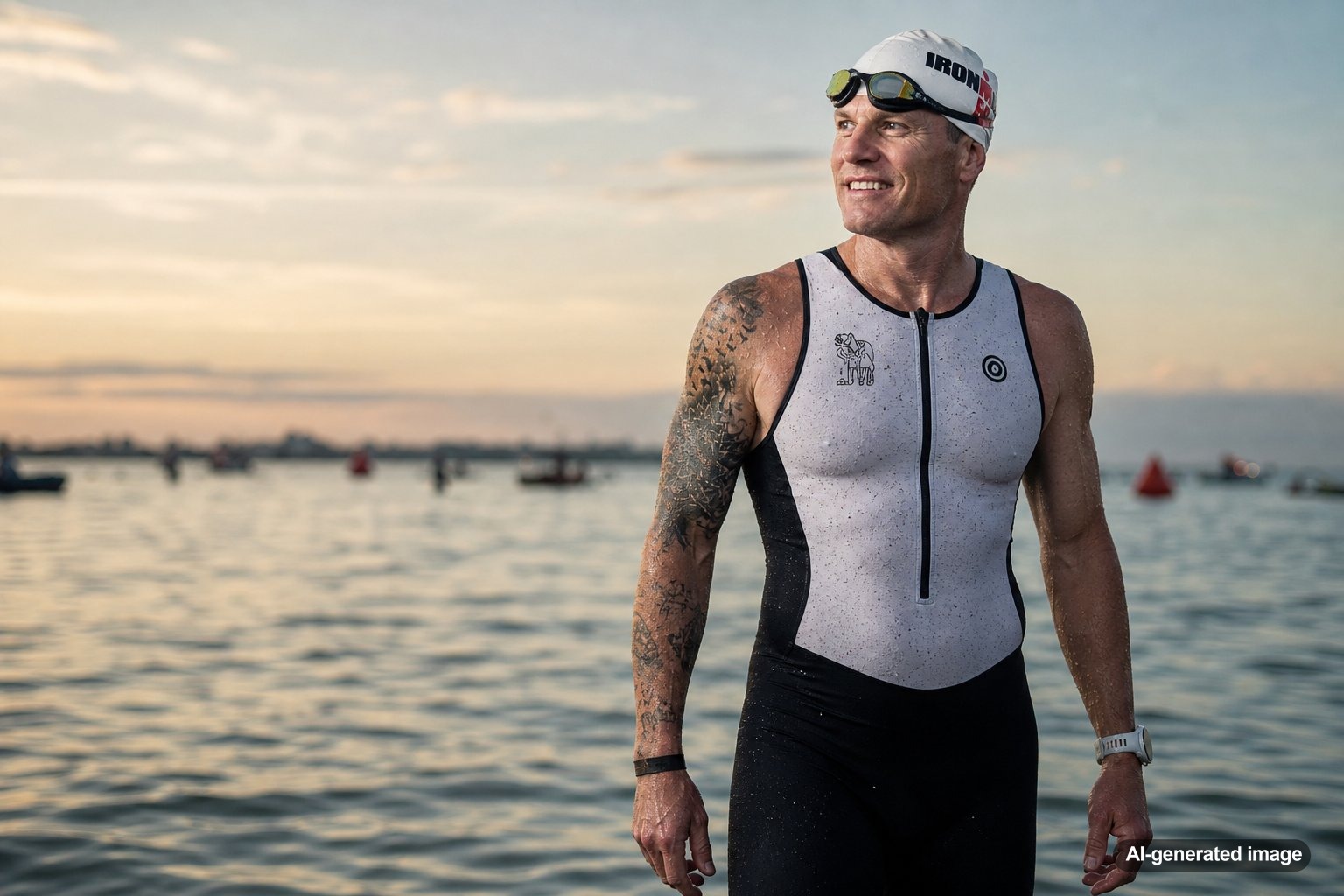
Staying mentally strong before the Ironman swim start is not about pretending you are calm. It is about knowing what to do when your heart is loud, the music is pumping, the crowd is pressing in, and the water suddenly looks much bigger than it did in training.
The swim start can test even experienced athletes. There is waiting, uncertainty, comparison, and the simple reality that once the cannon goes off, the day becomes real. For someone like Greg Schaefer, whose life and platform sit at the intersection of endurance, family, business leadership, adversity, and forward motion, that moment is more than a race detail. It is a reminder that strength often begins before the hard part officially starts. Learn more about Greg’s broader story on the About Greg page.
Quick answer: how to stay mentally strong before the Ironman swim start
- Narrow your focus. Do not try to process the whole race at once. Bring your attention back to the first buoy, the first breath, or the first clean stroke.
- Control what is controllable. Check your goggles, wetsuit, nutrition, timing, and warmup rhythm, then stop negotiating with things you cannot change.
- Use a simple phrase. A short cue like “smooth and steady” or “one more step” can quiet mental clutter.
- Expect nerves. Anxiety before the swim does not mean you are unprepared. It often means you care.
- Start with patience. The goal is not to win the first 200 yards. The goal is to settle into a race you can keep building.
Understand what the swim start does to your mind
The Ironman swim start has a unique emotional pressure. Unlike a training swim, you are surrounded by athletes, spectators, announcements, timing mats, volunteers, and the knowledge that the race will last all day. Your brain may try to jump ahead to the bike, the run, the cutoffs, the weather, or the finish line before you have even touched the water.
That is where many athletes lose energy before the race begins. They are not physically swimming yet, but mentally they are already fighting the entire course. A stronger approach is to recognize the pattern and shorten the time horizon. You do not need to solve the marathon while standing in the swim corral. You need to breathe, enter the water, find space, and begin.
This kind of focus is not only useful in racing. It is also part of the deeper message Greg carries into his speaking work: hard moments become more manageable when we stop demanding certainty from the entire road ahead and commit to the next honest step. For organizations and teams interested in that message, Greg’s speaking work connects endurance lessons with leadership, resilience, and purpose.
Build a race-morning routine before you need it
Mental strength is easier to access when your morning has structure. A clear routine reduces the number of decisions you have to make when adrenaline is already high. That might include when you eat, when you arrive, when you check your transition setup, when you put on your wetsuit, and when you step away from the crowd for a few quiet breaths.
The point is not perfection. Race mornings rarely go exactly as planned. The point is to give your mind familiar anchors. When something feels off, you can return to the next step in the routine instead of spiraling into every possible outcome.
Use nerves instead of arguing with them
A common mistake is treating nerves as proof that something is wrong. Before an Ironman swim, nerves are normal. The body is preparing for effort, risk, noise, and uncertainty. Trying to force yourself into total calm can sometimes make anxiety louder.
A more useful approach is to name what is happening without judgment. You might think, “My body is getting ready,” instead of “I am panicking.” That small shift matters. It turns the physical signs of stress into information rather than a verdict.
Many athletes benefit from a short pre-swim cue. It should be simple enough to remember when the moment gets loud. Examples include “long exhale,” “easy hands,” “steady to the buoy,” or Greg’s mission-centered reminder, “One More Step… Just One More.” A phrase like that does not remove the challenge. It gives the mind one clean track to follow.
Stop racing everyone before the race starts
The swim corral can create an unhelpful comparison trap. Someone looks calmer. Someone has a faster seed time. Someone has the newest gear. Someone is stretching like a professional. None of that tells you how your day will unfold.
Mental strength before the swim start often means refusing to spend energy on other people’s signals. Your race will be built by your pacing, your composure, your fueling, your decisions, and your ability to keep moving through discomfort. Comparison steals attention from the things that actually matter.
What many athletes miss
The strongest athletes are not always the ones who feel fearless before the swim. Often, they are the ones who feel the nerves, respect the moment, and still choose a disciplined first action.
Have a plan for the first few minutes in the water
The first few minutes of the swim can feel messy. There may be contact, splashing, poor visibility, cold water, or a faster start than expected. A strong mental plan begins with expecting that the opening may not feel smooth right away.
Instead of judging the whole swim by the first 100 yards, give yourself a settling window. Focus on exhaling under the water, lengthening your stroke, finding a sustainable rhythm, and moving toward the first sighting point. If you need to adjust your line or create space, do it calmly. The first job is not to prove toughness. The first job is to get composed.
Practical pre-swim mental reset
In the final minutes before the start, keep the reset simple:
- Look down, not around. Lower your eyes for a moment to reduce stimulation from the crowd.
- Take three slow exhales. Make the exhale longer than the inhale.
- Check one thing. Goggles sealed, cap set, watch ready, or wetsuit comfortable.
- Choose one cue. Repeat a short phrase you can carry into the water.
- Commit to the first task. Start clean, breathe early, sight calmly, and settle.
This reset works because it gives the mind a job. A focused mind is usually steadier than a mind left to wander through every fear at once.
FAQ
Is it normal to feel anxious before an Ironman swim start?
Yes. Many athletes feel anxiety before open water starts, especially in a race as long and emotionally charged as an Ironman. The goal is not to eliminate every nerve. The goal is to respond with a routine, a cue, and a calm first action.
What should I think about right before the swim begins?
Think about the smallest useful task. That might be your first breath pattern, your first sighting point, or staying relaxed through the first few strokes. Avoid trying to mentally race the entire day before the swim begins.
How can I avoid panic in the first few minutes?
Start with patience, keep your exhale steady, and give yourself permission to settle gradually. If the water feels crowded, create space without rushing. A controlled reset is better than forcing speed too early.
Does mental toughness mean ignoring fear?
No. Mental toughness is not denial. It is the ability to notice fear, stay honest about the moment, and still take the next disciplined step.
The bottom line
Staying mentally strong before the Ironman swim start comes down to focus, routine, patience, and the willingness to begin without needing perfect confidence. You do not have to feel fearless to move forward. You need a clear first step, a steady breath, and enough trust to let the day unfold one piece at a time.
Interested in bringing Greg’s message to your event or organization?
Learn more about Greg’s speaking work or get in touch to start the conversation.
Contact Greg or learn more about the Forward Motion Fund.
This article is for educational purposes only and is not medical advice. For diagnosis, treatment, or personalized medical guidance, please speak with a qualified healthcare professional.