
Best Strength Training Exercises For Parkinson’s Patients Over Age 50
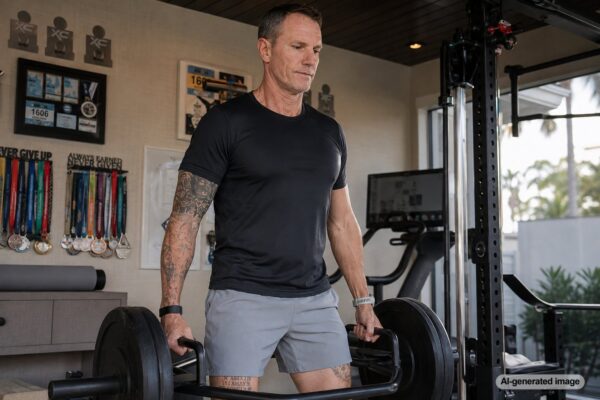
Strength training can be a meaningful part of life with Parkinson’s, especially after age 50, when preserving muscle, balance, confidence, and independence often matters as much as performance. The best exercises are not the flashiest ones. They are the movements that build usable strength for standing up, walking with control, carrying daily items, getting off the floor safely, and staying connected to the life a person still wants to live.
Greg Schaefer’s message of forward motion is not about pretending hard things are easy. It is about taking the next grounded step with wisdom, support, and purpose. For people with Parkinson’s, strength training should be viewed the same way: not as a test of toughness, but as a structured way to keep showing up for the body, family, routines, and identity that still matter. You can learn more about Greg’s broader story and mission on the About Greg page.
Quick answer
- The best strength exercises for many Parkinson’s patients over 50 are functional movements, such as sit-to-stands, supported squats, hip hinges, rows, step-ups, carries, wall push-ups, and core stability work.
- Strength training should be tailored to balance, medication timing, fatigue, freezing, joint health, fall risk, and other individual factors.
- Training should support real life, including getting out of chairs, climbing stairs, turning, reaching, and walking with better control.
- Safety matters more than intensity. A physical therapist, neurologist, or Parkinson’s-informed exercise professional can help adapt exercises appropriately.
- Consistency beats occasional hero workouts. Small, repeatable sessions can become a powerful part of a broader movement plan.
Why strength training matters after 50 with Parkinson’s
Parkinson’s can affect movement speed, stiffness, posture, balance, coordination, and confidence. Aging can bring its own changes in muscle mass, joint tolerance, recovery, and reaction time. When those realities overlap, strength training becomes less about gym culture and more about daily function.
Research-informed Parkinson’s exercise guidance commonly includes strength training alongside aerobic activity, flexibility, balance, agility, and functional movement. That broader mix matters because strength alone is not the full picture. A stronger person still needs mobility, coordination, balance practice, and endurance for daily life.
For adults over 50, the goal is not to copy a 25-year-old’s training plan. The goal is to build strength in patterns that transfer: standing, stepping, reaching, bracing, carrying, pulling, pushing, and recovering from small losses of balance. That is where the exercises below can be useful when adapted to the individual.
1. Sit-to-stands for chair strength and independence
The sit-to-stand is one of the most practical strength exercises because it trains the exact movement used every day: getting up from a chair, couch, car seat, or bench. It strengthens the legs, hips, and trunk while also reinforcing coordination and confidence.
A simple version starts from a stable chair with feet flat on the floor. The person leans slightly forward, presses through the feet, stands tall, pauses, and sits back down with control. If needed, hands can assist on the chair or thighs. Over time, the movement can be progressed by using less hand support, slowing the lowering phase, or holding a light weight close to the chest.
What people often miss: the lowering portion matters. Sitting down slowly builds control and may help reduce the habit of dropping into the chair. That control is valuable in real life.
2. Supported squats for leg strength without unnecessary risk
Squats can be helpful, but they do not need to be deep, heavy, or intimidating. A supported squat may use a countertop, rail, suspension strap, or sturdy chair back for balance. The goal is to train the hips, thighs, and glutes while keeping the movement controlled.
For someone with Parkinson’s, external support can be a strength tool, not a weakness. It allows the person to practice better range of motion, posture, and confidence while reducing fear of falling. The depth should match the person’s ability, joint comfort, and balance.
A helpful cue is to keep the feet planted, move slowly, and stand tall at the top. If freezing, dizziness, pain, or instability shows up, the exercise should be modified or stopped and reviewed with a qualified professional.
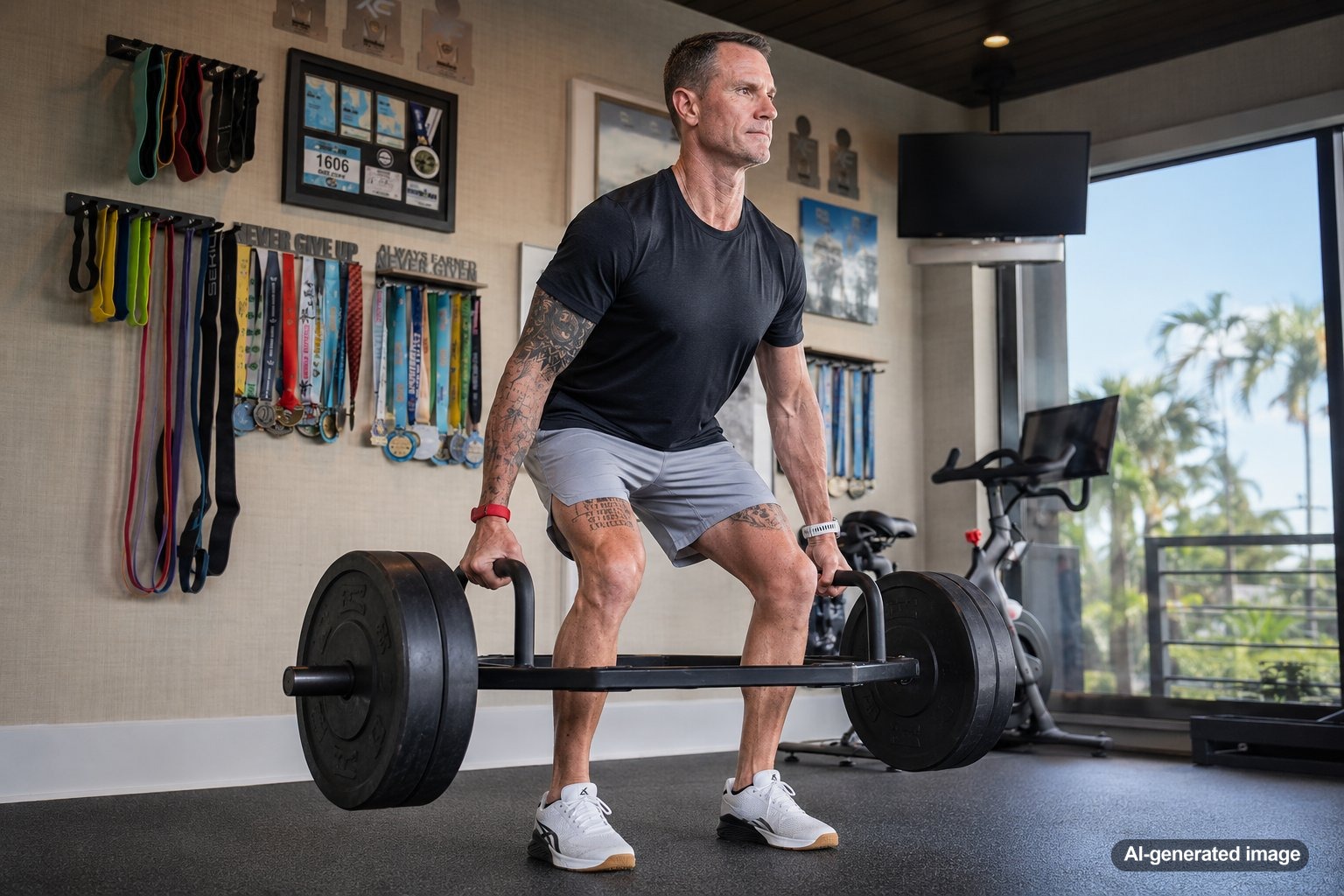
3. Hip hinges and deadlift patterns for lifting safely
The hip hinge trains the movement used when picking something up, loading a dishwasher, reaching into a trunk, or lifting a bag from the floor. Instead of rounding forward through the back, the person learns to send the hips back, keep the spine more organized, and use the legs and hips.
A beginner version can be practiced with hands on the hips, a dowel along the back, or a light object held close to the body. The range of motion can be small. The point is not to lift heavy. The point is to build a safer pattern for daily bending and lifting.
For adults over 50, this pattern is especially useful because poor bending mechanics can make ordinary tasks feel more risky. A well-coached hinge can also support posture, glute strength, and confidence with household movement.
4. Rows for posture, pulling strength, and upper-back support
Rows train the upper back, shoulders, and arms. They can be done with a resistance band, cable machine, or light dumbbells. For many people with Parkinson’s, posture can become more forward-flexed over time, so upper-back strength may help support a more open, upright position.
A seated or standing band row is often approachable. The person anchors the band safely, holds the handles, gently pulls the elbows back, pauses, and returns with control. The shoulders should stay relaxed rather than shrugged.
This exercise also has a practical purpose. Pulling open doors, carrying groceries, using railings, and stabilizing the shoulders during daily tasks all rely on pulling strength.
5. Wall push-ups or elevated push-ups for pushing strength
Push-ups do not need to happen on the floor. For many adults over 50, especially those managing Parkinson’s symptoms, a wall push-up or countertop push-up is a better starting point. It strengthens the chest, shoulders, arms, and trunk while keeping the body in a more manageable position.
The person places hands on a wall or stable elevated surface, steps back slightly, bends the elbows, and presses away with control. The body should move as one unit rather than collapsing through the low back or neck.
Pushing strength matters for getting up from surfaces, moving objects, opening heavy doors, and protecting the shoulders during everyday activity. The safer the setup, the more likely the exercise can become consistent.
6. Step-ups for stairs, balance, and single-leg strength
Step-ups train the ability to climb stairs, step onto curbs, and manage changes in surface height. A low step is usually enough at first. The person steps up with control, stands tall, and steps down carefully. A railing or support surface can be used.
This exercise combines strength and balance, which is why it should be approached with respect. The height of the step, speed, footwear, lighting, and available support all matter. Some people may need a physical therapist to decide whether step-ups are appropriate.
When done safely, step-ups can build confidence in one of the daily tasks that often determines independence: navigating stairs and uneven spaces.
7. Farmer carries for grip, posture, and real-world strength
A farmer carry is simply walking while holding weight at the sides. It can be done with light dumbbells, kettlebells, grocery bags, or other safe hand-held loads. The exercise trains grip, trunk stability, posture, and walking control.
For someone with Parkinson’s, the carry should be light enough to preserve good walking mechanics. The environment should be clear, flat, and uncluttered. A shorter distance with better form is better than a long distance that creates shuffling, rushing, or instability.
The real-life connection is obvious. Carrying groceries, a suitcase, a laundry basket, or household items requires strength and coordination. Training that pattern can make daily life feel more manageable.
8. Core stability exercises for bracing, turning, and control
Core training does not have to mean crunches. For many adults over 50, safer options may include seated marching, standing anti-rotation presses with a band, heel taps, bird dogs, or modified planks on an elevated surface. The goal is control, not strain.
Core stability supports posture, walking, reaching, turning, and balance reactions. Because Parkinson’s can affect coordination and movement timing, core exercises should be simple enough to perform well. Complicated movements are not automatically better.
A useful rule: if the person cannot breathe smoothly, maintain alignment, or control the movement, the exercise is too hard for that day.
How to make strength training safer and more effective
Strength training for Parkinson’s should be personalized. Symptoms can vary widely from person to person and even from hour to hour. Medication timing, fatigue, sleep, stress, balance, joint pain, blood pressure, and confidence can all change how a workout feels.
- Start with professional guidance when possible. A physical therapist or Parkinson’s-informed exercise professional can help identify safe starting points.
- Use stable surfaces and clear space. Remove tripping hazards, secure rugs, and choose supportive footwear.
- Train during the best movement window. Some people move better at certain times of day or during certain medication phases. A clinician can help guide this conversation.
- Prioritize control over load. Moving well with light resistance is usually more useful than chasing heavier weight with poor form.
- Include rest and recovery. Over 50, recovery is part of the plan, not a sign of weakness.
What people often overlook
Strength training is not only about muscles. It can also rebuild trust. A person who feels less steady may begin avoiding movement. Avoidance can lead to more weakness, more fear, and a smaller life. The right exercise plan can gently reverse that cycle by giving the person repeated, safe experiences of capability.
That emotional piece matters. Greg’s phrase, One More Step… Just One More, works because it is not grandiose. It is practical. In training, the same mindset might look like one controlled sit-to-stand, one careful step-up, one steady walk across the room, or one more week of showing up.
FAQ
How often should someone with Parkinson’s over 50 strength train?
Many Parkinson’s exercise resources include strength training multiple days per week, but the right frequency depends on the individual. A qualified healthcare professional or physical therapist can help tailor frequency, intensity, and recovery to the person’s symptoms, goals, and safety needs.
Should Parkinson’s patients lift heavy weights?
Some people may eventually use moderate or heavier resistance safely, but weight is not the first priority. Form, balance, breathing, control, and appropriate supervision matter more. The safest load is the one the person can control without pain, rushing, or loss of stability.
Are machines or free weights better?
Both can have a place. Machines may offer more stability and simpler setup. Free weights may better mimic real-life movement but may require more balance and coordination. Bands, body weight, and supported movements can also be valuable. The best choice depends on the person.
Can strength training help with balance?
Strength training can support balance by improving leg, hip, trunk, and postural strength, but balance often needs direct practice too. A well-rounded program may include strength, aerobic activity, flexibility, balance, agility, and functional movement.
When should someone get professional support?
Professional support is especially important if there is a history of falls, freezing, dizziness, significant fatigue, pain, major balance changes, heart concerns, or uncertainty about safe exercise setup. A clinician can help adapt the plan rather than leaving the person to guess.
Interested in bringing Greg’s message to your event or organization?
Learn more about Greg’s speaking work or get in touch to start the conversation.
Contact Greg or learn more about the Forward Motion Fund.
This article is for educational purposes only and is not medical advice. For diagnosis, treatment, or personalized medical guidance, please speak with a qualified healthcare professional.