
What The Swim Bike Run Mindset Teaches You About Life
The swim bike run mindset teaches you that life is rarely handled in one perfect stretch. It is handled in segments. One discipline at a time. One transition at a time. One decision at a time when the conditions are not exactly what you hoped for.
For someone like Greg Schaefer, a dad, husband, CEO, motivational speaker, 20-time Ironman, and Parkinson’s advocate, endurance is not only about race day. It is about how you keep moving when life asks more from you than you expected. You can learn more about Greg’s story on the About Greg page, but the deeper lesson is universal: progress often begins when you stop waiting for everything to feel easy.
Quick answer: what does the swim bike run mindset teach you?
- Break hard things into manageable parts. You do not have to solve the whole race at once.
- Respect transitions. Life changes require focus, patience, and adjustment.
- Expect discomfort without worshiping it. Growth is not about suffering for its own sake. It is about staying steady when things get hard.
- Keep moving before confidence fully arrives. Action often leads the way.
- Remember that endurance is built with support. Nobody gets through the hardest miles completely alone.
The power of thinking in segments
An Ironman can feel overwhelming if you think about the entire distance at once. The swim, bike, and run each demand something different. The water requires calm. The bike rewards pacing. The run tests patience, discipline, and the ability to manage whatever is left.
Life works in a similar way. A business challenge, a diagnosis, a family strain, a career shift, or a personal loss can feel impossible when viewed as one massive event. The swim bike run mindset brings the focus back to the next segment. What is the part in front of you right now? What does this moment require? What decision will help you stay in motion without pretending everything is simple?
That distinction matters. Segmenting life is not avoidance. It is a practical way to keep the hard thing from becoming too large to touch. You still respect the full distance, but you stop asking yourself to carry all of it at the same time.
The swim: learning to stay calm when visibility is low
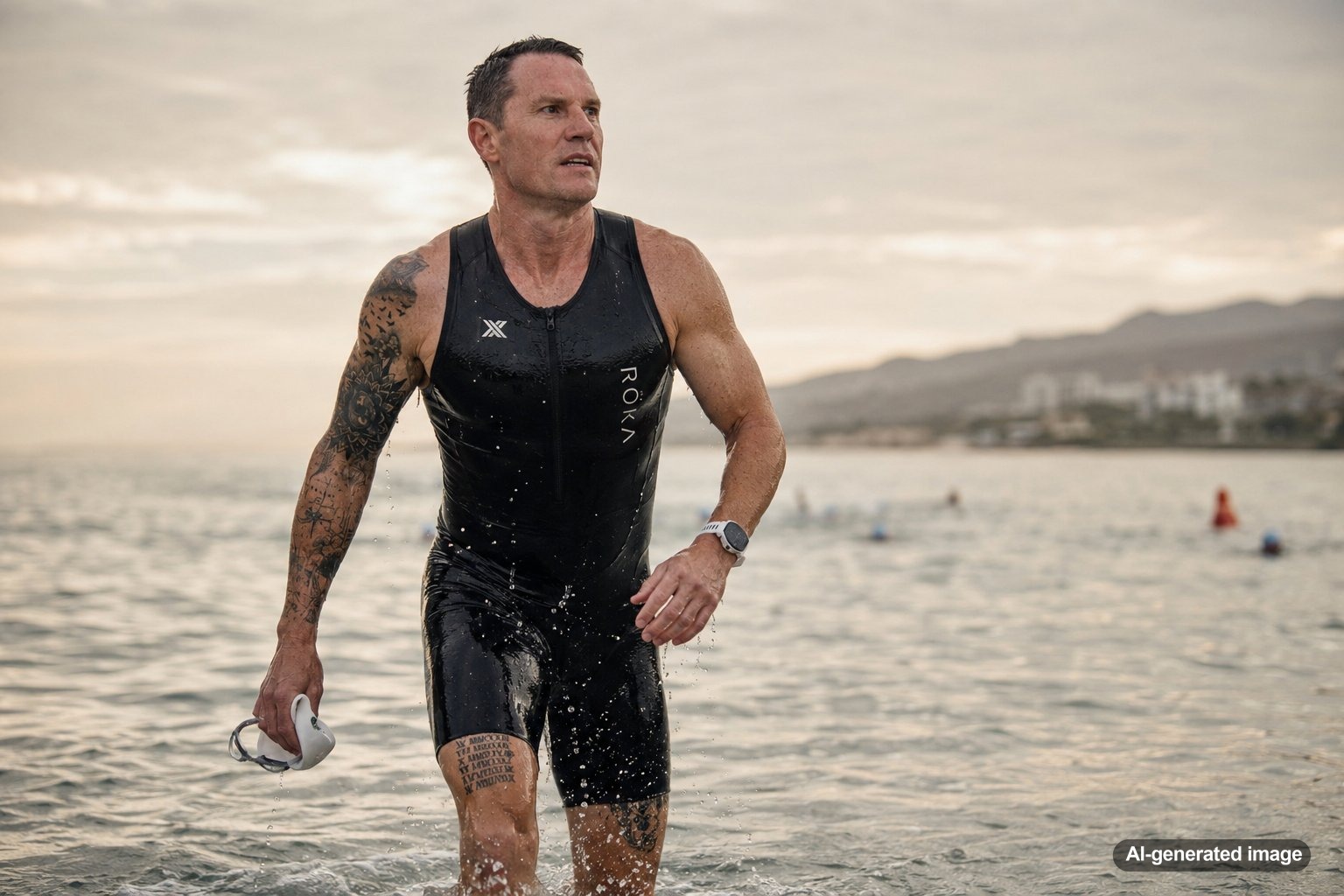
The swim can be disorienting. The water moves. People crowd in. Your line of sight is limited. You cannot always see far ahead, and that uncertainty can create panic if you let it.
That is one of the strongest life lessons endurance sport offers. There are seasons when you do not have full visibility. You may not know how the next month, year, or chapter will unfold. In those moments, calm becomes a skill. You breathe. You find a rhythm. You sight forward just enough to correct your direction. You do not need perfect clarity to keep moving.
In leadership, that might look like guiding a team through change without pretending you have every answer. In family life, it may mean showing up with honesty during uncertainty. In adversity, it can mean taking the next responsible step even when your emotions are still catching up.
The bike: pacing matters more than ego
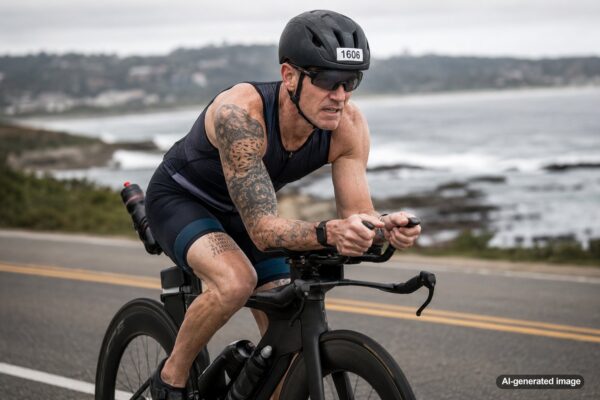
The bike portion rewards people who understand restraint. Push too hard too early, and the run will expose it. Hold back too much, and you may never find your strength. The lesson is not to play small. It is to pace with purpose.
That lesson travels well beyond racing. In business, pacing shows up in sustainable leadership, clear decision-making, and the discipline not to burn every resource at once. In personal growth, it shows up when you stop confusing intensity with consistency. In advocacy or mission-driven work, it shows up when you remember that lasting impact is built over time, not through one dramatic burst of energy.
The swim bike run mindset teaches that discipline is not always loud. Sometimes it is measured. Sometimes it is quiet. Sometimes the strongest move is refusing to let ego decide the pace.
The run: finishing asks for a different kind of strength
By the time the run begins, the body and mind have already been tested. The run is not only about speed. It is about staying honest with yourself when fatigue has stripped away the easy answers.
This is where endurance becomes deeply human. The later miles are rarely glamorous. They ask for focus, humility, and the willingness to keep choosing forward motion. Not because it is easy. Not because every step feels inspiring. Because the commitment still matters.
That is a meaningful frame for life. Many people can start with energy. Fewer people know how to continue when the original excitement is gone. The run mindset is about meeting that quieter test. It is about doing the next right thing when no one is cheering, when progress feels slow, and when you have to rely on values deeper than mood.
Transitions are part of the race, not interruptions
In triathlon, transitions count. The race clock does not stop while you change gear, reset your mind, and prepare for the next discipline. That small detail carries a big life lesson: transitions are not wasted time. They are part of the work.
People often judge themselves harshly during transition seasons. They want to be fully adapted right away. They want the old identity, old confidence, or old rhythm to instantly fit the new reality. But change takes adjustment. A founder who sells a business, a parent whose family enters a new chapter, an athlete facing physical change, or a person redefining purpose after adversity all need time to learn the new terrain.
Greg’s broader message of forward motion lives in that space. The point is not to pretend transitions are easy. The point is to treat them with respect. You can learn about the mission connected to that message through the Forward Motion Fund.
What people often miss about endurance
Endurance is not just toughness
One of the most overlooked truths about endurance is that it is not only about pushing harder. It is also about listening better, adapting sooner, asking for support, and knowing when patience is part of strength.
Outside observers often see the finish line and assume endurance is built from grit alone. Grit matters, but it is incomplete by itself. The strongest endurance athletes are not just stubborn. They are attentive. They notice signals. They manage energy. They recover. They adjust plans when the conditions change.
The same is true in life. Mental toughness without self-awareness can become recklessness. Resilience without support can become isolation. Purpose without pacing can become burnout. The swim bike run mindset is more balanced than that. It says keep going, but keep going wisely.
Practical life lessons from the swim bike run mindset
1. Name the discipline you are in
Ask yourself which part of the race you are living right now. Are you in the swim, trying to stay calm through uncertainty? Are you on the bike, needing patience and pacing? Are you on the run, drawing on deeper commitment after a long stretch of effort? Naming the phase can help you respond more clearly.
2. Stop demanding finish-line feelings at the starting line
Confidence often grows through motion. You may not feel ready at the beginning. That does not mean you are incapable. It may simply mean you are at the start of a difficult discipline and need to let experience build steadiness.
3. Respect the support crew
Endurance stories are never only individual stories. Family, friends, coaches, teammates, clinicians, volunteers, and community members often shape what becomes possible. In life, support is not a weakness. It is part of the system that helps people continue.
4. Define success beyond speed
Some days, success is a breakthrough. Other days, it is staying in the race. The swim bike run mindset helps you measure progress by commitment, courage, adaptation, and forward motion, not just by pace.
FAQ
What is the swim bike run mindset?
The swim bike run mindset is a way of approaching hard things in stages. It comes from triathlon, but it applies to life, leadership, adversity, and personal growth. Instead of trying to solve everything at once, you focus on the discipline in front of you and keep moving with intention.
How does triathlon teach resilience?
Triathlon teaches resilience by forcing athletes to adapt across changing conditions. The swim, bike, run, and transitions each require a different kind of focus. That variety mirrors real life, where challenges rarely arrive in one neat form.
Is endurance only about mental toughness?
No. Mental toughness matters, but endurance also depends on pacing, recovery, support, humility, and self-awareness. Lasting resilience is usually built through a combination of discipline and wisdom.
How can this mindset help leaders?
Leaders can use the swim bike run mindset to manage uncertainty, pace their teams, and stay steady during transition. It encourages clear thinking under pressure without turning leadership into empty hype.
How does this connect to Greg Schaefer’s message?
Greg’s message is rooted in forward motion through family, business, endurance sports, adversity, advocacy, and mission-driven living. The swim bike run mindset reflects that same belief: you do not need the whole path solved to take one more step.
Interested in bringing Greg’s message to your event or organization?
Learn more about Greg’s speaking work or get in touch to start the conversation.
Contact Greg or learn more about the Forward Motion Fund.
This article is for educational purposes only and is not medical advice. For diagnosis, treatment, or personalized medical guidance, please speak with a qualified healthcare professional.