

How to Talk to Your Kids About Adversity and Resilience
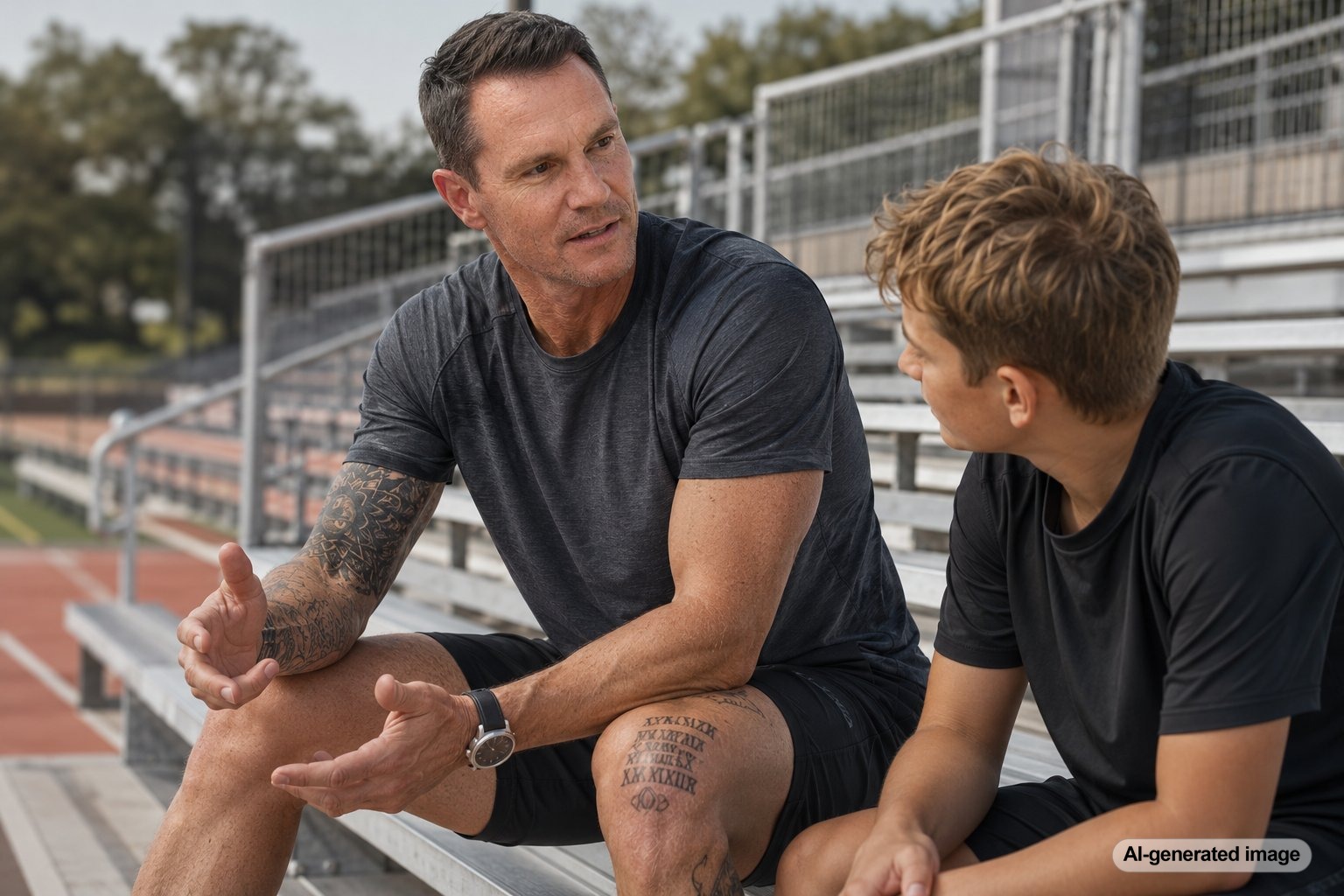
Talking to your kids about adversity is not about having the perfect speech. It is about giving them a steady place to stand when life gets complicated. Children do not need adults to pretend hard things are easy. They need adults who can tell the truth in a way that feels safe, grounded, and age appropriate.
For a parent, leader, athlete, or advocate like Greg Schaefer, resilience is not a slogan. It is something lived in real time through family, business, endurance, health challenges, and the daily decision to keep moving forward. When kids see adversity up close, the goal is not to hide every struggle from them. The goal is to help them understand that struggle can be faced with honesty, support, patience, and one more step.
Quick answer
- Be honest, but do not overload kids with adult-level details.
- Name the challenge clearly so silence does not become scarier than the truth.
- Let kids ask questions, even if the answers are incomplete.
- Model resilience as a process, not a performance.
- Remind them that asking for help is part of strength.
Start with truth, not fear
Kids often sense more than adults realize. They notice changes in mood, routines, energy, finances, health, training, work, or family stress. When no one explains what is happening, children may fill in the blanks with ideas that are bigger or scarier than reality.
A helpful conversation begins with a clear and calm version of the truth. That might sound like, Our family is going through something hard right now, and we are going to talk about it together. It does not have to include every detail. It should include enough clarity to help them feel included rather than left alone with their imagination.
This is especially important when adversity is visible. If a parent is facing a diagnosis, a career change, a loss, a major disappointment, or a difficult season, children may not need the full adult explanation, but they do need emotional honesty. They need to know that hard does not mean hopeless.
Greg’s story is rooted in many layers of forward motion: being a husband and dad, building and leading a business, competing as a 20-time Ironman, living with Young-Onset Parkinson’s, and using his platform to serve something larger than himself. For families, that kind of example offers a practical lesson: resilience is not pretending nothing hurts. It is choosing how to respond when something does.
To learn more about the broader story behind Greg’s work, visit his About page.
Match the conversation to your child’s age and temperament
Not every child processes adversity the same way. Some kids ask direct questions immediately. Some go quiet. Some seem uninterested at first and return with a question days later. Others show stress through behavior instead of words.
Younger children usually need simple language, repetition, and reassurance about daily life. They may want to know who will pick them up, whether routines will change, or whether someone they love is safe. Older kids and teenagers may want more context, more privacy, or more room to wrestle with uncertainty.
A strong approach is to give children a small, honest opening and then let their questions guide the depth. You might say, Something difficult has happened, and we are working through it. You can ask me anything, and if I do not know the answer yet, I will tell you that too.
That last part matters. Children do not need adults to fake certainty. In fact, watching an adult say I do not know yet calmly can be one of the most useful lessons they receive. It teaches them that uncertainty is uncomfortable, but it is not unmanageable.
Separate pain from panic
One of the most important things parents can model is the difference between a real problem and a panicked response. Kids learn from the emotional temperature in the room. If adults never acknowledge difficulty, children may learn avoidance. If adults treat every setback like a disaster, children may learn fear. The middle path is steadiness.
Try language that names the challenge without making it bigger than it needs to be: This is hard, and we are taking it one step at a time. Or, I feel sad today, but I am not alone, and our family is still a team.
That kind of language does two things at once. It validates reality and protects hope. It tells a child that hard feelings are allowed, but they do not have to take over the whole story.
Make resilience practical, not abstract
Children understand resilience best when they can see what it looks like in ordinary moments. Resilience is getting out of bed after a hard day. It is apologizing after losing patience. It is going to practice when motivation is low. It is asking for help instead of pretending to be fine. It is taking the next step before the whole road is clear.
For an endurance athlete, the phrase one more step carries obvious meaning. But it also belongs in family life. A child who is struggling at school, grieving a change, facing disappointment, or watching a parent go through adversity may not need a grand speech. They may need one small next action they can actually take.
That could be finishing one assignment, taking a walk, naming one feeling, writing down one question, showing up for one conversation, or helping with one small family responsibility. Practical resilience gives kids something to do with their fear.
Tell stories, but do not turn pain into a performance
Stories help children understand adversity because stories create shape. A parent can share a time they failed, lost, struggled, had to start again, or needed support. Those stories can be powerful, especially when they are not polished into false perfection.
The strongest stories are specific and humble. Instead of saying, I never give up, try saying, There were days I wanted to quit, so I focused on the next step instead of the whole mountain. Instead of saying, Everything happens for a reason, try saying, I do not like what happened, but I am learning how to respond to it.
Kids can spot fake inspiration. They do not need adversity wrapped in a perfect bow. They need to see that people can be scared and brave, tired and committed, disappointed and still moving. That emotional honesty is often more powerful than any motivational phrase.
Give kids a role without giving them the burden
When a family is facing adversity, children may want to help. That instinct can be healthy, but it should be guided carefully. A child should never feel responsible for fixing an adult problem, managing a parent’s emotions, or carrying the weight of the household. At the same time, giving them a small, appropriate role can help them feel connected rather than powerless.
Helpful roles might include writing a card, helping with a simple routine, being kind to a sibling, joining a family walk, or choosing a small way to contribute. The message should be clear: You are part of this family, and your kindness matters. You are not responsible for solving this.
That distinction protects children while still teaching them that love is active. Support matters. Community matters. Families and teams become stronger when people learn how to show up for one another.
Common mistakes to avoid
- Overexplaining: Too many adult details can overwhelm a child rather than comfort them.
- Pretending everything is fine: Children may sense the gap between words and reality.
- Making the child your emotional caretaker: Kids can offer love, but adults should seek adult support.
- Using only slogans: Phrases like stay strong can feel empty unless they are paired with listening and practical support.
- Rushing the conversation: Kids may need several small talks instead of one big one.
Use questions that open the door
Some children will not know how to begin a conversation about adversity. Questions can help, but they should not feel like an interrogation. The best questions create room.
You might ask: What have you noticed lately? Is there anything you are wondering about? What feels most confusing right now? Do you want information, comfort, or just time together?
For teenagers especially, the last question can be useful. Not every young person wants advice in the moment. Sometimes they want presence before perspective. Sitting in the car, walking side by side, cooking together, or doing something familiar can make hard conversations easier than sitting across a table trying to force eye contact.
Teach them that support is strength
One of the clearest lessons adversity can teach is that no one moves forward alone. A resilient child is not a child who never needs help. A resilient child learns how to recognize difficulty, name it, seek support, and keep going with the people who care about them.
This is also true in leadership, athletics, advocacy, and family life. The strongest teams are not built on pretending. They are built on trust, honest communication, shared purpose, and the willingness to take the next step together.
That idea is central to the mission behind the Forward Motion Fund, which grew from Greg’s commitment to keep moving forward and support mission-aligned work connected to Parkinson’s research, partner and caregiver support, challenged athletes, and youth and education initiatives.
FAQ
Should I tell my kids when something hard is happening?
In most cases, yes, in an age-appropriate way. Children often notice stress or change even when adults try to hide it. A calm, honest explanation can be more reassuring than silence.
What if I get emotional during the conversation?
It is okay for children to see emotion. You can say, I am sad right now, but I am safe, and I have support. That helps them understand that feelings are normal and manageable.
How much detail should I share?
Share enough to answer their real questions without giving them adult burdens. Let their age, maturity, and temperament guide how much detail you offer.
What if my child does not want to talk?
Do not force the conversation all at once. Keep the door open. A child may return later, ask questions indirectly, or need time before they are ready.
How do I teach resilience without minimizing pain?
Name the hard thing honestly, validate the feeling, and then focus on the next right step. Resilience is not denying pain. It is learning how to move with it, through it, and beyond the moment in front of you.
The bottom line
Talking to kids about adversity is not about giving them a perfect map. It is about helping them trust that hard things can be spoken about, faced, and carried with support. When adults tell the truth calmly, listen well, and model one more step, children learn something that can serve them for life.
They learn that resilience is not loud. It is not flawless. It is not the absence of fear. It is the steady decision to keep moving forward with honesty, love, and purpose.
Interested in bringing Greg’s message to your event or organization?
Learn more about Greg’s speaking work or get in touch to start the conversation.
Contact Greg or learn more about the Forward Motion Fund.
This article is for educational purposes only and is not medical advice. For diagnosis, treatment, or personalized medical guidance, please speak with a qualified healthcare professional.


