

How To Track Your Recovery Using Wearable Tech
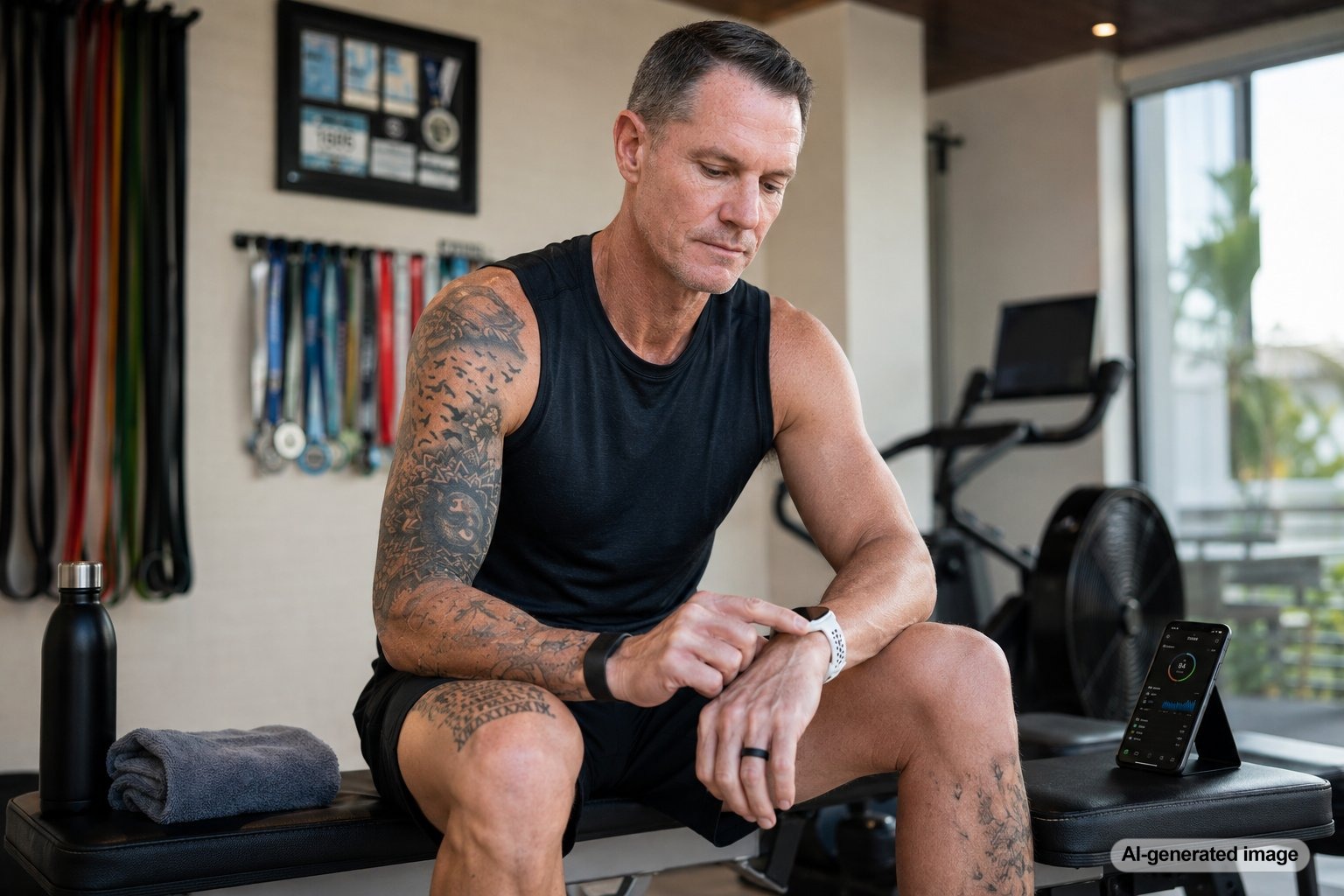
Wearable technology can help you track recovery, but only when you treat the data as evidence rather than a verdict. A watch, ring, chest strap, or fitness band cannot feel the stiffness in your legs, recognize the weight of a difficult week, or know how motivated you are to train. What it can do is reveal patterns in sleep, heart rate, training load, stress, and daily activity that may be difficult to notice on your own.
For endurance athletes, business leaders, and anyone balancing ambitious goals with real-life demands, those patterns can support better decisions. The goal is not to obey every score. It is to combine consistent measurements with honest self-assessment, then adjust before ordinary fatigue becomes a deeper problem. That practical approach reflects the discipline behind Greg’s broader story of endurance, leadership, and forward motion.
Quick answer
- Follow trends over several days instead of reacting to one unusual reading.
- Prioritize sleep duration, resting heart rate, heart rate variability, and recent training load.
- Compare your numbers with your own normal baseline, not another athlete’s data.
- Pair device metrics with soreness, mood, energy, motivation, and workout performance.
- Use recovery scores to guide questions, not to make every decision for you.
Start by building a personal baseline
A recovery metric has limited value until you know what is normal for you. Two people can have very different resting heart rates, sleep patterns, and heart rate variability readings while both being well recovered. Even the same person may see changes because of age, fitness, travel, temperature, medication, illness, alcohol, stress, or a demanding work schedule.
Wear your device consistently for several weeks before drawing strong conclusions. Keep the timing and placement as consistent as possible, especially when using a wrist-based sensor. During this period, focus less on whether a number looks good and more on how it behaves when you feel rested, fatigued, stressed, or unusually strong.
Your baseline should not be treated as a permanent target. It is a moving reference point that may change as your fitness, health, schedule, and responsibilities change.
Track the recovery metrics that matter most
Sleep duration and consistency
Sleep is one of the clearest places to begin. Pay attention to total sleep time, bedtime consistency, wake time, and the number of nights in which your sleep is shorter than usual. A wearable may estimate sleep stages, but those estimates should not be confused with a clinical sleep study. For everyday recovery decisions, broad trends in duration and consistency are often more useful than debating whether the device correctly labeled every minute of deep or rapid eye movement sleep.
One short night does not automatically require a canceled workout. Several short or disrupted nights, especially when paired with poor energy and declining performance, deserve more attention.
Resting heart rate
Resting heart rate is most useful when measured under similar conditions and compared with your personal norm. A sustained increase may appear when the body is handling more strain than usual. Possible contributors include hard training, dehydration, heat, disrupted sleep, emotional pressure, travel, or illness.
Do not panic over a single elevated reading. Look for a pattern across multiple mornings and consider what else has changed. A higher resting heart rate after a late flight and little sleep tells a different story than a persistent increase accompanied by unusual fatigue or other symptoms.
Heart rate variability
Heart rate variability, commonly called HRV, reflects variation in the time between heartbeats. Many wearables use it as one input when estimating stress or readiness. Higher is not universally better, and comparisons between people are rarely helpful. Device type, measurement timing, breathing, sleep, training, and many other factors can affect the reading.
Use HRV as a trend marker. If it remains below your normal range while resting heart rate rises and your legs feel flat, that combination may support an easier day. If one reading drops but your sleep, mood, and performance remain strong, it may simply be noise.
Training load and recovery time
Training-load features estimate how much strain your recent workouts created. Some platforms combine activity intensity, duration, fitness history, sleep, stress, and other signals to produce a recovery-time or readiness recommendation.
These estimates can help prevent a common mistake: judging every workout in isolation. A moderate session may be reasonable after a light week but costly when added to several demanding days, poor sleep, and a stressful schedule. The value is in seeing the accumulation.
Remember that an estimated recovery timer usually refers to readiness for another demanding effort. It does not necessarily mean complete inactivity until the timer reaches zero. Easy movement, mobility work, walking, or a truly gentle recovery session may still fit, depending on your condition and training plan.
Combine the dashboard with a human check-in
Before deciding how to train, compare the device with a quick personal assessment. Ask yourself:
- How did I sleep, regardless of the score?
- Do I feel normal soreness or something sharper and more concerning?
- Is my energy improving as I move, or does everything feel unusually heavy?
- Am I mentally ready to train, or am I forcing the session to protect a streak?
- Has my performance declined across several workouts?
- Am I dealing with illness symptoms, unusual dizziness, chest discomfort, or another health concern?
The strongest recovery decisions usually come from agreement between several signals. Poor sleep, an elevated resting heart rate, suppressed HRV, unusual soreness, and low motivation form a more persuasive pattern than any one metric alone.
Use a simple green, yellow, and red system
You do not need a complicated spreadsheet to make wearable data useful. A three-level framework can turn several measurements into a practical daily decision.
Green: train as planned
Your metrics are close to their usual ranges, sleep was adequate, soreness feels normal, and your energy improves during the warmup. Proceed with the planned session while remaining willing to adjust if your body responds poorly.
Yellow: modify the session
One or more metrics are outside their normal ranges, sleep has been inconsistent, stress is elevated, or you feel unusually flat. Reduce intensity, shorten the workout, replace intervals with easy aerobic work, or focus on technique and mobility.
Red: prioritize recovery or seek guidance
Several negative signals are present together, your performance has been deteriorating, or you have symptoms that should not be dismissed. Rest may be appropriate. Persistent abnormalities, concerning symptoms, or abrupt changes should be discussed with a qualified healthcare professional rather than diagnosed through an app.
Review weekly patterns, not just daily scores
Daily readiness scores are convenient, but the most valuable insights often appear during a weekly review. Look at seven to fourteen days and ask what preceded your strongest and weakest sessions.
- Did your best workouts follow consistent sleep rather than unusually long sleep?
- Does late eating, alcohol, travel, or a stressful evening regularly affect your overnight readings?
- Do hard sessions remain productive when separated by easy days?
- Does your heart rate stay unusually high during familiar easy efforts?
- Are you repeatedly overriding low-readiness signals and then underperforming?
Write down one or two observations rather than trying to explain every fluctuation. Over time, this creates a personal recovery playbook based on your actual life.
What wearable users often get wrong
Chasing a perfect score
Recovery is not a video game. A lower score does not mean you failed, and a high score does not guarantee a great workout. The score is an estimate built from an algorithm that cannot fully understand your circumstances.
Comparing numbers with other people
Your training partner’s HRV, resting heart rate, sleep need, and response to workload may be very different. Compare your current pattern with your own established range.
Changing the plan after every fluctuation
Constantly reacting to individual readings can make training inconsistent. Look for clusters of signals, sustained changes, and agreement between the data and your lived experience.
Ignoring sensor quality
Loose placement, tattoos beneath optical sensors, cold skin, movement, low battery levels, inconsistent wear time, and device changes can influence measurements. When a number looks implausible, check the measurement conditions before interpreting it.
Letting data increase anxiety
Tracking should support better behavior, not create fear around sleep or exercise. If you wake up feeling rested but become distressed because an app assigned a poor score, step back. Consider hiding nonessential metrics, reviewing data less frequently, or taking a break from tracking.
Recovery lessons extend beyond athletics
The same discipline applies in leadership and everyday life. Performance is not created only by adding effort. It also depends on recognizing when preparation, rest, and adaptation are doing important work beneath the surface.
A wearable can make invisible strain easier to notice, but the deeper skill is learning to respond without ego. Sometimes forward motion means completing the hard session. Sometimes it means shortening the session so you can return with purpose tomorrow. Greg explores that balance of resilience, discipline, and sustainable performance through his speaking work with organizations and teams.
Frequently asked questions
Which wearable metric is best for recovery?
No single metric is best in every situation. Sleep, resting heart rate, HRV, recent training load, and subjective feedback are more useful when evaluated together. Consistency and personal trends matter more than collecting the largest number of metrics.
Should I skip a workout when my recovery score is low?
Not automatically. Consider how far the score is from your norm, whether it has remained low, how you feel, and what type of workout is planned. A modified or easier session may be appropriate, while concerning symptoms or persistent changes warrant professional guidance.
How long does it take to establish a recovery baseline?
Several weeks of consistent use can provide an initial picture, although a more useful baseline develops over months and across different training phases, travel periods, workloads, and seasons.
Can a wearable detect overtraining or illness?
A wearable may highlight unusual patterns, but it cannot independently diagnose overtraining, infection, a sleep disorder, or another medical condition. Treat persistent changes as a reason to look more closely and consult a qualified professional when appropriate.
Are sleep stages from a wearable accurate?
Consumer devices estimate sleep from signals such as movement and heart rate. They can be helpful for observing general trends, but their sleep-stage estimates are not equivalent to clinical testing. Avoid making major health decisions based on one night’s stage breakdown.
Interested in bringing Greg’s message to your event or organization?
Learn more about Greg’s speaking work or get in touch to start the conversation.
Contact Greg or learn more about the Forward Motion Fund.
This article is for educational purposes only and is not medical advice. For diagnosis, treatment, or personalized medical guidance, please speak with a qualified healthcare professional.


