
Tracking Parkinson’s Progression: Which Wearables Actually Work?

Wearables can be useful for tracking Parkinson’s, but the best answer is not as simple as buying the newest watch and expecting it to explain progression. Parkinson’s changes day to day and hour to hour. Medication timing, sleep, stress, training load, fatigue, hydration, and the setting itself can all affect how symptoms show up.
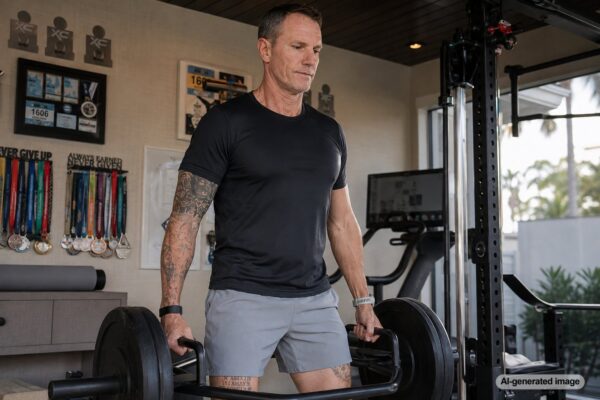
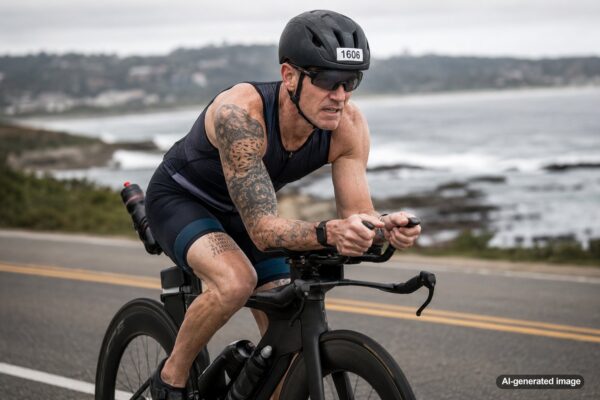
For someone like Greg Schaefer, whose story sits at the intersection of family, business leadership, endurance sports, advocacy, and life with Young-Onset Parkinson’s, the value of tracking is not about reducing a person to data. It is about noticing patterns, asking better questions, and staying in motion with clearer information. That same grounded approach is part of Greg’s broader story and the mission behind forward motion.
Quick answer: which wearables actually work?
- Consumer smartwatches and fitness trackers can help track trends in steps, activity, sleep, heart rate, and general movement patterns, but they are not diagnostic tools.
- Smartphone-based tracking can be useful because phones capture walking, tapping, speech, and daily activity patterns in real-world settings.
- Research-grade wearable sensors are usually stronger for Parkinson’s-specific movement analysis, especially when they are validated in studies and interpreted by clinicians or researchers.
- Medication and symptom diary apps may be most useful when they connect wearable data with timing, symptoms, exercise, sleep, and notes about daily life.
- The most useful tool is the one a person will actually wear consistently and discuss with a qualified care team.
What wearables can track well
Wearables are strongest when they capture patterns over time. A single reading is rarely the point. The value comes from repeated data that may reveal changes in activity, walking consistency, sleep disruption, tremor-like movement, exercise tolerance, or changes around medication timing.
For Parkinson’s, this matters because symptoms can fluctuate. A person may look steady in a clinic visit but struggle later in the day. Another person may feel slow after poor sleep or during a stressful week. Wearables may help document those real-world patterns in a way memory alone cannot.
Common wearable categories include wrist-worn watches, fitness trackers, phone sensors, rings, clip-on movement sensors, and multi-sensor systems used in research or clinical programs. They do not all measure the same things, and they do not all measure them with the same accuracy.
Where consumer smartwatches help most
Consumer smartwatches are most helpful for broad lifestyle and movement trends. They may help someone see whether daily activity is declining, sleep is becoming more disrupted, workouts are taking longer to recover from, or step patterns are changing. They can also support reminders, medication schedules, fall-detection features on some devices, and communication with a support system.
These tools work best when the question is practical: Am I moving less this month? Does poor sleep seem to affect my symptoms the next day? Do symptoms feel different after hard training days? Am I missing medication windows? These are not small questions. They can shape a more useful conversation with a clinician, care partner, coach, or family member.
The limitation is important. A consumer watch may detect movement, but it does not always know why that movement is happening. Tremor, exercise, nervous energy, typing, poor sensor placement, or everyday arm motion can sometimes look similar to an algorithm. That is why wearable data should be treated as supporting context, not a final answer.
Where Parkinson’s-specific sensors are stronger
Research-grade and clinically oriented sensors are designed to answer more specific Parkinson’s questions. They may focus on gait, bradykinesia, tremor, dyskinesia, freezing of gait, turning, balance, or motor fluctuations. Some systems use sensors placed on the wrist, ankle, trunk, or multiple body points to capture movement in more detail.
These tools are usually more meaningful when they are part of a study, a clinical program, or a care plan. They can help researchers and clinicians look beyond the snapshot of an office visit and better understand how movement changes during ordinary life. The Michael J. Fox Foundation has supported work using smartphones and wearable technology to collect mobility and symptom data, and the Parkinson’s Foundation notes that apps, smartphones, and smartwatches may help people track symptoms and share information with care teams.
The tradeoff is access and practicality. More specialized sensors may be less comfortable, less available, more expensive, or harder to interpret without professional support. A perfect device that stays in a drawer is less useful than a simple tracker that someone wears every day.
What people often miss when comparing wearables
Look beyond the device itself
- Consistency: A wearable needs enough daily use to show meaningful trends.
- Context: Data is more useful when paired with notes about medication, sleep, stress, meals, exercise, and symptoms.
- Specificity: A general activity tracker is not the same as a Parkinson’s-specific sensor.
- Interpretation: Trends should be reviewed with a qualified healthcare professional, especially if they influence treatment conversations.
Many people shop for the most advanced device, but the better question is: what decision will this data help support? If the goal is general awareness, a smartwatch or phone app may be enough. If the goal is to understand motor fluctuations, medication response, or possible progression, a clinician may recommend a more structured tracking approach.
Another overlooked issue is emotional weight. For some people, tracking creates clarity. For others, constant numbers create stress. The goal should be useful information, not surveillance of every imperfect day. A wearable should support life, not shrink life.
How to use wearable data wisely
The strongest approach is to combine wearable trends with a simple human record. That might include symptom notes, medication timing, exercise, sleep quality, falls or near falls, changes in handwriting, voice changes, mood, fatigue, and daily function. The data becomes more valuable when it tells a story that a clinician can understand.
A practical tracking routine might look like this: wear the device consistently for several weeks, note medication times, record symptom changes in plain language, bring the summary to a care appointment, and ask what patterns are clinically meaningful. This keeps the technology in its proper place. It informs the conversation, but it does not replace the relationship with the care team.
For leaders, families, athletes, and people navigating hard seasons, this mindset also echoes Greg’s message of forward motion. Progress is not always dramatic. Sometimes it is one more step, one more observation, one more honest conversation, and one more decision to keep showing up. For organizations looking for a grounded message about resilience, leadership, and adversity, Greg’s speaking work brings that perspective into rooms where people are facing pressure, change, and uncertainty.
So, which wearables actually work?
The wearables that work best are the ones that match the purpose. For everyday awareness, consumer smartwatches, fitness trackers, and phone-based apps can be useful. For Parkinson’s-specific symptom measurement, research-grade or clinically guided sensors are usually more appropriate. For real-life decision-making, the strongest option is often a combination: wearable data, symptom notes, medication context, and a care team that can interpret the full picture.
No wearable can fully capture identity, courage, family life, athletic discipline, or the emotional reality of living with Parkinson’s. Data can support the path, but it is not the path. The human being is still at the center.
FAQ
Can a smartwatch diagnose Parkinson’s?
No. Wearables may help identify movement patterns or support research, but diagnosis and treatment decisions require evaluation by qualified healthcare professionals.
Can wearables prove Parkinson’s progression?
Wearables may help show trends over time, but progression is complex. Symptoms can vary because of sleep, medication timing, stress, exercise, illness, and other factors. A clinician can help evaluate whether a trend is meaningful.
Are research-grade sensors better than consumer watches?
For Parkinson’s-specific movement analysis, research-grade or clinically guided sensors are often more precise. For daily habit tracking, a consumer watch may be easier to wear consistently and still useful.
What should I bring to my neurologist?
Bring simple summaries rather than overwhelming raw data. Helpful information may include symptom timing, medication timing, sleep patterns, falls or near falls, activity changes, exercise notes, and questions about what the wearable data might mean.
Interested in bringing Greg’s message to your event or organization?
Learn more about Greg’s speaking work or get in touch to start the conversation.
Contact Greg or learn more about the Forward Motion Fund.
This article is for educational purposes only and is not medical advice. For diagnosis, treatment, or personalized medical guidance, please speak with a qualified healthcare professional.
Sources & further reading
- Parkinson’s Foundation: Tech Tools for Daily Living
- Michael J. Fox Foundation: Watch and Learn: Gaining Insight on Parkinson’s Using Wearable Technology
- Michael J. Fox Foundation: Identification and Quantification of Parkinson’s Disease Progression Using Digital Measures from a Wrist-worn Wearable Device
- NINDS: Parkinson’s Disease