

How To Train Hard Without Losing Perspective
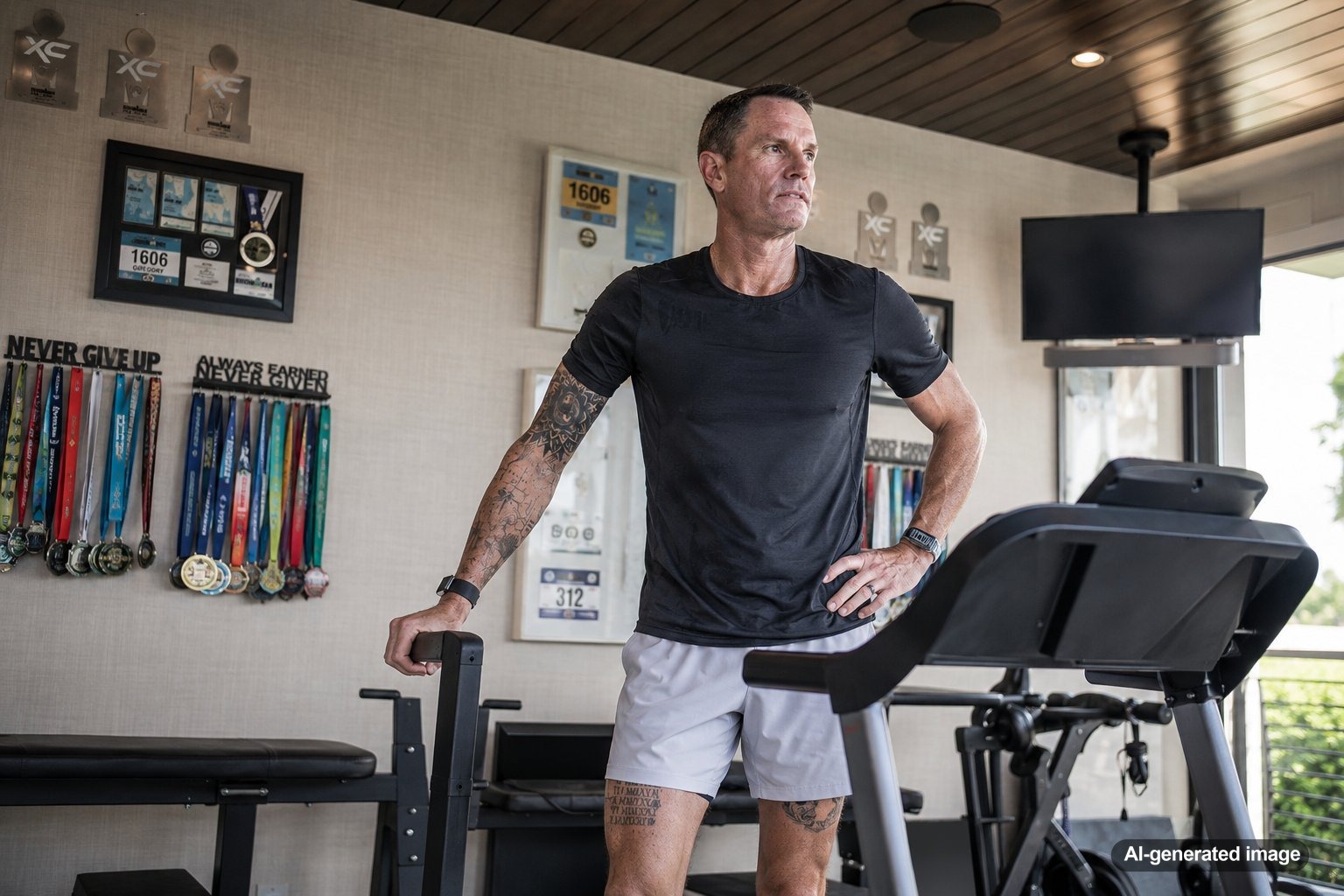
Training hard can sharpen discipline, build confidence, and reveal what you are capable of doing under pressure. It can also become so consuming that every missed workout feels like failure, every family commitment feels like an interruption, and every result seems to determine your worth. The goal is not to care less about performance. It is to care deeply while remembering that training is one meaningful part of a much larger life.
Greg Schaefer’s experience across endurance sports, business leadership, family life, adversity, and advocacy reflects that broader view of forward motion. You can learn more about his journey on the About Greg page. Hard training becomes more sustainable when it supports your values instead of quietly replacing them.
Quick answer
- Define success by more than pace, mileage, rankings, or race results.
- Protect relationships and responsibilities with the same intention you bring to training.
- Separate productive discomfort from warning signs that require rest or support.
- Keep an identity outside of sport so setbacks do not erase your sense of self.
- Review your goals regularly to make sure the cost still matches the purpose.
Know what the training is for
Perspective becomes difficult to maintain when the work no longer has a clearly defined purpose. Athletes often begin with a meaningful goal, such as finishing a first race, returning after a difficult season, improving health, or testing personal limits. Over time, the original purpose can be replaced by automatic escalation: more miles, harder sessions, faster splits, another event, and less room for anything that does not contribute directly to performance.
A useful question is not simply, “What am I training for?” It is, “What do I want this training to add to my life?” The answer might include confidence, community, energy, structure, adventure, or a deeper ability to remain steady under pressure. When the plan stops serving those outcomes, adjustment is not weakness. It is evidence that you are still leading the process rather than being controlled by it.
Measure progress without letting numbers define you
Data can help athletes make informed decisions. Pace, power, heart rate, sleep, volume, and recovery trends may reveal useful patterns. The trouble begins when measurement shifts from feedback to judgment.
A slow session can mean many things: accumulated fatigue, heat, stress, poor sleep, insufficient fueling, or simply an ordinary off day. It does not automatically mean that discipline is disappearing. Likewise, a personal record is worth celebrating, but it does not make someone more valuable than they were the day before.
Try using two scorecards. The first tracks performance. The second tracks the quality of the process:
- Did you follow the intended effort instead of chasing an unnecessary result?
- Did you recover with the same seriousness you brought to the workout?
- Did you communicate well with the people affected by your schedule?
- Did you adapt intelligently when circumstances changed?
- Did you finish the week more capable rather than merely more tired?
The second scorecard often reveals the habits that make long-term performance possible.
Protect the people who are part of the journey
Serious training rarely affects only the athlete. Early alarms, weekend events, travel, fatigue, meal planning, equipment, and recovery time can influence an entire household. A plan may look balanced on paper while creating strain for a spouse, partner, children, friends, or coworkers.
Perspective requires honest communication before resentment builds. Share the calendar. Discuss high-volume weeks and important family commitments. Ask what support looks like in both directions. A training goal should not require everyone else to silently reorganize life around it.
This does not mean abandoning ambition whenever a schedule becomes inconvenient. It means treating relationships as commitments rather than background conditions. The people who support an athlete should feel included, respected, and valued beyond what they contribute to race day.
Learn the difference between discomfort and damage
Hard training includes discomfort. Fatigue, doubt, weather, repetition, and demanding efforts are part of the process. Mental toughness often grows through the decision to continue when the work is difficult but still appropriate.
However, not every urge to stop should be ignored. Persistent pain, unusual weakness, worsening sleep, emotional volatility, declining performance, loss of motivation, and an inability to recover may signal that the current load needs attention. The disciplined response may be to reduce intensity, change the session, take a rest day, or seek qualified guidance.
There is an important distinction between avoiding effort and responding intelligently to information. Pushing through everything can look committed from the outside while undermining the larger goal. Sustainable athletes learn when to press, when to adjust, and when to stop.
Keep an identity that is larger than your sport
Athletic identity can be powerful. It creates belonging and reinforces habits that support difficult goals. It can also become fragile when it is the only identity a person trusts.
Injury, illness, changing responsibilities, aging, financial pressure, or an unexpected life event can alter training quickly. When self-worth depends entirely on performance, an interruption can feel like personal disappearance rather than a change in circumstances.
Stay connected to the roles and values that remain meaningful regardless of the training calendar. You may be a parent, spouse, friend, leader, mentor, volunteer, creator, neighbor, or advocate. These identities do not dilute athletic commitment. They give it context. Greg’s work through the Forward Motion Fund also reflects how movement and endurance can connect with a mission beyond individual achievement.
Build flexibility into the plan before you need it
Rigid plans often feel reassuring because they remove decisions. Yet real life does not follow a clean training calendar. Work emergencies happen. Children get sick. Travel changes. Energy fluctuates. Weather turns. Bodies respond differently than expected.
A resilient plan includes options. For example, define the essential purpose of each key workout and identify an acceptable shorter version. Establish which sessions can move and which should not be stacked together. Decide in advance what circumstances justify rest. This reduces the temptation to make emotional choices when a week becomes complicated.
Flexibility is not the absence of standards. It is the ability to preserve the purpose of the plan when the original format no longer makes sense.
Watch for signs that ambition is narrowing your life
Training may be losing perspective when ordinary decisions begin revolving around fear rather than purpose. Common patterns include:
- Feeling intense guilt after a reasonable rest day.
- Skipping meaningful events for routine workouts that could have been moved.
- Hiding pain, fatigue, expenses, or training volume from people close to you.
- Believing every session must prove fitness.
- Comparing constantly and losing the ability to enjoy your own progress.
- Treating slower athletes, recreational participants, or your former self with contempt.
- Continuing toward a goal you no longer want because changing direction feels embarrassing.
Any one of these moments can happen without indicating a larger problem. Repeated patterns deserve reflection. Ask whether training is expanding your capacity to live well or steadily shrinking the rest of your world.
Use regular perspective checks
Do not wait for burnout, conflict, or injury to evaluate the balance. A brief review every few weeks can keep small issues from becoming defining problems.
- Purpose: Does this goal still matter to me for the reasons I chose it?
- Health: Am I generally recovering, sleeping, and functioning well?
- Relationships: Are the people closest to me experiencing this season as a shared commitment or a constant burden?
- Work and responsibility: Am I meeting obligations with integrity?
- Enjoyment: Is there still some curiosity, satisfaction, or gratitude in the process?
- Adaptability: Can I change a workout without feeling that the entire goal is ruined?
These questions are not designed to make training easy. They help ensure that difficult training remains intentional.
The bottom line
Training hard without losing perspective means holding ambition and awareness at the same time. You can pursue demanding goals, tolerate discomfort, and expect a great deal from yourself without making every workout a referendum on your worth. The strongest approach is not always the one that demands the most today. It is the one that allows discipline, health, relationships, purpose, and performance to keep moving forward together.
Frequently asked questions
Can serious athletes maintain balance?
Yes, although balance does not always mean equal time for every priority each day. During a demanding training block, sport may temporarily receive more attention. Maintaining perspective means making that choice consciously, communicating its impact, and ensuring that other important responsibilities are not repeatedly neglected.
Is taking an unplanned rest day a lack of discipline?
Not necessarily. An unplanned rest day can be a disciplined response to pain, illness, excessive fatigue, poor recovery, or a major life demand. The key is to distinguish thoughtful adaptation from a repeated pattern of avoiding appropriate effort.
How can I tell whether my goal is still healthy?
Consider the overall pattern. A healthy goal can be difficult and inconvenient, but it should remain connected to a meaningful purpose. If it consistently harms your health, relationships, work, finances, or emotional stability, it may be time to adjust the goal or seek support.
What should I do when family and training commitments conflict?
Discuss the conflict directly, identify which commitments are truly fixed, and look for alternatives such as moving, shortening, or replacing a workout. Not every conflict has a perfect solution, but transparent communication usually creates better outcomes than assuming others will accommodate the plan.
Can perspective improve performance?
It can support the conditions that make sustained performance more likely. Athletes who recover appropriately, adapt to changing circumstances, maintain supportive relationships, and avoid treating every session as a test may be better positioned to train consistently over time.
Interested in bringing Greg’s message to your event or organization?
Learn more about Greg’s speaking work or get in touch to start the conversation.
Contact Greg or learn more about the Forward Motion Fund.
This article is for educational purposes only and is not medical advice. For diagnosis, treatment, or personalized medical guidance, please speak with a qualified healthcare professional.


