

What Wearables Can and Cannot Tell You About Recovery, Stress, and Performance
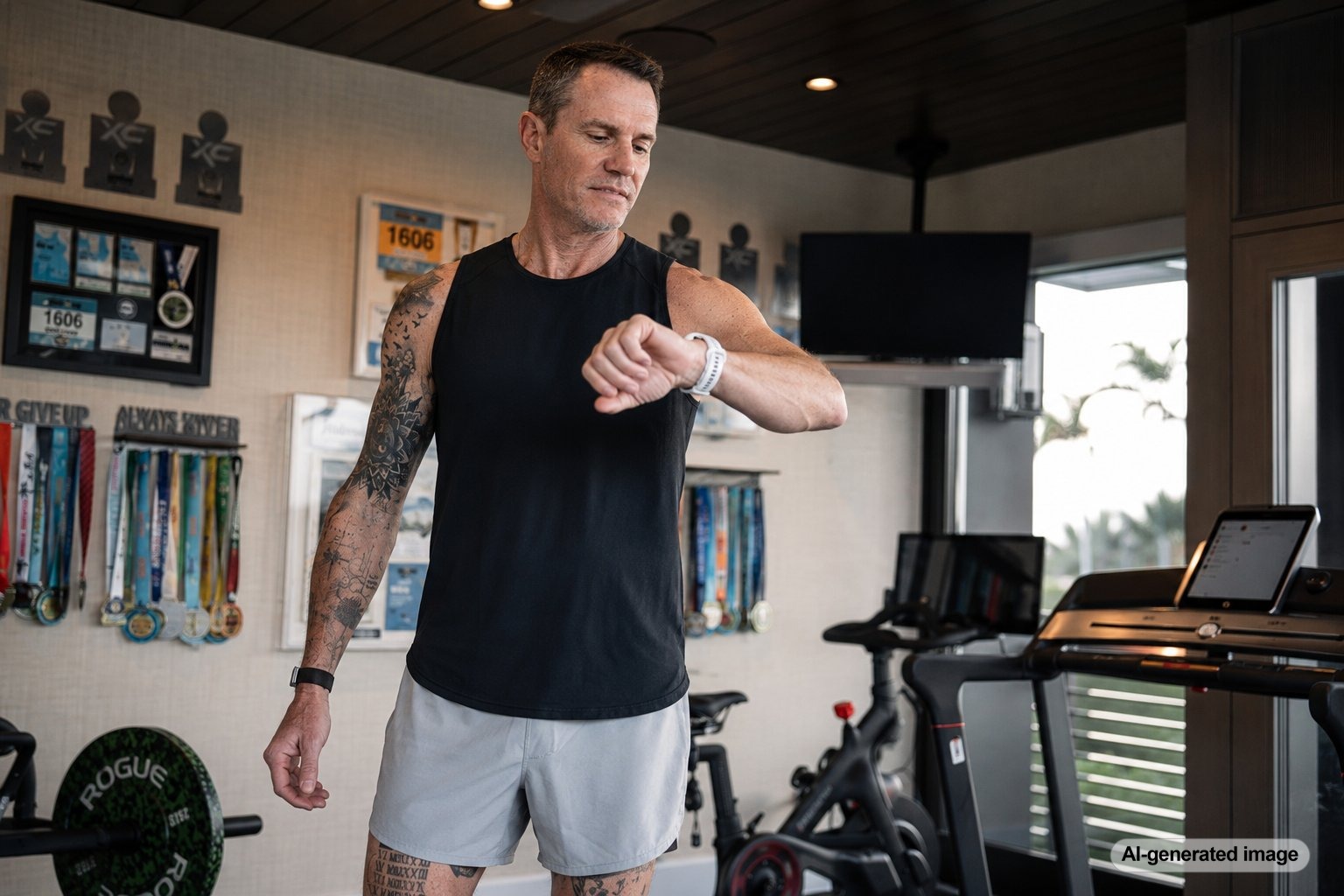
Wearables have changed the way many athletes, leaders, and everyday high performers think about their bodies. A watch, ring, strap, or app can put heart rate, sleep, activity, strain, and recovery scores within reach every morning. For someone balancing training, work, family, stress, and health realities, that information can be useful. It can also become noisy fast.
Greg Schaefer’s world sits at the intersection of endurance, business, family, Parkinson’s advocacy, and forward motion. In that kind of life, data matters, but it is not the whole story. A wearable can help you notice patterns. It cannot tell you who you are, how hard your season has been, or what courage looks like on a difficult day. For more on Greg’s broader story, visit the About Greg page.
Quick answer: what wearables can and cannot tell you
- Wearables can show trends. They are often most useful for spotting changes over time in sleep, resting heart rate, activity, and recovery patterns.
- Wearables can suggest stress or fatigue. Metrics such as heart rate variability, resting heart rate, sleep duration, and training load can offer clues.
- Wearables cannot explain the full reason behind a number. A low recovery score may reflect hard training, poor sleep, travel, illness, emotional stress, alcohol, dehydration, medication, or sensor error.
- Wearables cannot replace judgment. The best decisions combine data, lived experience, coaching, medical guidance when needed, and honest self-awareness.
- Wearables should support forward motion, not create fear. The goal is better awareness, not becoming trapped by a score.
What wearables are good at measuring
Most consumer wearables are best at gathering repeated signals across time. They may estimate sleep duration, track resting heart rate, record steps or activity, measure workout intensity, and provide trends in recovery-related metrics such as heart rate variability. These tools are not perfect, but repeated daily data can help reveal patterns that are hard to notice from memory alone.
For endurance athletes, that can be valuable. A rising resting heart rate after several hard training days may be a cue to pay attention. A pattern of poor sleep before big work presentations may show that stress is not only mental. A drop in activity during a difficult health stretch may show where support, structure, or a reset is needed.
The strength of a wearable is not that it knows everything. Its strength is that it keeps showing up with data, day after day, so you can compare today’s signal against your own baseline.
What wearables can tell you about recovery
Recovery is not just soreness. It includes sleep, nervous system strain, muscle repair, hydration, nutrition, emotional load, and the cumulative stress of life. Wearables try to simplify that complexity into scores, trends, or readiness estimates.
A useful recovery signal may include:
- Resting heart rate that is higher or lower than your normal pattern
- Heart rate variability that shifts away from your usual baseline
- Sleep duration or sleep consistency changing over several nights
- Training load that has increased faster than your body is adapting
- Reduced movement, lower energy, or a mismatch between how you feel and how hard you are pushing
The key phrase is your normal pattern. A single score rarely matters as much as the direction of change. One rough night may not mean much. A week of poor sleep, elevated resting heart rate, reduced motivation, and heavier-than-normal workouts deserves attention.
What wearables can tell you about stress
Stress is not always visible. People can look composed while their body is carrying a heavy load. Wearables may help identify some physiological signs that stress is accumulating, especially when heart rate, sleep, activity, and HRV patterns all shift at the same time.
Still, stress is not only a number. A device cannot fully understand grief, caregiving, pressure at work, family concerns, uncertainty after a diagnosis, or the emotional weight of a major life transition. It can show that the body is responding. It cannot always tell you why.
That distinction matters. If a wearable says you are under strain, the best next question is not, “What is wrong with me?” It is, “What context might explain this pattern, and what small adjustment would help today?”
What wearables can tell you about performance
Performance is where wearable data can be both powerful and misleading. A watch can tell you pace, distance, heart rate, power, cadence, training load, and recovery trends. Those numbers can help athletes train with more structure and avoid guessing every day.
But performance also includes discipline, experience, patience, confidence, adaptability, and the ability to stay steady when the plan changes. A device can tell you that your body is carrying fatigue. It cannot tell you whether a race, meeting, family responsibility, or mission-driven commitment is worth showing up for anyway.
For someone like Greg, who has lived through business leadership, Ironman racing, family responsibility, Parkinson’s diagnosis, and continued competition, performance is not only output. It is also identity, purpose, and the decision to keep moving forward with honesty. The data can inform the day. It should not own the day.
Where wearables often get misunderstood
One common mistake is treating a recovery score as a verdict. A low number can feel like permission to shut down or proof that something is wrong. A high number can feel like permission to ignore pain, overtrain, or dismiss stress. Neither reaction is the point.
Another mistake is comparing your data to someone else’s. Two people can have very different baselines for HRV, resting heart rate, sleep need, training capacity, and stress response. Wearables are most useful when they help you understand yourself better, not when they become another scoreboard.
A third mistake is assuming precision equals truth. A device can display a number with confidence, but the estimate may be based on algorithms, sensor placement, movement, skin contact, device model, and conditions during measurement. Sleep stage estimates, stress scores, and readiness scores can be helpful, but they are still interpretations.
A better way to use wearable data
The most grounded approach is to treat wearable data as one voice in the room. It should be heard, but it should not be the only voice. Your own symptoms, mood, sleep quality, appetite, soreness, motivation, coaching input, family context, and medical guidance can all matter.
Try using three questions:
- What is the trend? Is this a one-day dip or a repeated pattern?
- What is the context? Did training, travel, stress, illness, medication, alcohol, sleep disruption, or emotional strain change recently?
- What is the smallest wise adjustment? More sleep, lighter training, a walk, hydration, a conversation, a rest day, or a call to a professional may be more useful than obsessing over the score.
This is where wearable data can support resilience. It can help you respond earlier, with less drama, and with more respect for the body you are asking to carry you forward.
When to be cautious with wearable data
Wearables can be especially tricky when a person is already anxious about health, performance, sleep, or symptoms. For some people, constant checking can create more stress than clarity. A sleep score can make a bad night feel worse. A recovery warning can turn normal fatigue into fear. A performance metric can make a meaningful effort feel inadequate.
Be cautious if the data is causing you to ignore your body, overreact to normal variation, compare yourself harshly, or avoid professional guidance when symptoms deserve attention. Wearables can be useful tools, but they are not clinicians, coaches, family members, or inner wisdom.
For people living with Parkinson’s or other health conditions, data may offer helpful structure around activity and routine, but medical questions should be discussed with a qualified healthcare professional. Exercise and movement can play an important role in many Parkinson’s care plans, but every person’s situation is different.
FAQ
Are wearable recovery scores accurate?
They can be useful, especially for trends, but they should not be treated as exact measurements of readiness or health. Different devices use different sensors and algorithms, and estimates can vary.
Should I train if my wearable says recovery is low?
Maybe, but the score should start a conversation, not end it. Consider how you feel, what you trained recently, whether you slept poorly, and whether there are symptoms or warning signs that need attention.
Can wearables detect stress?
They may detect patterns associated with physiological stress, such as changes in heart rate, HRV, sleep, or activity. They cannot fully understand the emotional, social, medical, or life context behind those changes.
What is the best wearable metric to watch?
No single metric tells the whole story. Resting heart rate, HRV, sleep consistency, training load, and subjective energy are more useful together than separately.
How should athletes use wearables without becoming obsessed?
Use the data to guide reflection, not self-judgment. Look for patterns over time, pair the numbers with how you actually feel, and remember that meaningful performance includes more than what a device can measure.
The bottom line
Wearables can help you become more aware of recovery, stress, and performance. They can show patterns, flag changes, and remind you to respect the cost of effort. But they cannot measure purpose. They cannot define resilience. They cannot know the full story behind one more step.
The best use of data is not control. It is awareness. When a wearable helps you listen better, recover smarter, and keep moving with more honesty, it becomes a tool for forward motion.
Interested in bringing Greg’s message to your event or organization?
Learn more about Greg’s speaking work or get in touch to start the conversation.
Contact Greg or learn more about the Forward Motion Fund.
This article is for educational purposes only and is not medical advice. For diagnosis, treatment, or personalized medical guidance, please speak with a qualified healthcare professional.
Sources & further reading
- National Institutes of Health: A Validation of Six Wearable Devices for Estimating Sleep, Heart Rate and Heart Rate Variability in Healthy Adults
- National Institutes of Health: Wearable Health Devices in Health Care: Narrative Systematic Review
- National Institutes of Health: Alignment Between Heart Rate Variability From Fitness Trackers and Perceived Stress
- Parkinson’s Foundation: Assistive Technology & Devices


