

Why Awareness Alone Is Not Enough in Mission-Driven Work
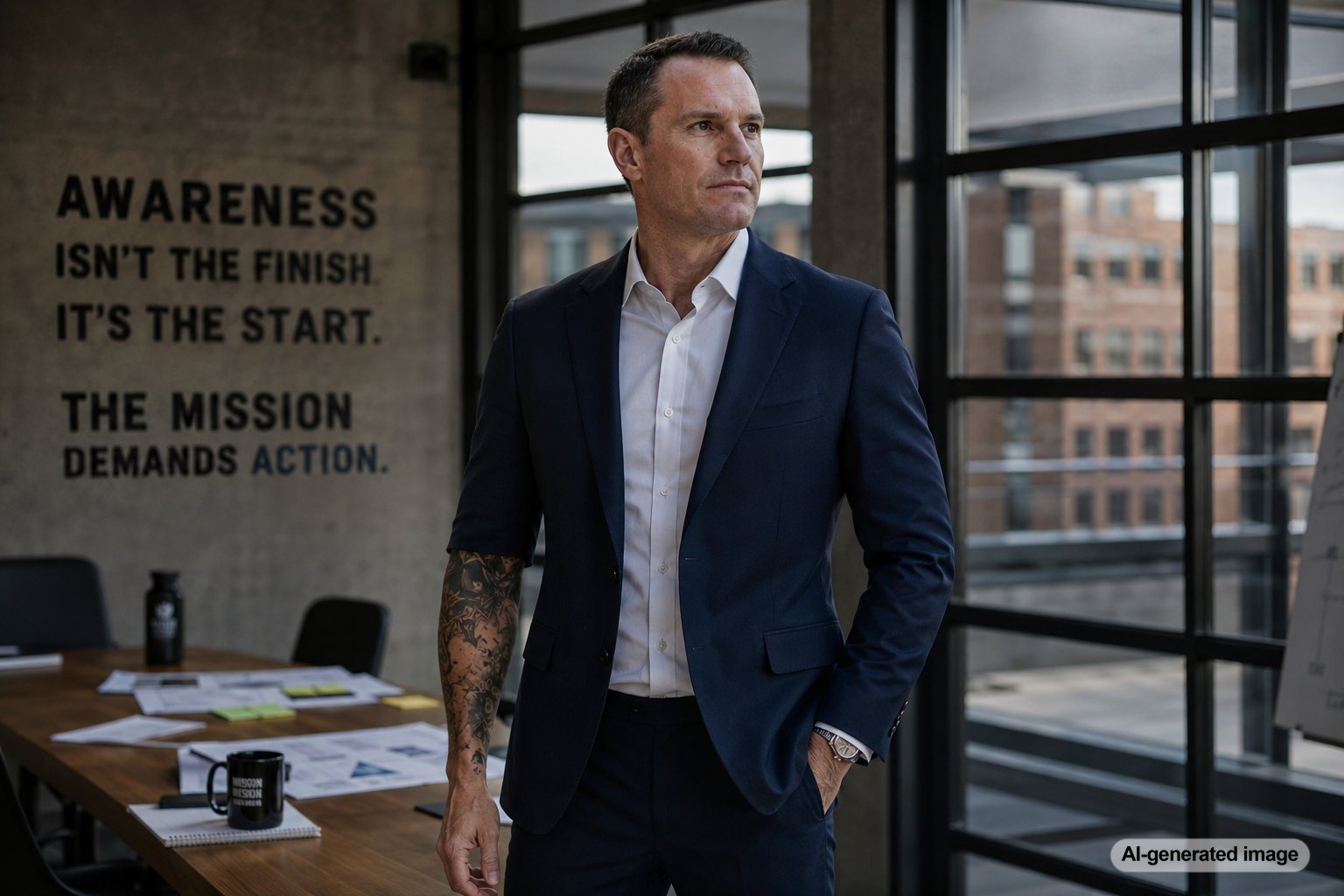
Awareness matters. It gives an issue a name, brings overlooked experiences into public view, and helps people understand why a mission deserves attention. But awareness is only the beginning. Mission-driven work creates meaningful change when attention becomes informed action, sustained support, stronger systems, and measurable responsibility.
A campaign can reach thousands of people and still leave the underlying problem untouched. A powerful story can move an audience without giving them a useful next step. Real impact begins when people move beyond simply knowing that an issue exists and decide what they are prepared to do about it.
Quick answer
- Awareness helps people recognize an issue, but recognition does not automatically change behavior or conditions.
- Mission-driven work needs a clear path from attention to participation.
- Lasting impact depends on trust, consistency, accountability, and practical action.
- Strong missions give people meaningful roles instead of treating them as passive observers.
- Progress should be evaluated by what changes, not only by how many people saw the message.
Awareness Opens the Door, but It Does Not Complete the Work
Awareness is often the most visible part of a mission. It includes public conversations, media coverage, social posts, events, personal stories, educational campaigns, and symbolic gestures. These efforts can reduce silence and help people feel less alone. They can also attract volunteers, supporters, partners, and decision-makers who did not previously understand the issue.
The limitation is that visibility can create the appearance of progress before meaningful progress has occurred. People may share a message, attend an event, or express support without changing their habits, contributing resources, learning more, or staying involved. The mission becomes familiar, but the conditions surrounding it remain largely the same.
Mission-driven leaders must therefore ask a harder question: What should happen because people are now aware? The answer might involve funding research, improving access, supporting families, changing an organizational practice, volunteering expertise, building partnerships, or creating more inclusive opportunities. Without that bridge, awareness can become an endpoint rather than a beginning.
The Difference Between Attention and Commitment
Attention is temporary by nature. It often rises around an emotional story, an awareness month, a major event, or a widely shared moment. Commitment is different. It continues after the spotlight moves elsewhere.
A committed supporter understands the mission well enough to make deliberate choices. A committed organization aligns its policies, budget, leadership behavior, and community relationships with the values it publicly promotes. A committed advocate keeps learning, even when the issue becomes complex or inconvenient.
This distinction is especially important for causes connected to health, disability, caregiving, youth opportunities, or community support. The people living closest to the issue do not experience it only when the public is paying attention. Their needs continue every day. Mission-driven work must be designed with that reality in mind.
Four Elements That Turn Awareness Into Impact
1. A clear next step
People are more likely to participate when they understand what useful participation looks like. Vague invitations such as “get involved” or “make a difference” may sound encouraging, but they place the burden on the audience to figure out what to do.
A stronger mission offers specific options. Someone might attend an educational session, support a vetted program, introduce a potential partner, volunteer a professional skill, advocate for a practical policy, or help expand access for people facing barriers. Different people have different levels of time, influence, and resources, so there should be more than one responsible way to contribute.
2. Education with depth
Awareness often simplifies a subject so it can reach a broad audience. That can be useful, but meaningful engagement requires more depth. Supporters need enough context to understand who is affected, what obstacles exist, which solutions are credible, and where uncertainty remains.
Good education also protects a mission from becoming a slogan. It encourages people to listen to lived experience, avoid assumptions, and recognize that complex challenges rarely have one dramatic solution.
3. Consistent leadership
A mission gains credibility when leaders demonstrate the same values in ordinary decisions that they promote in public moments. Consistency appears in how teams are treated, how partnerships are chosen, how funds are discussed, how setbacks are acknowledged, and how affected communities are included.
For leaders, this can mean resisting the pressure to chase visibility at the expense of substance. A smaller initiative with clear purpose and responsible follow-through may create more value than a large campaign that generates attention but lacks continuity.
4. Accountability for outcomes
Mission-driven work should be able to explain what progress means. That does not require reducing every human outcome to a number, but it does require honest evaluation.
Useful questions include: Did more people gain access to support? Did a partnership create a lasting resource? Did participants receive something they could use? Did the organization learn from the people it intended to serve? Were commitments completed? What should change next time?
Accountability keeps a mission grounded. It shifts the focus from appearing active to becoming effective.
What People Often Miss About Mission-Driven Work
One overlooked challenge is that awareness can center the messenger instead of the mission. Personal stories are powerful because they make an issue human, but the story should lead people toward a broader understanding of the work. It should not reduce an entire community to one person’s experience or turn hardship into a promotional device.
Greg Schaefer’s platform reflects the intersection of family, business leadership, endurance, adversity, advocacy, and forward motion. That combination matters because mission-driven credibility is rarely built through one identity or one moment. It develops through lived responsibility, repeated choices, and a willingness to keep serving when recognition is absent.
Another missed point is that action should not always mean money. Financial support can be essential, but missions also advance through introductions, expertise, mentorship, event access, thoughtful advocacy, volunteer time, and sustained attention. A strong organization helps people understand where their contribution can be most useful.
How Organizations Can Move Beyond Symbolic Support
Organizations often want to support meaningful causes but struggle to move beyond a public statement or one-time campaign. A more durable approach starts by connecting the mission to existing capabilities.
- Use your platform responsibly. Share useful education, not only branded declarations.
- Build long-term partnerships. Give community organizations time to develop trust and shared goals.
- Offer practical resources. Contribute expertise, space, technology, transportation, introductions, or employee time when appropriate.
- Include affected voices. Do not make assumptions about what a community needs without listening to people with direct experience.
- Review internal practices. Public advocacy carries more weight when workplace policies and leadership behavior reflect the same values.
- Report honestly. Explain what was attempted, what was achieved, and what remains unfinished.
For event planners and team leaders, a meaningful keynote can help begin this process. The best speaking experiences do more than create an emotional high. They give people language, perspective, and practical questions they can carry into their work. Learn more about Greg’s speaking work and how his message connects resilience with responsible action.
The Role of Storytelling Without Empty Inspiration
Stories help people care, but caring must be treated as a starting point. Effective mission-driven storytelling creates emotional connection while preserving dignity, complexity, and agency. It does not ask the audience to admire someone from a safe distance. It invites them to examine their own choices.
A strong story should answer at least one of these questions: What does this experience reveal? What does the audience understand now that it did not understand before? What responsibility follows from that understanding? What realistic action is available?
This is where earned resilience differs from generic motivation. Earned resilience does not pretend that hardship is easy, useful, or automatically transformative. It acknowledges uncertainty while showing that purposeful action remains possible. The message is not that determination solves every problem. The message is that one thoughtful step can still matter.
Why Sustainable Missions Need a Community
No individual can carry a meaningful mission alone. Sustainable work depends on people with different perspectives, strengths, and relationships. Some may bring direct lived experience. Others may contribute operational knowledge, fundraising ability, medical or educational expertise, event access, athletic community connections, or caregiver insight.
A healthy mission does not treat supporters as an audience surrounding one central figure. It builds a community in which people understand the purpose, respect their roles, and remain connected to the people the work is meant to serve.
The Forward Motion Fund reflects this broader approach by bringing attention to aligned areas of impact, including Parkinson’s research, partner and caregiver support, challenged athletes, and youth and education initiatives. The value of that work is not awareness alone. It is the opportunity to connect people, resources, and action around a shared commitment to forward motion.
A Practical Framework for Mission-Driven Action
Leaders, advocates, and supporters can use a simple five-part framework to evaluate whether awareness is becoming impact:
- Understand: Learn from credible information and people with direct experience.
- Define: Identify the specific problem or opportunity the mission is addressing.
- Invite: Give people clear, realistic ways to participate.
- Act: Follow through with resources, partnerships, programs, or changed behavior.
- Evaluate: Review what changed, what did not, and what the next step should be.
This framework also helps protect against performative activity. When a campaign cannot define the intended outcome, describe the action taken, or evaluate what happened, it may be generating attention without advancing the mission.
Frequently Asked Questions
Is awareness still valuable?
Yes. Awareness can reduce stigma, introduce people to an overlooked issue, attract supporters, and create the conditions for action. The problem is not awareness itself. The problem is treating awareness as the final measure of success.
How can a nonprofit or advocacy group encourage action without pressuring people?
Offer several specific participation options, explain how each option helps, and allow people to choose based on their capacity. Clear information and respectful invitations are generally more effective than guilt-based messaging.
What is the difference between advocacy and performative support?
Advocacy involves informed, consistent action connected to the needs of the people affected. Performative support focuses primarily on appearing aligned with a cause, often without meaningful follow-through, accountability, or internal change.
How should organizations measure mission-driven impact?
Measures should match the mission. They may include access created, participants supported, resources delivered, partnerships sustained, behaviors changed, commitments completed, or lessons gathered from the community. Visibility metrics can be useful, but they should not stand alone.
Can one person make a meaningful difference?
One person can take a meaningful step, influence a team, support a program, open a door, or build a relationship. Lasting change usually requires community, but individual action can help that community grow.
The Bottom Line
Awareness tells people that a mission exists. Impact gives them a reason and a way to participate. The strongest mission-driven work connects human stories with education, practical action, consistent leadership, and honest accountability.
Progress is not measured only by how loudly a message travels. It is measured by what people understand, what they choose to do, and whether the work continues after the moment has passed. Awareness can open the door. Mission-driven action is what carries the work forward, one deliberate step at a time.
Interested in bringing Greg’s message to your event or organization?
Learn more about Greg’s speaking work or get in touch to start the conversation.
Contact Greg or learn more about the Forward Motion Fund.
This article is for educational purposes only and is not medical advice. For diagnosis, treatment, or personalized medical guidance, please speak with a qualified healthcare professional.