

Why Endurance Athletes Often Handle Uncertainty Differently
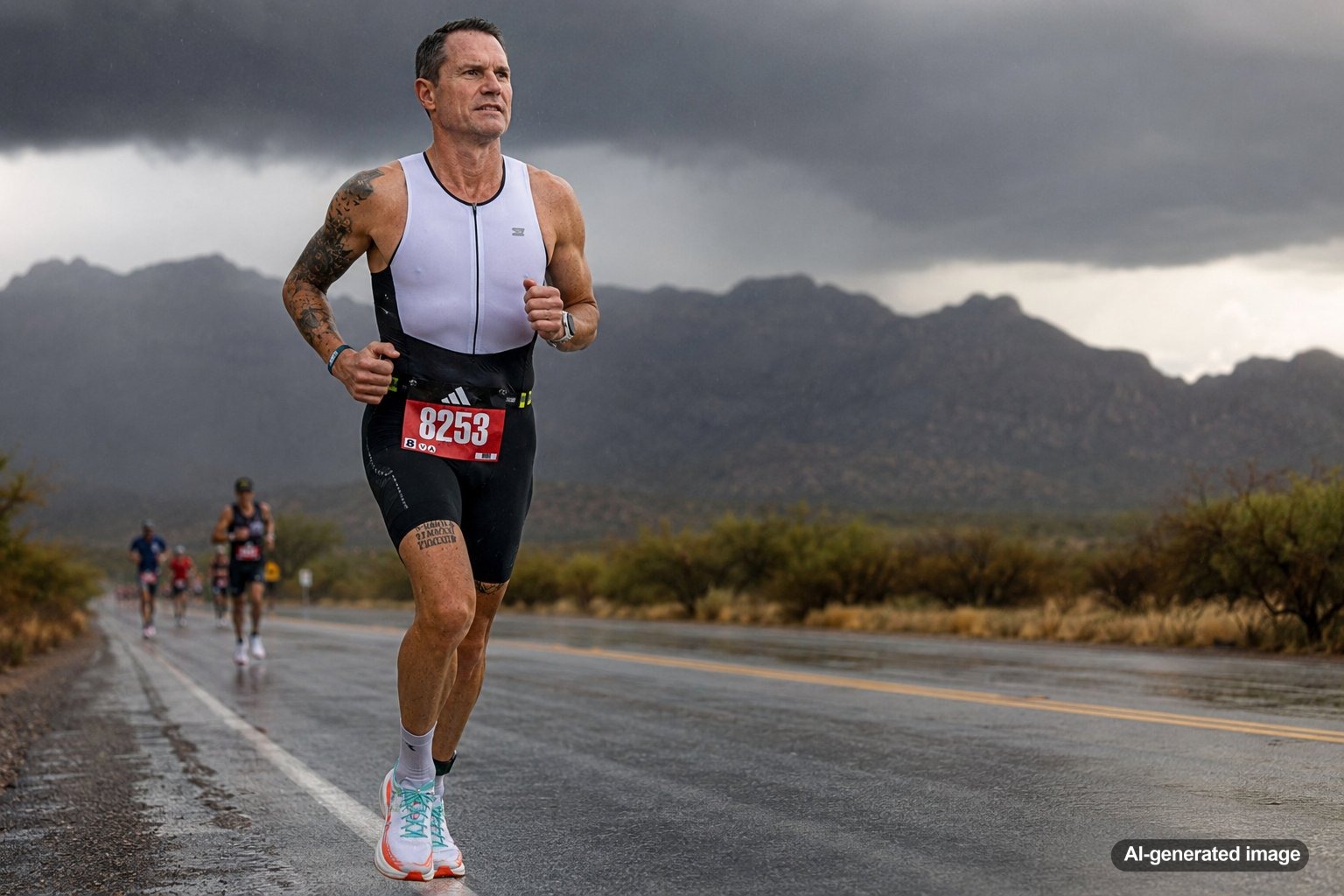
Endurance athletes often handle uncertainty differently because uncertainty is built into the work. A race plan can be thoughtful, detailed, and tested, yet weather, fatigue, equipment, pacing, nutrition, terrain, or an unexpected bad stretch can still change the day. The athlete cannot control every variable. The athlete can control the next decision.
That distinction matters well beyond competition. Endurance training develops a practical relationship with discomfort, incomplete information, and changing conditions. It does not make someone fearless or immune to stress. It can, however, teach a person how to remain useful when the outcome is unclear. That mindset is part of the broader connection between endurance, leadership, resilience, and Greg Schaefer’s lived experience.
Quick answer
- Endurance athletes practice making decisions while tired, uncomfortable, and uncertain.
- They learn to separate controllable actions from uncontrollable conditions.
- They expect plans to change without treating every change as failure.
- They become familiar with delayed results and uneven progress.
- They often focus on the next manageable step instead of demanding certainty about the finish.
Uncertainty is part of the environment, not an interruption
Many people approach uncertainty as though something has gone wrong. Endurance athletes are repeatedly taught the opposite. Uncertainty is not always a disruption to the event. It is part of the event.
A long race may begin with a clear strategy, but no athlete knows exactly how the body will respond several hours later. Wind can change. Temperatures can rise. A familiar pace can suddenly feel expensive. Small issues can become important, while problems that seemed threatening may pass.
The athlete learns to begin with a plan while remaining available to reality. That is different from being careless or improvising everything. Preparation still matters. The difference is that the plan is treated as a guide, not a promise.
They distinguish preparation from prediction
Strong endurance preparation is not an attempt to predict every moment. It is an effort to build enough capacity, awareness, and judgment to respond well when prediction fails.
An athlete may train for heat, hills, fatigue, transitions, nutrition timing, and equipment problems. None of that guarantees a smooth day. It creates options. The athlete has rehearsed enough conditions to avoid becoming completely dependent on one ideal scenario.
This is a useful distinction in business and life. Preparation asks, “What can I strengthen before the pressure arrives?” Prediction asks, “Can I know exactly what will happen?” The first question builds capability. The second can become a search for control that no amount of planning can provide.
They learn to make smaller decisions
Uncertainty becomes overwhelming when every decision feels connected to the final outcome. Endurance athletes often reduce the size of the problem.
During a difficult section of a race, the useful question may not be, “Can I finish?” It may be, “What does the next mile require?” The answer could involve slowing slightly, taking in fuel, relaxing the shoulders, checking form, or reaching the next aid station.
This does not ignore the larger goal. It protects the larger goal from panic. A person can rarely solve an entire uncertain future in one moment, but there is often one useful action available now.
What people often miss
Focusing on the next step is not a lack of ambition. It is a way of keeping ambition connected to reality. Large outcomes are usually reached through a series of decisions that are much smaller than the outcome itself.
They expect emotional weather to change
Endurance events can produce dramatic internal swings. An athlete may feel confident, discouraged, focused, irritated, strong, and depleted during the same day. Experience teaches that no single feeling deserves complete authority.
A bad stretch does not always mean the day is over. A great stretch does not mean the challenge is finished. Feelings provide information, but they are not always accurate forecasts.
This can change how someone responds to uncertainty. Instead of treating anxiety as proof that failure is coming, an experienced athlete may recognize it as a temporary state. Instead of making a permanent decision during a difficult hour, the athlete may adjust, gather information, and allow the situation to develop.
They practice adapting without abandoning the mission
Adaptability is sometimes confused with lowering standards. In endurance sports, adaptation often protects the mission.
Consider an athlete whose original pace is no longer sustainable. Continuing at that pace may look disciplined for a few minutes, but it can destroy the larger objective. A responsible adjustment may involve slowing down, changing nutrition, modifying effort, or redefining what success looks like that day.
The mission can remain steady while the method changes. That lesson applies directly to leadership. Teams need clarity about what matters, but they also need permission to respond to new information. Rigid execution is not always commitment. Sometimes it is an inability to accept what the conditions are saying.
Greg’s speaking work draws on this intersection of endurance, business leadership, adversity, and forward motion. The message is not that every obstacle can be controlled. It is that people can build a stronger response to what they cannot control.
They become familiar with delayed evidence
Endurance progress is often quiet. A single workout may not reveal whether the training is working. Improvement appears through patterns: more consistency, better recovery, steadier pacing, stronger judgment, or the ability to remain composed deeper into an effort.
That experience can make athletes more patient when results are not immediately visible. They understand that useful work may be happening before there is obvious proof.
This does not mean waiting passively or refusing to evaluate a plan. It means using a longer time horizon. One disappointing session, difficult meeting, slow month, or uncertain season does not automatically define the entire direction.
They build confidence from evidence, not certainty
Endurance confidence is rarely the belief that nothing will go wrong. A more durable form of confidence sounds like this: “I have handled difficult conditions before. I know how to assess, adjust, and continue.”
That confidence is grounded in evidence. It comes from training in imperfect conditions, recovering from mistakes, returning after setbacks, and learning that discomfort does not always require an immediate escape.
This is one reason endurance athletes may appear calm in uncertain environments. They are not necessarily more certain about the outcome. They may simply have more trust in their ability to respond.
How this mindset appears outside of sports
The endurance approach to uncertainty can be useful in several common situations:
- During organizational change: A leader can clarify the next decision without pretending to know every future consequence.
- During a personal setback: A person can protect routines, relationships, and responsibilities while allowing time for a new direction to become clear.
- During a difficult project: A team can adjust scope or sequencing without abandoning the purpose of the work.
- During a long recovery or rebuilding period: Progress can be measured through consistency and capacity, not only through dramatic milestones.
The common thread is disciplined flexibility. Keep the mission visible. Stay honest about the conditions. Make the next useful decision. Repeat.
Practical ways to respond to uncertainty like an endurance athlete
Identify what is controllable now
Separate the situation into three categories: what you can control, what you can influence, and what you must accept for the moment. Put most of your energy into the first category.
Use checkpoints instead of constant judgment
Do not reevaluate the entire mission every five minutes. Choose reasonable checkpoints for reviewing progress, conditions, and strategy. This reduces emotional overreaction while preserving adaptability.
Create more than one workable plan
Build a primary approach, a conservative alternative, and a minimum viable next step. Options reduce the pressure to force one plan after it stops fitting reality.
Do not confuse discomfort with danger
Some discomfort signals that effort is required. Other discomfort signals that a change is necessary. Experience, honest assessment, and appropriate professional guidance help distinguish between them. The goal is not to ignore warning signs. It is to avoid treating every difficult feeling as a command to quit.
Return to the next concrete action
When uncertainty becomes abstract and overwhelming, make the problem physical and specific. Send the message. Review the numbers. Take the meeting. Ask for help. Complete the next training session. Rest when rest is the responsible move.
Frequently asked questions
Are endurance athletes naturally better at handling uncertainty?
Not necessarily. Some may be drawn to endurance sports because they already tolerate ambiguity well, while others develop that ability through repeated experience. Training creates opportunities to practice responding to changing conditions, but every athlete handles pressure differently.
Does mental toughness mean ignoring fear or doubt?
No. Useful mental toughness includes noticing fear, doubt, fatigue, and changing conditions without allowing one reaction to control every decision. It also includes knowing when to adjust, seek support, or stop.
Can this mindset be developed without competing in endurance events?
Yes. The same skills can be practiced through challenging projects, consistent physical activity, leadership responsibilities, caregiving, entrepreneurship, or any meaningful commitment that requires patience and adaptation over time.
Why is the next-step mindset so effective?
It reduces the cognitive and emotional weight of an uncertain future. Instead of solving everything at once, a person directs attention toward the next action that can improve the situation or preserve forward progress.
What is the biggest lesson endurance sports offer about uncertainty?
You do not need complete certainty to move responsibly. You need preparation, honest awareness, adaptable judgment, and the willingness to take one more useful step.
Interested in bringing Greg’s message to your event or organization?
Learn more about Greg’s speaking work or get in touch to start the conversation.
Contact Greg or learn more about the Forward Motion Fund.
This article is for educational purposes only and is not medical advice. For diagnosis, treatment, or personalized medical guidance, please speak with a qualified healthcare professional.


