

Why Men Should Track Strength And Waist Size, Not Just Weight
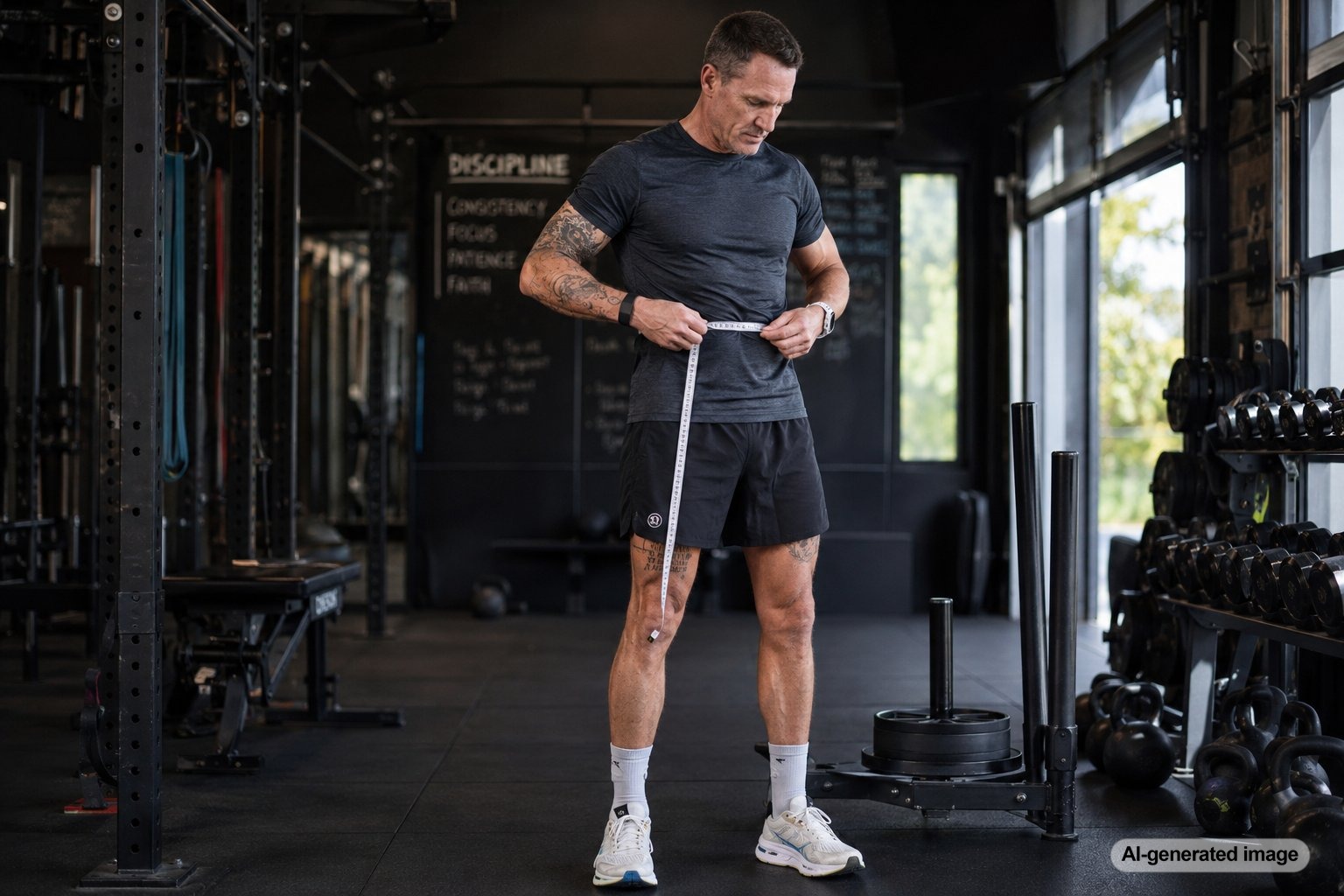
The bathroom scale is simple, familiar, and easy to measure. It is also incomplete. A man’s body weight can move up, down, or barely change while meaningful changes are happening in strength, muscle, fitness, and where body fat is carried. If the only question is, “What do I weigh?” it is easy to miss progress that matters far more in everyday life.
A better approach is to keep weight in perspective and pair it with two additional signals: waist size and strength. Together, those measures can give a more useful picture of physical progress than any single number. This is especially relevant for men who care about staying capable, active, and resilient over the long haul, whether they are training for competition or simply trying to move through life with more strength and energy. That practical focus on continuing to move forward also connects naturally with Greg Schaefer’s broader story of endurance, leadership, family, adversity, and purposeful action.
Quick answer: Why track more than weight?
- Weight cannot tell you what changed. A lower or higher number does not explain changes in muscle, fat distribution, hydration, or physical capability.
- Waist size adds useful context. Waist circumference provides a practical way to monitor changes around the abdomen over time.
- Strength shows what your body can do. Tracking a few repeatable exercises can reveal functional progress that a scale cannot measure.
- Trends matter more than isolated readings. Looking at several weeks or months can be more informative than reacting to one weigh-in or workout.
Weight is a data point, not a complete scorecard
Body weight has value. It is inexpensive to measure, easy to repeat, and useful for identifying a trend. The problem begins when it becomes the only definition of progress.
Imagine two men who both weigh 190 pounds. One has been consistently strength training, has reduced his waist measurement, and can now handle heavier resistance with good form. The other has become less active and has lost strength while his waist has increased. The scale shows the same number, but it is describing two very different situations.
The same issue can happen during a training program. Someone may become stronger while his body weight barely moves. Another person may lose several pounds while also feeling weaker and less capable. Neither outcome can be understood from scale weight alone.
For athletes, leaders, parents, and anyone interested in long-term performance, the better question is not simply, “Did my weight change?” It is, “What is changing in my body, and what can I do now that I could not do before?”
Waist size gives the scale important context
Waist circumference is one useful piece of that broader picture because it provides information about fat distribution around the abdomen. The National Institutes of Health notes that a large waist circumference can be associated with increased health risk, even when body mass index is in a normal range. For men, NIH resources commonly identify a waist circumference greater than 40 inches as a point associated with higher health risk. That number is a clinical reference point, not a universal personal target, and individual circumstances can vary.
The practical value of tracking your waist is not that you need to obsess over fractions of an inch. It is that a consistent measurement can reveal a trend the scale may hide. If body weight remains relatively stable while waist circumference gradually decreases and strength improves, that combination tells a much more useful story than weight alone.
How to make waist measurements more useful
Consistency matters. Use the same general measuring method, similar conditions, and a repeatable schedule. Measuring frequently enough to see a trend is more useful than repeatedly checking for tiny day-to-day changes.
It is also worth resisting the temptation to turn waist size into another number to chase aggressively. The goal is better information, not a new obsession. For questions about healthy weight, waist circumference, or personal risk factors, a qualified healthcare professional can provide individualized guidance.
Strength measures capability, not appearance
Strength is different from weight and waist circumference because it measures performance. It answers a direct question: What can your body actually do?
The National Institutes of Health recommends muscle-strengthening activity for adults and notes that strength training can help maintain muscle and physical function. You do not need an elaborate testing laboratory to monitor your own trend. A few safe, repeatable movements can serve as practical markers when performed under similar conditions.
Depending on your experience, mobility, goals, and available equipment, examples might include the resistance used for a controlled squat or leg press, the number of technically sound push-ups you can perform, a rowing or pulling movement, a loaded carry, or another exercise you can repeat safely. The exact movement matters less than consistency, appropriate technique, and relevance to your abilities.
For an endurance athlete, strength tracking can also provide a counterweight to the temptation to measure fitness only through miles, pace, or race results. Endurance matters, but the ability to produce and preserve force matters too. Greg’s experience as a 20-time Ironman is part of a broader life built around discipline and forward motion, not a belief that one metric defines a person or a performance.
The three-metric approach: weight, waist, and strength
Instead of eliminating the scale, put it in a better system. Weight, waist circumference, and strength each answer a different question.
- Weight: Is total body mass trending up, down, or staying relatively stable?
- Waist: Is the measurement around the abdomen changing over time?
- Strength: Is physical capability improving, holding steady, or declining on repeatable movements?
When these signals move together, the picture can become clearer. When they move in different directions, they can prompt better questions.
Suppose weight is unchanged, waist size is gradually decreasing, and strength is rising. The scale alone might suggest “nothing happened,” while the larger pattern suggests meaningful progress. If weight is falling rapidly but strength is consistently declining as well, that may be worth examining rather than automatically celebrating the lower number.
No single pattern provides a diagnosis, and these measurements should not be used to self-diagnose a medical condition. They are simply tools for paying closer attention to trends.
What men often miss about progress
One overlooked problem with scale-centered thinking is that it can reward the easiest number to change rather than the capability you actually want to build. If your real goals include carrying luggage without struggling, keeping up with your children, performing well at work and in sport, remaining independent as you age, or showing up ready for the next challenge, strength deserves a place on the scorecard.
The measurement system should reflect the life you are trying to live.
A simple way to track without becoming consumed by numbers
You do not need a complicated dashboard. Choose a consistent routine and give the data enough time to become meaningful.
For example, you might record body weight under similar conditions a few times per week and focus on the longer-term trend rather than individual readings. Waist circumference can be checked less frequently, using the same technique each time. Strength can be recorded during regular training by noting resistance, repetitions, or another relevant performance marker.
Then review the pattern periodically. Are you stronger? Is your waist measurement moving in the direction you want? Is your body weight changing in a way that makes sense alongside those other measures? How do you feel during daily activities and training?
The point is not perfect data. It is useful feedback.
Strength becomes more important when the goal is longevity of capability
There is a difference between looking fit and remaining capable. Strength training provides a direct way to work on the second goal. NIH guidance emphasizes muscle-strengthening activity as part of a healthy physical activity routine, and research summarized by NIH has highlighted the importance of maintaining muscle function as people age.
That perspective can change the emotional relationship with fitness. Instead of treating exercise as punishment for what the scale says, training becomes practice for the life you want to keep living.
That idea extends well beyond the gym. Business leadership, endurance training, family life, and adversity all reward the ability to keep working with reality instead of becoming trapped by one discouraging data point. Greg speaks to organizations about resilience and forward motion from lived experience across those worlds. You can learn more about his speaking work and keynote perspective here.
Frequently asked questions
Should men stop weighing themselves?
No. Weight can still be useful when viewed as one data point among several. The problem is not the scale itself. The problem is asking it to tell you more than it can.
How often should I measure my waist?
There is no single schedule that fits everyone. For general personal tracking, consistency is more important than constant measurement. Using the same method at regular intervals can make the trend easier to interpret. A healthcare professional can provide guidance if waist circumference is being monitored for a specific health concern.
What strength exercises should I track?
Choose movements that are safe, repeatable, appropriate for your experience, and relevant to your goals. Examples can include pushing, pulling, squatting, carrying, or other resistance exercises. If you are new to strength training or have medical, balance, mobility, or injury concerns, professional guidance may be appropriate before beginning or changing a program.
Can my waist get smaller even if my weight stays the same?
Body weight and waist circumference do not always move together. Tracking both can provide more context than tracking either measurement alone. Changes in hydration, muscle, body fat, food intake, and other factors can affect the numbers differently.
What matters most: strength, waist size, or weight?
They answer different questions, so there is no need to crown one universal winner. Weight measures total mass, waist circumference adds information about abdominal size and fat distribution, and strength reflects physical capability. Looking at the pattern across all three can provide a more useful personal scorecard.
Interested in bringing Greg’s message to your event or organization?
Learn more about Greg’s speaking work or get in touch to start the conversation.
Contact Greg or learn more about the Forward Motion Fund.
This article is for educational purposes only and is not medical advice. For diagnosis, treatment, or personalized medical guidance, please speak with a qualified healthcare professional.


