

Why Modeling Resilience Is Better Than Teaching It
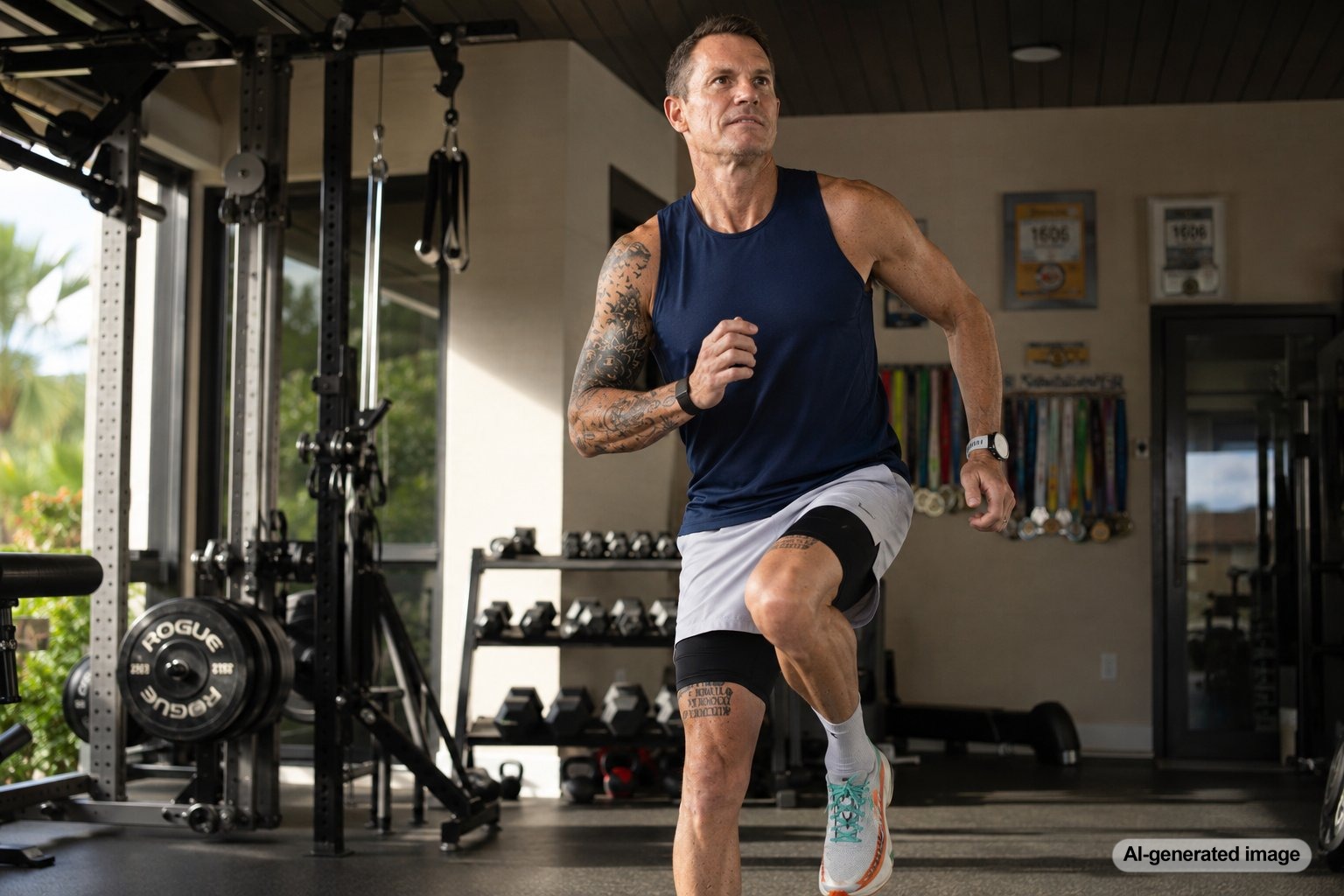
Resilience is often spoken about like a lesson plan. We tell people to be strong, stay positive, push through, keep perspective, and never quit. Those words can be well intended. Sometimes they are even helpful. But the deeper truth is that resilience is rarely learned because someone explained it perfectly. It is learned because someone close enough to watch showed what it looks like when pressure is real.
That is what makes modeling resilience more powerful than teaching it. A person who keeps showing up with honesty, discipline, humility, and purpose gives others something more useful than advice. They give them a pattern to remember when life becomes difficult. For Greg Schaefer, whose story brings together family, business leadership, endurance sports, Parkinson’s advocacy, and the daily choice to keep moving forward, resilience is not a theory. It is a lived practice. You can learn more about Greg’s journey on the About Greg page.
Quick answer
- Modeled resilience is visible, not abstract. People can see the choices, habits, and tradeoffs behind it.
- Teaching resilience can sound simple from a distance. Modeling it shows how complicated, imperfect, and human it really is.
- People trust resilience more when they see it practiced under pressure.
- Leaders, parents, athletes, and advocates often have the greatest influence through what they consistently do, not what they say once.
- The strongest example is not perfection. It is honest forward motion after disruption, loss, uncertainty, or change.
Resilience becomes believable when people can see it
Most people do not need another slogan about toughness. They need a believable example of how to respond when the plan changes. Modeling resilience gives people something concrete. It shows how a person handles frustration, disappointment, fear, fatigue, uncertainty, and responsibility without pretending those things are easy.
That matters because resilience is often misunderstood as emotional armor. In real life, resilience usually looks less dramatic. It may look like getting up early to train when motivation is gone. It may look like having a difficult conversation instead of avoiding it. It may look like asking for help without shame. It may look like staying committed to family, team, work, and mission even when the path is no longer the one you expected.
When someone models resilience, they make the invisible visible. Others can see the discipline before the breakthrough, the doubt before the decision, the recovery after the setback, and the quiet repetition behind the result. That kind of example has weight because it does not ask people to believe in an idea. It lets them witness a way of living.
Teaching can become abstract. Modeling stays grounded.
There is still a place for teaching resilience. Teams, schools, organizations, and families all benefit from language that helps people understand adversity and response. The problem comes when resilience is presented as a clean formula. Life is rarely clean. Pressure does not arrive on schedule. Loss, diagnosis, business uncertainty, athletic disappointment, family stress, and personal change can all overlap in ways that no workshop outline can fully capture.
Modeling resilience keeps the lesson grounded in reality. It does not say, “Here is what you should feel.” It says, “Here is what it can look like to keep moving even when feelings are complicated.” That distinction matters. People who are struggling may not need a perfect answer. They may need proof that imperfect progress still counts.
In Greg’s world, resilience lives at the intersection of many identities. It is not only about racing. It is not only about Parkinson’s. It is not only about speaking or leadership. It is about being a husband, dad, CEO, athlete, advocate, and human being who continues to build meaning after life changes. That broader context makes the example stronger because it reflects the way real people live: with overlapping roles, responsibilities, fears, and hopes.
People remember behavior more than advice
Advice is easy to forget when life gets hard. Behavior is harder to ignore. A leader who remains steady during uncertainty teaches more than a speech about composure. A parent who apologizes, adapts, and keeps showing up teaches more than a lecture about strength. An athlete who respects the process after a bad race teaches more than a quote about grit.
This is especially true in organizations. Teams watch how leaders respond when results disappoint, when markets shift, when conflict appears, or when the next step is unclear. A leader who talks about resilience but reacts with blame, panic, or avoidance creates confusion. A leader who admits reality, communicates clearly, protects trust, and keeps the team focused creates a model others can follow.
The same pattern applies in families and communities. Children, friends, colleagues, and supporters often learn from what is repeated. They notice whether a person keeps commitments. They notice whether strength includes kindness. They notice whether purpose survives inconvenience. Resilience becomes contagious when the example is consistent enough to be trusted.
The strongest models are honest, not flawless
One of the most overlooked parts of resilience is honesty. People sometimes think modeling resilience means hiding pain, never admitting fear, or always appearing strong. That kind of performance can actually make resilience feel unreachable. It teaches people that strength belongs only to those who never struggle.
A better model is more human. It allows room for hard days, unanswered questions, and the need for support. It does not turn adversity into a neat inspirational package. It shows that courage and difficulty can exist in the same person at the same time.
This is where resilience becomes deeply useful. A person who says, “This is hard, and I am still taking the next step,” gives others permission to be honest without surrendering. That balance is powerful. It avoids both denial and defeat. It creates a path between pretending everything is fine and believing nothing can move forward.
Four ways resilience is modeled in real life
1. Through response, not reaction
Everyone faces moments that trigger fear, frustration, or disappointment. The resilient model is not someone who never reacts internally. It is someone who learns to pause long enough to choose a response. That may mean asking better questions, slowing down before making a decision, or focusing on what can be controlled instead of spiraling around what cannot.
2. Through consistency after the emotional high fades
Resilience is often celebrated at the finish line, but it is built in the quiet middle. It shows up in repeated actions that are not glamorous. Training, therapy, planning, communication, recovery, and daily commitments may not look dramatic, but they are often where the real strength is formed.
3. Through accepting support
Resilience is not isolation. Strong people still need strong systems. Family, friends, teammates, clinicians, colleagues, coaches, and community can all matter. Modeling resilience includes showing that support is not weakness. It is part of staying in motion with wisdom.
4. Through purpose beyond self
Resilience becomes more durable when it is connected to something larger than personal achievement. A mission, a family, a cause, a team, or a community can help give effort a deeper reason. Greg’s Forward Motion Fund reflects that kind of purpose by connecting personal adversity with broader impact.
What people often miss
The goal is not to look invincible. The goal is to become trustworthy under pressure. When someone models resilience well, others do not walk away thinking, “I could never be that strong.” They walk away thinking, “Maybe I can take one more step too.”
Why this matters for leaders, teams, and organizations
In a workplace or event setting, resilience can easily become a buzzword. Organizations talk about adapting to change, building culture, managing adversity, and performing under pressure. Those are important themes, but they mean very little unless people can connect them to lived experience.
That is why speakers with real-world credibility matter. Audiences are quick to recognize when a message has been manufactured. They are also quick to recognize when someone has earned the right to speak about adversity, discipline, identity, and forward motion. Greg’s background as an entrepreneur, endurance athlete, husband, dad, and Parkinson’s advocate gives his message a practical foundation. It is not theory delivered from a distance. It is perspective shaped by pressure.
For leaders and teams, the lesson is clear: resilience is not only something to discuss at retreats or annual meetings. It is something to practice in the everyday culture. How people handle change, communicate through uncertainty, recover from mistakes, and support one another becomes the real curriculum.
FAQ
Can resilience actually be taught?
Yes, resilience can be taught in useful ways. People can learn language, tools, habits, and frameworks that help them respond to adversity. But those lessons become stronger when they are paired with real examples. Teaching gives people concepts. Modeling gives them proof.
Why is modeling resilience more effective for teams?
Teams often follow what leaders repeatedly demonstrate. If a leader talks about resilience but avoids hard conversations or reacts poorly under pressure, the message loses credibility. When a leader stays honest, focused, and accountable, the team has a real model to draw from.
Does modeling resilience mean always staying positive?
No. Real resilience is not constant positivity. It includes honesty, grief, uncertainty, and frustration. The key is not pretending everything is easy. The key is continuing to make constructive choices even when the situation is difficult.
How can parents model resilience for their children?
Parents model resilience by showing effort, repair, patience, accountability, and the ability to keep going after setbacks. Children often learn less from polished speeches and more from watching how adults handle everyday disappointment, stress, and responsibility.
What is one simple way to start modeling resilience?
Start by narrating the next honest step. Instead of pretending a challenge does not hurt, name the reality and then identify one constructive action. That small pattern can show others that resilience is not magic. It is movement with intention.
Interested in bringing Greg’s message to your event or organization?
Learn more about Greg’s speaking work or get in touch to start the conversation.
Contact Greg or learn more about the Forward Motion Fund.
This article is for educational purposes only and is not medical advice. For diagnosis, treatment, or personalized medical guidance, please speak with a qualified healthcare professional.


