

Why Resilience Speeches Are In High Demand For 2026
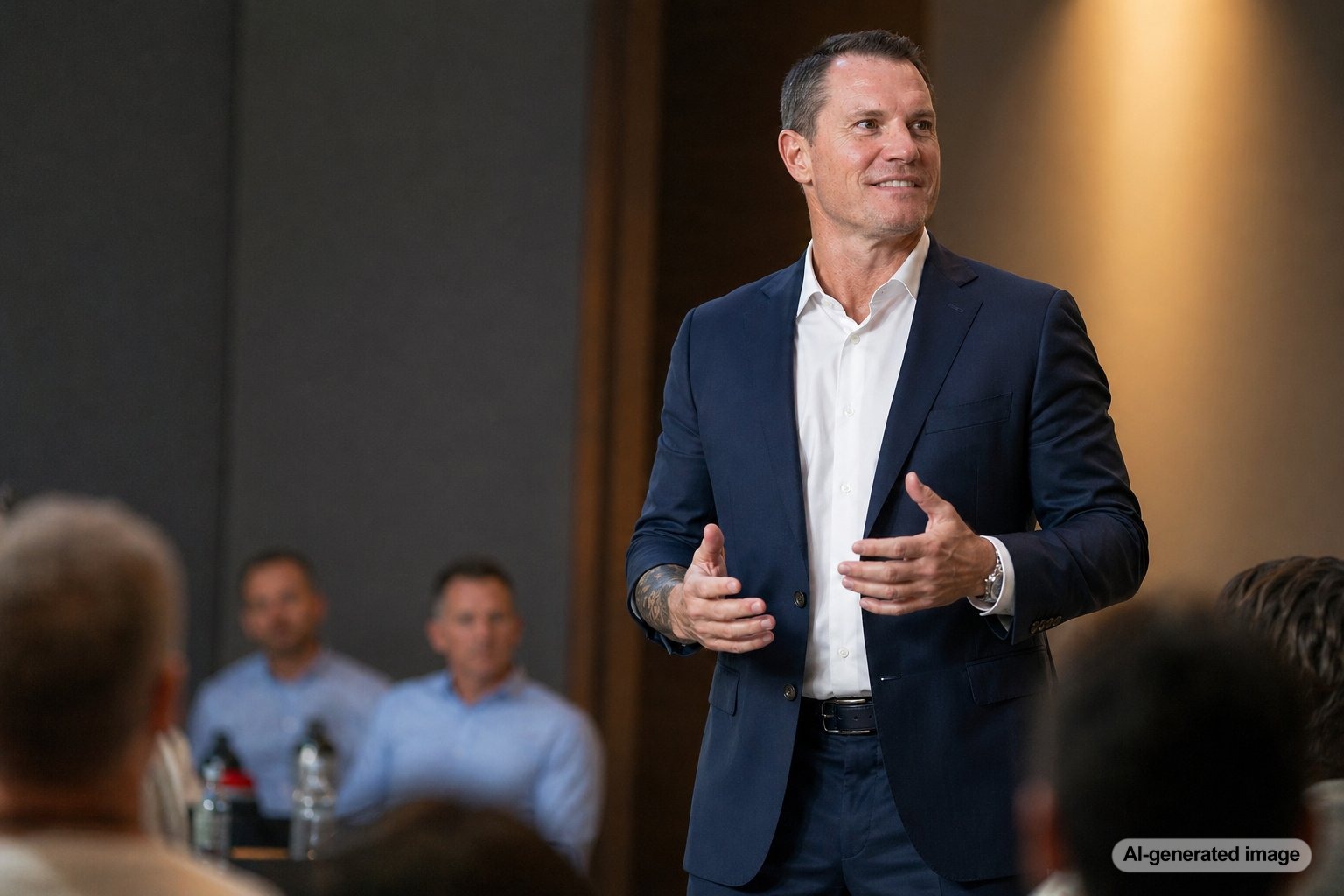
Resilience speeches are in high demand for 2026 because organizations are no longer looking for simple inspiration. They are looking for grounded perspective, practical courage, and a message that helps people keep moving when life, work, health, and uncertainty do not go according to plan.
For event planners, leadership teams, associations, schools, and mission-driven organizations, the right resilience speaker can do more than energize a room. A strong keynote can give people language for adversity, a framework for forward motion, and a human reminder that strength is often built one decision at a time. That is where a speaker like Greg Schaefer brings a different kind of credibility, rooted in family, business leadership, endurance sports, Parkinson’s advocacy, and lived experience.
Quick answer: why resilience speeches are rising in demand
- Organizations need messages that help people navigate uncertainty without pretending it is easy.
- Teams are looking for speakers who can connect resilience to leadership, performance, purpose, and real life.
- Audiences are less interested in empty hype and more interested in earned perspective.
- Event planners want keynotes that feel human, practical, and emotionally intelligent.
- Resilience is now relevant across business, health, athletics, education, caregiving, and community impact.
Resilience has become a leadership issue
For a long time, resilience was often treated as a personal trait. Some people had it, some people needed more of it, and many speeches reduced it to pushing harder. In 2026, the conversation is more mature. Resilience is now tied to leadership, team culture, decision-making, communication, and how people behave when the path gets complicated.
Leaders are facing pressure from every direction. Teams are adapting to change, shifting priorities, personal stress, and professional fatigue. In that environment, a resilience keynote cannot simply tell people to toughen up. It has to help them understand how to stay clear, committed, and connected when conditions are imperfect.
That is one reason resilience speeches are moving from nice-to-have programming into core event strategy. They speak to the emotional and practical reality of modern work: people want to perform well, but they also want to feel that their effort has purpose.
Audiences want credibility, not performance
The demand for resilience speakers is also rising because audiences have become more discerning. They can feel the difference between a polished motivational performance and a message that has been earned through real adversity.
A strong resilience speech does not need to dramatize hardship or turn pain into a slogan. It should show what it looks like to keep showing up with honesty, discipline, and purpose. Greg’s story carries that kind of weight because it is not built on one identity alone. He is a dad, husband, entrepreneur, former CEO, 19-time Ironman, speaker, and Parkinson’s advocate. His message lives at the intersection of responsibility, endurance, uncertainty, and forward motion.
That balance matters. For audiences, resilience becomes more believable when it is connected to everyday choices: showing up for family, leading through pressure, rebuilding after disruption, racing again after a diagnosis, or choosing one more step when the future feels unclear.
Event planners are looking for messages that connect across the room
One reason resilience speeches work well in 2026 is that they can reach many kinds of people at once. In a single audience, there may be executives trying to lead through uncertainty, employees managing burnout, caregivers carrying quiet responsibilities, athletes chasing a goal, and people facing private challenges no one else can see.
A well-crafted resilience keynote gives all of them a place to enter the message. It does not require everyone to have the same struggle. Instead, it honors the fact that adversity has many forms and that forward motion can look different from person to person.
For conferences, corporate meetings, nonprofit events, healthcare gatherings, athletic communities, and schools, that kind of message can create shared language. It can help a room move from passive inspiration to a more useful question: what is the next honest step we can take from here?
The best resilience speeches are practical, not just emotional
Emotion matters in a keynote, but emotion alone is not enough. The most effective resilience speeches give audiences something they can carry back into their work, relationships, training, leadership, and daily decisions.
Practical resilience can include learning how to separate what can be controlled from what cannot, how to stay disciplined without becoming rigid, how to ask for support without seeing it as weakness, and how to keep identity from being defined by one setback. These are not abstract ideas. They show up in boardrooms, families, medical waiting rooms, training plans, team meetings, and moments when people have to decide whether they will shut down or take one more step.
That is why the strongest keynotes often blend story with usable takeaways. A personal story opens the door. A practical framework helps people walk through it.
What people often miss about resilience
There are a few overlooked truths that make resilience speeches especially relevant right now.
- Resilience is not constant confidence. Many people move forward while still feeling uncertain, tired, or afraid.
- Resilience is not isolation. Support systems, family, teammates, clinicians, colleagues, and community often matter deeply.
- Resilience is not denial. Honest acceptance can be more powerful than forced positivity.
- Resilience is not only for crisis. It is also built in preparation, routines, values, and small daily choices.
When a speaker can explain these distinctions clearly, the message becomes more useful. It gives audiences permission to be human while still challenging them to keep moving.
Why 2026 audiences are responding to forward motion
Forward motion is a simple idea, but it carries weight because it does not pretend the road is easy. It does not require perfect answers. It asks for one more step, then another, then another.
For Greg, that message is connected to endurance racing, business leadership, family, advocacy, and living with Young-Onset Parkinson’s. It is also connected to the Forward Motion Fund, which reflects a broader mission to support research, caregivers and partners, challenged athletes, and youth and education initiatives through aligned organizations.
That kind of mission-driven resilience feels especially relevant for 2026 because audiences want more than personal achievement stories. They want examples of adversity being turned into service, connection, and impact. They want to see what happens when forward motion becomes bigger than one person.
FAQ: resilience speeches in 2026
What makes a resilience speech effective?
An effective resilience speech combines a credible personal story with clear, practical takeaways. It should help audiences think differently about adversity, leadership, discipline, support, and purpose without relying on empty motivational language.
Who should book a resilience keynote speaker?
Resilience keynotes can be a strong fit for corporate events, leadership conferences, healthcare gatherings, nonprofit fundraisers, athletic communities, education events, association meetings, and teams navigating change or challenge.
Why are resilience speeches especially relevant for leaders?
Leaders set the tone when conditions are difficult. A resilience keynote can help leaders think about steadiness, communication, accountability, and the daily choices that shape a team’s culture under pressure.
How is a resilience speech different from a general motivational speech?
A general motivational speech may focus mainly on energy and inspiration. A resilience speech should go deeper, connecting adversity to behavior, mindset, values, support systems, leadership, and the choice to keep moving forward in realistic ways.
What should event planners look for in a resilience speaker?
Event planners should look for lived credibility, emotional intelligence, practical takeaways, audience relevance, and a message that feels grounded rather than performative. The best fit is often a speaker whose story connects naturally to the goals of the event.
Interested in bringing Greg’s message to your event or organization?
Learn more about Greg’s speaking work or get in touch to start the conversation.
Contact Greg or learn more about the Forward Motion Fund.
This article is for educational purposes only and is not medical advice. For diagnosis, treatment, or personalized medical guidance, please speak with a qualified healthcare professional.


