
Young-onset Parkinson’s and Athletic Identity: How to Keep Moving Without Denial

For an athlete, movement is rarely just exercise. It can be identity, discipline, stress relief, community, confidence, and proof that hard things can be handled one step at a time. When young-onset Parkinson’s enters that story, the challenge is not only physical. It can also raise a harder question: who am I if my body no longer responds exactly the way it used to?
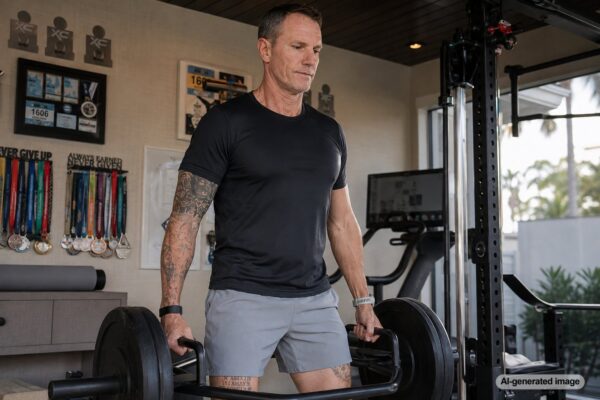
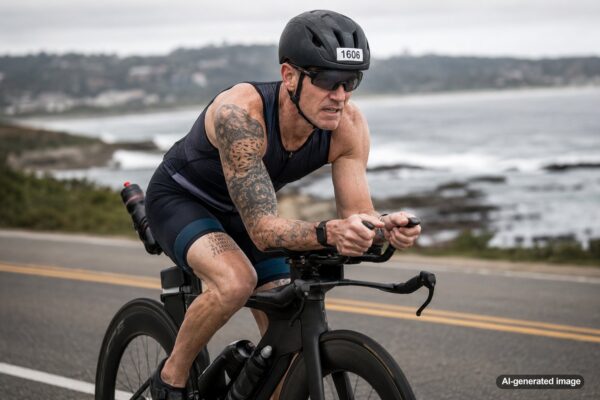
Keeping an athletic identity after a diagnosis does not mean pretending nothing has changed. It means learning how to keep moving with honesty. Greg Schaefer’s story lives in that space: dad, husband, CEO, speaker, 20-time Ironman, and someone living with Young-Onset Parkinson’s who continues to build a life around forward motion. You can learn more about his broader story on the About Greg page.
Quick answer
- Athletic identity can still be healthy after young-onset Parkinson’s when it is flexible, honest, and not built only on performance.
- Denial often looks like refusing to adjust, ignoring symptoms, hiding from support, or measuring every day against a pre-diagnosis version of yourself.
- Movement can remain a powerful anchor, but it should be adapted with professional guidance, recovery, safety, and self-awareness.
- The goal is not to stop being an athlete. The goal is to become a more complete one: disciplined, adaptable, supported, and honest.
The difference between moving forward and pretending nothing changed
There is a thin line between grit and denial. Athletes are trained to push through discomfort, stay consistent, and finish what they start. Those traits can be useful after a Parkinson’s diagnosis, but they can also become a trap if they turn into a refusal to listen to the body.
Moving forward means acknowledging reality without surrendering your whole identity to it. Denial says, “I am exactly the same and nothing needs to change.” Forward motion says, “I am still me, and I am willing to adapt so I can keep living with strength.”
For someone with young-onset Parkinson’s, that distinction matters. Younger people may still be working, parenting, leading teams, building companies, racing, training, and carrying responsibilities that do not pause for diagnosis. The emotional weight can be different when the diagnosis arrives in the middle of an active life rather than near the edge of retirement.
Why athletic identity can feel shaken
Athletes often use training as a language. A long ride, a hard run, a swim set, or a finish line can communicate things that are difficult to say out loud: I am capable. I am disciplined. I can handle pain. I can come back.
Parkinson’s can complicate that language. Symptoms may affect movement, balance, stiffness, energy, mood, sleep, or confidence. The experience varies widely from person to person, but the uncertainty itself can be disruptive. An athlete may wonder whether a slower time means normal aging, training load, stress, medication timing, or disease-related change.
That uncertainty can create a quiet identity conflict. If you have spent years trusting your body as your primary tool for proving resilience, it can feel deeply personal when that body becomes less predictable. The work is not only to keep training. It is to stop using performance as the only evidence that you are still strong.
What denial can look like in an athlete
Denial is not always dramatic. It can be subtle, and it often hides behind familiar athletic habits. It may look like refusing to tell a coach, training partner, spouse, or physician what is really happening. It may look like chasing old numbers at all costs. It may look like skipping recovery because rest feels like weakness. It may look like isolating because you do not want anyone to see the adjustments.
Some athletes deny the emotional side as much as the physical side. They can talk about mileage, heart rate, watts, pace, and race logistics, but not fear, grief, frustration, or the pressure to remain the person everyone thinks they are. That silence can become heavy.
Honesty does not mean making Parkinson’s the center of every conversation. It means refusing to build your life around hiding. There is strength in naming what is real, choosing wise adjustments, and letting trusted people help carry the load.
How to keep moving without making movement your only identity
A healthy athletic identity after young-onset Parkinson’s can still include goals, races, training plans, and competition. It can also include new measures of success that are not limited to pace or podiums.
One useful shift is from outcome identity to process identity. Instead of asking only, “Did I perform like I used to?” the better question becomes, “Did I show up with discipline, awareness, courage, and respect for the body I have today?”
That shift does not lower the standard. It deepens it. It allows an athlete to keep excellence in the picture while adding wisdom. The most resilient athletes are not the ones who never adapt. They are the ones who adapt early enough to keep going.
Practical ways to stay active with honesty
Exercise is commonly discussed as an important part of living with Parkinson’s, and many Parkinson’s organizations describe regular movement as a meaningful tool for mobility, balance, flexibility, strength, and overall well-being. The right approach should be individualized, especially for someone balancing symptoms, medications, training history, injury risk, and ambitious goals.
- Build a knowledgeable care team. A movement disorder specialist, physical therapist, neurologist, coach, or trainer with relevant experience can help translate medical realities into practical movement choices.
- Track patterns without obsessing. Energy, stiffness, balance, sleep, stress, medication timing, and recovery can all affect training. Notes can help you recognize patterns without turning every workout into a verdict.
- Adjust the plan before pride creates a problem. Changing terrain, intensity, volume, recovery days, or race expectations can be a sign of intelligence, not defeat.
- Keep strength, balance, mobility, and aerobic work in the conversation. Many athletes favor the type of training they already love. Parkinson’s may make a broader movement plan more important.
- Let trusted people in. A spouse, training partner, coach, or friend can notice changes, offer perspective, and make the journey less isolated.
What people often miss
One overlooked part of young-onset Parkinson’s and athletic identity is that the loss is not always about sport itself. Sometimes it is about privacy. Sometimes it is about control. Sometimes it is about being seen differently by people who knew you as relentless, capable, fast, strong, or unshakable.
Another overlooked part is that adaptation can become a new form of leadership. When an athlete with Parkinson’s keeps moving honestly, they model something more useful than invincibility. They show teammates, coworkers, children, and communities what it looks like to face reality without letting reality erase purpose.
That is one reason Greg’s message connects beyond endurance sports or Parkinson’s alone. The deeper lesson applies to boardrooms, families, teams, nonprofits, and anyone navigating an unexpected change: forward motion is not the absence of difficulty. It is the decision to keep taking the next honest step.
When support becomes part of strength
Athletes often know how to train hard alone. Living well with Parkinson’s may require a different kind of discipline: accepting support without treating it as a loss of independence.
Support can include medical care, physical therapy, coaching, family conversations, peer connection, mental health support, or Parkinson’s-specific education. It can also include mission-driven involvement, advocacy, and community. For Greg, the Forward Motion Fund reflects the belief that forward motion can extend beyond one person’s story and support research, caregivers, challenged athletes, and youth or education initiatives through aligned organizations.
Receiving support and giving support are not opposites. They often grow together. The more honest a person becomes about what they are facing, the more useful their strength can become to others.
FAQ
Can someone with young-onset Parkinson’s still be an athlete?
Many people with Parkinson’s continue to stay active, train, and participate in sports or endurance events, though the right approach varies by person. A qualified healthcare professional can help evaluate safety, symptoms, treatment considerations, and appropriate exercise choices.
Is pushing through symptoms always a bad idea?
Not every difficult workout is harmful, but ignoring symptoms, balance changes, injury warning signs, or medical guidance can create unnecessary risk. The goal is not fear. The goal is informed courage.
How can athletes know whether they are adapting or giving up?
Adaptation usually keeps you connected to your values while changing the method. Giving up often disconnects you from purpose altogether. A modified training plan, new goal, different race expectation, or added support can still be a strong athletic choice.
Should Parkinson’s become part of an athlete’s public story?
That is personal. Some people feel called to speak openly. Others need time, privacy, or a smaller circle of support. Honesty does not require public disclosure before someone is ready.
Interested in bringing Greg’s message to your event or organization?
Learn more about Greg’s speaking work or get in touch to start the conversation.
Contact Greg or learn more about the Forward Motion Fund.
This article is for educational purposes only and is not medical advice. For diagnosis, treatment, or personalized medical guidance, please speak with a qualified healthcare professional.