
Is Cold Plunging Good for Recovery or Just Hype?
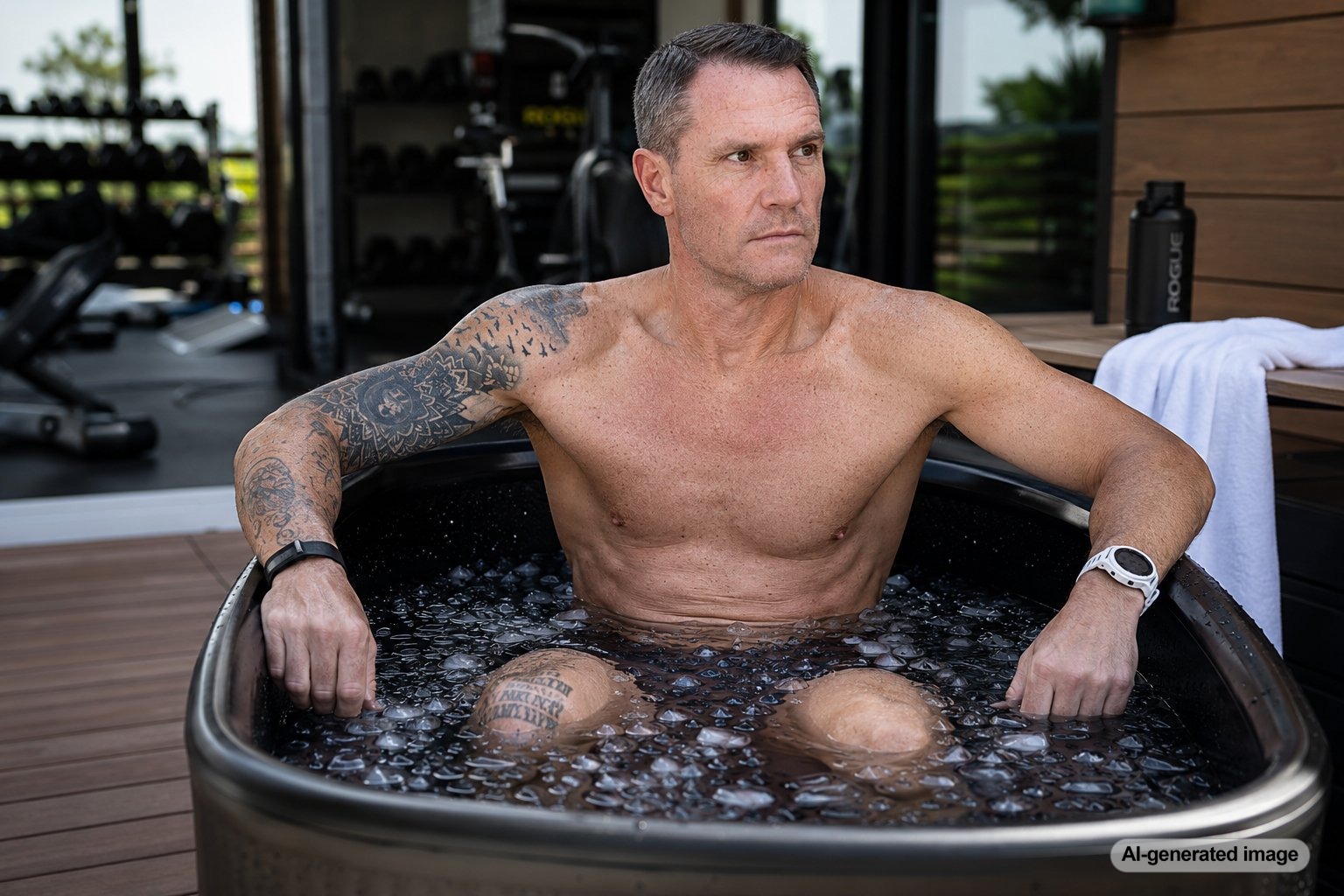
Cold plunging has moved from elite training rooms into backyards, gyms, recovery studios, and social feeds. For athletes, high performers, and people who like testing their edge, the appeal is obvious: step into discomfort, breathe through it, and come out feeling sharper.
So is cold plunging good for recovery or just hype? The most honest answer is: it can be useful, but it depends on what you mean by recovery. A cold plunge may help reduce perceived soreness after hard exercise, and for some people it becomes a powerful mental reset. It is not a shortcut around sleep, smart training, nutrition, mobility, or medical care. For someone like Greg Schaefer, whose world brings together endurance, family, business, adversity, and forward motion, the lesson is bigger than the tub: useful tools matter, but they only work when they serve the mission instead of becoming the mission.
For more on Greg’s story and the broader message behind forward motion, visit the About Greg page.
Quick answer: cold plunging can help, but it is not magic
- It may reduce soreness after hard exercise. Research on cold water immersion suggests some benefit for delayed onset muscle soreness compared with passive rest.
- It may make you feel more alert and mentally reset. Many people value the breathing, discipline, and controlled discomfort as much as the physical effect.
- It may not be ideal immediately after every strength session. Repeated cold exposure right after resistance training may blunt some strength or muscle-building adaptations.
- It does not replace the basics. Sleep, progressive training, fueling, hydration, mobility, and stress management remain the foundation.
- It is not right for everyone. People with cardiovascular concerns, blood pressure issues, cold sensitivity, neurological symptoms, or other medical considerations should ask a clinician before trying it.
Why cold plunging feels so powerful
Cold water creates an immediate stress response. Your breathing changes. Your heart rate can rise. Your body has to regulate temperature. That intensity can make the experience feel meaningful, even when the science is more nuanced than the social media story around it.
Part of the appeal is physical. After a long run, a hard ride, a demanding race block, or a high-volume training week, cold exposure can make heavy legs feel less inflamed and less sore. Part of the appeal is mental. You step into something uncomfortable on purpose, stay present, and practice not panicking. That can carry over into sport, leadership, family life, and hard seasons.
The caution is that feeling powerful does not automatically mean it is always the right recovery choice. A tool can be useful in one context and poorly timed in another.
Where cold plunging may actually help
The strongest practical case for cold plunging is short-term soreness management after intense or unfamiliar exercise. If the goal is to feel better between demanding sessions, especially during a race weekend, tournament, travel-heavy schedule, or high-volume endurance block, cold water immersion may have a place.
That does not mean it repairs every tissue faster or improves every performance outcome. A cold plunge can change how sore you feel. It may help you settle down after a demanding effort. It may support a recovery ritual that reminds you to stop, breathe, and reset. Those are real benefits when used honestly.
For endurance-minded people, the key question is not, “Can I tolerate the cold?” The better question is, “What am I trying to recover for?” If tomorrow requires another hard effort, reducing soreness may matter. If the current training block is about adaptation, strength, or muscle growth, the timing may deserve more thought.
Where the hype gets ahead of the evidence
Cold plunging gets overmarketed when it is presented as a fix for everything: inflammation, hormones, mental toughness, sleep, fat loss, longevity, pain, and performance. Some of those areas are being studied, but many claims are broader than the evidence supports.
A recovery method should earn its place in your routine. If it helps you stay consistent, feel better, and approach training with more intention, it may be worth keeping. If it becomes another pressure point, another badge of toughness, or another way to avoid the basics, it may be taking up more space than it deserves.
What people often miss
Recovery is not the same as comfort. Sometimes recovery means reducing soreness. Sometimes it means letting the body adapt to the stress you just gave it. Sometimes it means doing less, eating enough, going to bed, or admitting that the plan needs to change.
The strength training tradeoff
One of the most important distinctions is the difference between recovering for immediate performance and adapting for long-term gains. Some research suggests that frequent cold water immersion soon after resistance training may reduce aspects of strength, power, or muscle hypertrophy adaptation over time.
That does not mean every athlete should avoid cold plunges. It means timing matters. After a heavy lifting session where the goal is muscle or strength adaptation, some athletes may choose to wait several hours or use cold plunging on a different day. After an endurance event, high-soreness day, or competition where the goal is to bounce back quickly, the calculation may be different.
For leaders, athletes, and anyone trying to keep moving forward, this is a useful metaphor: not every hard thing is productive just because it is hard. The right tool at the wrong time can work against the goal.
How to think about cold plunging in a real recovery routine
Instead of asking whether cold plunging is good or bad, think in layers.
- First layer: fundamentals. Sleep, hydration, fueling, and intelligent training load.
- Second layer: context. Are you trying to reduce soreness quickly, support competition readiness, calm your nervous system, or build long-term strength?
- Third layer: response. Do you actually feel better afterward, or are you more stressed, chilled, fatigued, or lightheaded?
- Fourth layer: consistency. Does the practice support your life, family, training, work, and health, or does it become another extreme routine to maintain?
Greg’s message of “One More Step… Just One More.” is not about chasing every trend. It is about building a life of disciplined forward motion. Recovery should support that. It should help you return to what matters with more clarity, not distract you with another performance identity to manage.
Safety and common-sense cautions
Cold exposure is a stressor. That is part of why people are drawn to it, but it is also why it deserves respect. People with heart disease, blood pressure concerns, fainting history, Raynaud’s symptoms, cold urticaria, neuropathy, neurological symptoms, or other medical considerations should speak with a qualified healthcare professional before trying cold plunging.
Even healthy adults should avoid treating cold plunges like a toughness contest. Start conservatively, avoid breath-holding, do not plunge alone in risky conditions, get out if you feel dizzy or unwell, and do not combine cold immersion with alcohol or unsafe environments. The goal is recovery, not proving a point.
So, is it recovery or hype?
Cold plunging is recovery when it is used with a clear purpose, realistic expectations, and respect for the body. It becomes hype when it is sold as a universal answer or used to replace the habits that actually carry the load.
For endurance athletes, business leaders, caregivers, and people navigating hard chapters, the deeper takeaway is simple: recovery is not weakness. It is strategy. Cold water may be one tool in that strategy. The bigger work is knowing when to push, when to pause, and how to keep moving with enough humility to adjust.
FAQ
Does cold plunging reduce muscle soreness?
It may help reduce delayed onset muscle soreness for some people, especially after intense exercise, but results vary and the evidence is stronger for perceived soreness than for broad performance claims.
Should I cold plunge after lifting weights?
It depends on the goal. If your priority is long-term strength or muscle growth, frequent cold plunging immediately after resistance training may not be ideal. If your priority is short-term soreness relief or quick turnaround, it may be more useful.
How cold does the water need to be?
Many studies define cold water immersion as water around 15 degrees Celsius or colder, but practical routines vary. Colder is not automatically better, and safety should matter more than chasing the lowest temperature.
Can cold plunging help mental toughness?
It can be a structured way to practice breath control, discomfort, and composure. Still, mental toughness is built by how you live, lead, train, recover, and show up over time, not by one ritual alone.
Who should avoid cold plunging?
Anyone with heart, blood pressure, circulation, fainting, neurological, or cold-sensitivity concerns should seek medical guidance before trying it. When in doubt, ask a qualified professional.
Interested in bringing Greg’s message to your event or organization?
Learn more about Greg’s speaking work or get in touch to start the conversation.
Contact Greg or learn more about the Forward Motion Fund.
This article is for educational purposes only and is not medical advice. For diagnosis, treatment, or personalized medical guidance, please speak with a qualified healthcare professional.
Sources & further reading
- National Institutes of Health (NIH): Cold-water immersion for preventing and treating muscle soreness after exercise
- Frontiers in Sports and Active Living: Post-exercise cold water immersion effects on physiological adaptations
- National Institutes of Health (NIH): Effects of cold-water immersion on health and wellbeing