How Data-driven Health Can Help Leaders Without Running Their Lives
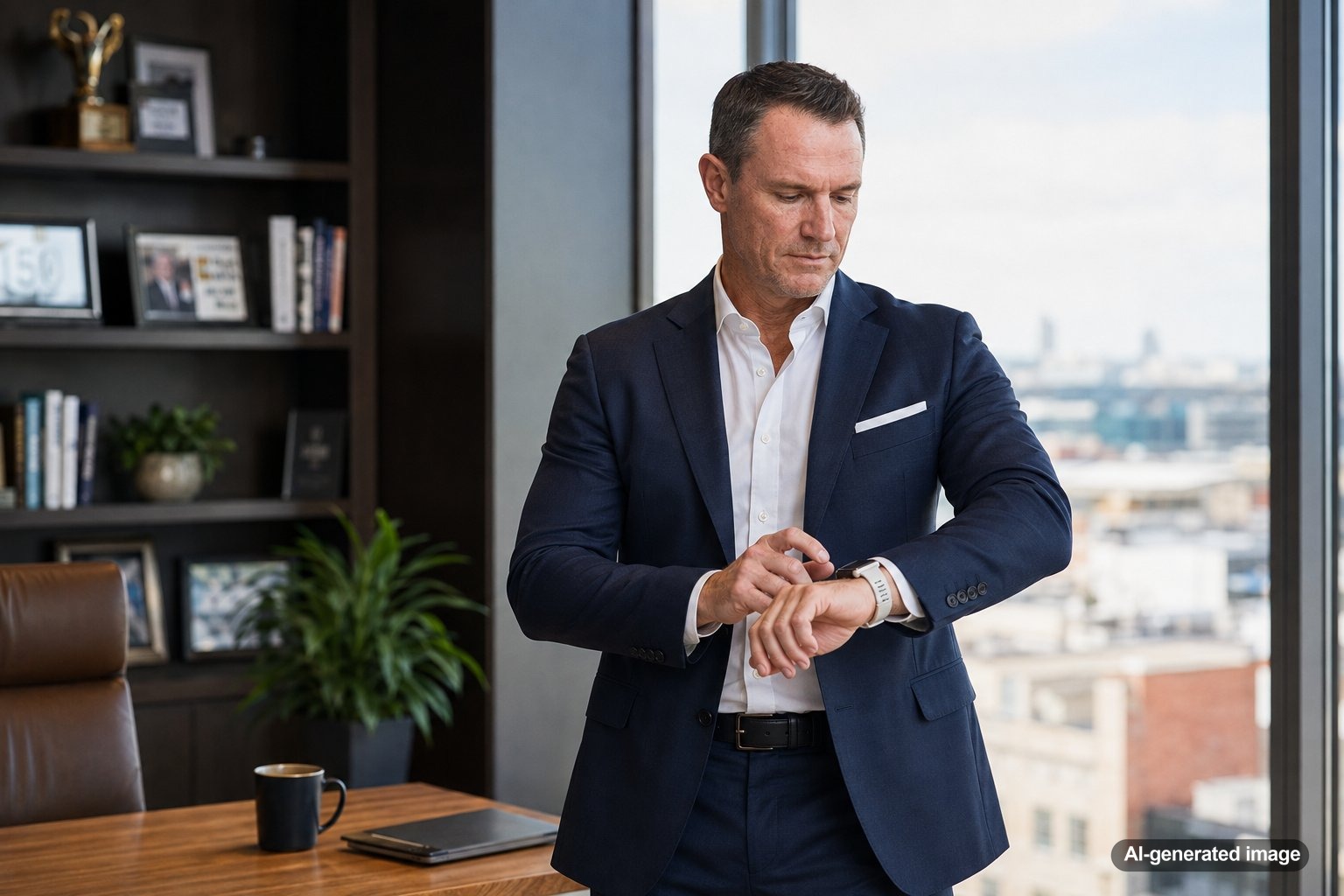
Data-driven health can help leaders make better decisions about energy, recovery, workload, and performance, but only when the data serves the person instead of controlling the schedule. The most useful approach is not to track everything. It is to select a few meaningful signals, notice patterns over time, and use those patterns to make modest adjustments.
A watch, ring, training platform, or simple journal can provide useful context. None of them knows the full story. Leadership still requires judgment, self-awareness, conversation, and the willingness to adapt when life refuses to fit neatly inside a dashboard.
Quick answer
- Track a small number of metrics connected to a specific leadership need.
- Look for trends across days or weeks instead of reacting to one score.
- Combine device data with personal observations and feedback from people you trust.
- Use the information to support decisions, not to surrender decisions to an algorithm.
Start with a decision, not a device
Many people begin health tracking by asking which wearable or application they should buy. Leaders may get more value by starting with a different question: What decision am I trying to improve?
A founder who reaches the end of every week depleted may want to understand the relationship between sleep, travel, meeting density, and perceived energy. A senior executive preparing for a demanding presentation may want to recognize which routines leave them feeling clear and composed. An endurance-minded leader may want to balance ambitious training with family and work responsibilities.
Those are different problems. They do not require the same measurements. When the decision comes first, data collection becomes more focused and less intrusive. Without that focus, a leader can accumulate dozens of numbers without gaining a single useful insight.
Choose a small set of meaningful signals
More data does not automatically produce more clarity. It can create noise, false urgency, and another stream of notifications demanding attention. A practical starting point is to select two or three signals that relate directly to the question at hand.
Depending on the person and the purpose, those signals might include:
- Sleep duration: A basic record of how much time is being set aside for sleep.
- Resting heart rate or another wearable trend: A piece of context that may be considered alongside workload, travel, exercise, and how the person feels.
- Perceived energy: A simple daily rating recorded without a device.
- Training or movement consistency: A record of whether planned activity is fitting realistically into the week.
- Schedule intensity: The number of high-stakes meetings, late evenings, or travel days in a given period.
The point is not to create a perfect personal laboratory. It is to build a lightweight feedback loop. If collecting the information takes so much effort that it becomes another job, the system is working against its purpose.
Treat trends as context, not commands
A single disappointing score can feel strangely authoritative, especially when it appears in bright colors before breakfast. Yet one reading can be influenced by an imperfect sensor, an unusual schedule, travel, stress, illness, or many other factors. It should rarely dictate an important decision by itself.
Patterns become more useful when they repeat. A leader might notice that three consecutive late client dinners are often followed by lower energy during morning strategy sessions. Another might discover that stacking difficult conversations at the end of a travel week makes patience harder to access. These observations do not prove a universal rule, but they can reveal a personal pattern worth testing.
The distinction matters: data can prompt a question without delivering the final answer. Instead of thinking, “My score is low, so today will be bad,” a leader can ask, “What does this signal suggest, and what support or adjustment would be reasonable today?” That preserves agency.
Combine numbers with human observations
Wearables are good at producing measurements. They cannot fully measure patience with a colleague, presence with a child, confidence during a presentation, or the quality of a difficult decision. Those outcomes still matter.
A short written check-in can make quantitative data more useful. At the end of the day, note energy, focus, mood, physical comfort, and one sentence about the day’s demands. Over time, this creates context that a device may miss.
Feedback from other people also belongs in the picture. A spouse may recognize that travel is taking a toll before a dashboard does. A colleague may notice when meeting preparation has become rushed. A coach or qualified healthcare professional may identify limitations in the way a person is interpreting a measurement.
Strong leaders rarely rely on a single source of business information. Health data deserves the same discipline. Numbers, lived experience, professional guidance, and trusted relationships each reveal something different.
Use data to shape the environment
The best response to a pattern is often an environmental change rather than a heroic promise to try harder. If energy repeatedly drops after a particular kind of week, the answer may involve changing the calendar, the travel plan, or the distribution of decisions.
Consider a leader who regularly schedules strategic work after a full morning of operational meetings. The data and daily notes show that concentration is consistently lower by that point. The practical experiment might be to protect two early strategy blocks each week and move routine reviews later. The goal is not to optimize every minute. It is to stop placing the most valuable work in a predictably difficult window.
Another leader might notice that exercise disappears during travel because the original plan requires equipment and a long uninterrupted session. A more realistic travel routine could preserve consistency without turning movement into another test of willpower.
Small changes are easier to evaluate. Change one variable, observe the result for a reasonable period, and decide whether the adjustment helped. Constantly redesigning the entire routine makes it difficult to know what actually mattered.
Protect space for flexibility
Leadership, family life, athletic goals, and health needs do not operate on fixed tracks. A child needs attention. A flight is delayed. A team encounters a crisis. A planned workout no longer makes sense. A rigid tracking system can turn normal adaptation into a feeling of failure.
A useful system leaves room for exceptions. It distinguishes between a long-term pattern and a difficult Tuesday. It also recognizes that rest, support, or a changed plan can represent disciplined leadership rather than a lack of toughness.
This principle is familiar in endurance sports. The plan provides direction, but conditions still matter. Experience is not the refusal to adjust. It is the ability to protect the larger mission when circumstances change.
Know when tracking is taking too much
Health data stops being helpful when it repeatedly increases anxiety, overrides common sense, disrupts relationships, or makes a person feel unable to act without checking a score. Leaders should also be cautious when tracking expands simply because more metrics are available.
Useful warning signs include:
- Checking the same information compulsively throughout the day.
- Allowing one score to determine mood or self-worth.
- Ignoring how the body feels because a device reports something different.
- Adding measurements without knowing what decision they support.
- Treating a consumer device as a diagnosis or substitute for professional guidance.
When those patterns appear, simplifying or pausing the system may help. Questions about symptoms, medications, treatment, or concerning changes belong with a qualified healthcare professional, not a dashboard.
A practical four-week leadership experiment
A limited experiment can provide insight without making tracking a permanent obligation.
Week 1: Define the question
Choose one issue, such as afternoon focus, recovery after travel, or consistency during demanding workweeks. Record only the information needed to understand that issue.
Week 2: Observe without overcorrecting
Continue normal routines where reasonable and look for repeated relationships. Avoid redesigning the plan in response to every daily fluctuation.
Week 3: Test one modest change
Protect an earlier focus block, reduce one late commitment, create a simpler travel routine, or make another specific adjustment connected to the observed pattern.
Week 4: Review the whole picture
Compare the measurements with personal notes, work quality, relationships, and how sustainable the change felt. Keep what helped. Remove what created noise. If the experiment did not produce useful information, that is also a valid result.
The bottom line
Data-driven health works best as a quiet support system. It should help leaders notice patterns, ask better questions, and make thoughtful adjustments while leaving room for judgment, family, work, adversity, and real life. The objective is not a perfect score. It is sustainable forward motion.
Frequently asked questions
How many health metrics should a leader track?
There is no universal number, but a small set is usually easier to interpret and maintain. Start with two or three signals tied to one clear question. Add another only when it has a defined purpose.
Should a wearable score change the day’s schedule?
One score can provide context, but it should not automatically control the day. Consider the trend, how you feel, the reliability of the measurement, and the consequences of changing the plan.
Can health data improve leadership performance?
It may help a leader recognize patterns involving energy, workload, preparation, and recovery. Its value depends on thoughtful interpretation and practical follow-through. It cannot replace leadership skills, relationships, or professional medical guidance.
What if tracking creates more stress?
Simplify the system, reduce how often you check it, or pause tracking. A tool that consistently creates anxiety or distraction is not serving its intended role. A qualified healthcare professional can help with medical questions or concerning symptoms.
Interested in bringing Greg’s message to your event or organization?
Learn more about Greg’s speaking work or get in touch to start the conversation.
Contact Greg or learn more about the Forward Motion Fund.
This article is for educational purposes only and is not medical advice. For diagnosis, treatment, or personalized medical guidance, please speak with a qualified healthcare professional.