
Swim Training For Athletes Who Didn’t Grow Up Swimming
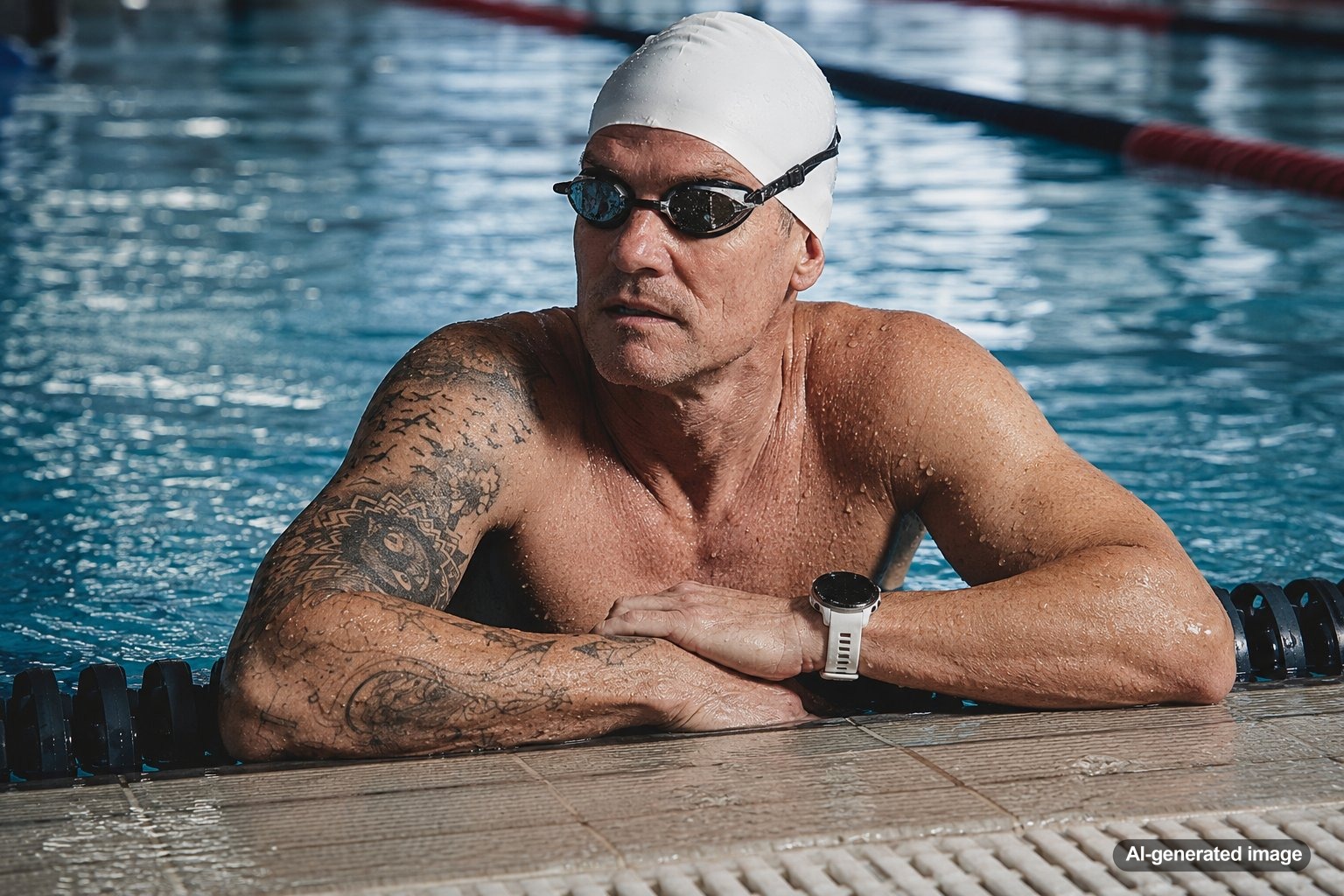
For many endurance athletes, the swim can feel like the part of training that exposes everything at once: breathing, patience, body position, rhythm, confidence, and the ability to stay calm when effort rises. Runners, cyclists, strength athletes, and late-start triathletes often arrive at the pool with plenty of toughness, but not always with the water comfort that lifelong swimmers built years ago.
That does not mean the swim has to stay intimidating. For an athlete who did not grow up swimming, progress usually comes from a different approach: less ego, more feel, and a willingness to treat technique as fitness. Greg Schaefer’s world of endurance, resilience, and forward motion is built on that same idea. Improvement does not always come from forcing harder. Sometimes it comes from learning how to move better, breathe steadier, and take one more step, or in this case, one more stroke. You can learn more about Greg’s endurance and life story on the About Greg page.
Quick answer
- Adult athletes should focus on comfort and technique before adding hard volume.
- Breathing is not just a fitness issue. It is often a timing, tension, and body-position issue.
- Short, frequent swims usually build skill better than rare, exhausting sessions.
- Open water confidence should be practiced gradually, not left until race day.
- The goal is not to swim like a lifelong swimmer. The goal is to become calm, efficient, and durable enough for your event.
Why swimming feels different for athletes who started later
Athletes who come from running, cycling, lifting, or field sports are used to solving discomfort with effort. Swimming does not always reward that instinct. In the water, more force can create more drag. A strong athlete can work very hard and still move slowly if the body position is low, the head lifts to breathe, or the kick is fighting the stroke instead of supporting it.
That can be humbling. A fit cyclist may be able to ride for hours but feel out of breath after 100 yards. A runner with strong lungs may struggle to relax because breathing is limited by stroke timing instead of being available whenever they want it. This is why swim training for adult athletes should not be treated like running with water around it. It is a skill sport with endurance layered on top.
Start with water comfort, not speed
The first useful goal is simple: become less tense in the water. Tension raises the legs, tightens the shoulders, shortens the breath, and makes every stroke more expensive. Many adult swimmers mistake panic or tightness for poor fitness, then try to fix it with harder intervals. That usually reinforces the problem.
Early sessions should include easy repeats where the athlete can stop before form falls apart. That might mean 25-yard or 50-yard repeats with generous rest. It might mean mixing drills, kicking, and relaxed freestyle rather than forcing continuous swimming too soon. The pool is not a place to prove toughness every day. It is a place to build trust with the water.
Breathing is a skill, not a character test
Many athletes who did not grow up swimming describe the same pattern: they feel fine for a few strokes, then the breathing starts to unravel. They lift the head, the hips drop, the stroke gets choppy, and the heart rate spikes. The problem may not be cardiovascular fitness. It may be timing.
A useful breathing goal is to exhale steadily into the water and turn to breathe without lifting the whole head forward. Lifting feels natural because it helps the mouth find air, but it often sinks the body and creates more drag. Turning the head with the body, keeping one goggle near the water when possible, and returning the face calmly can make the breath feel less rushed.
Some athletes benefit from practicing breathing on both sides, not because every race requires perfect bilateral breathing, but because it helps develop balance and awareness. Others may race with a preferred side while still using opposite-side breathing in training as a drill. The key is to make breathing deliberate instead of desperate.
Use drills carefully and connect them to real swimming
Drills can help, but only when the swimmer understands why they are doing them. A drill is not a magic exercise. It is a way to isolate a skill and then carry that skill back into freestyle.
For late-start swimmers, useful drill themes often include body position, relaxed rotation, quiet kicking, catch awareness, and breathing control. A simple structure might be drill, swim, drill, swim. For example, an athlete might do a short balance drill, then immediately swim 25 or 50 yards trying to feel the same balance in the full stroke. This prevents drills from becoming separate pool rituals that never change the actual swim.
Build endurance with repeatable quality
Once the athlete can swim relaxed short repeats, endurance can grow through consistency. The goal is not to leave every pool session destroyed. It is to accumulate clean, repeatable strokes over weeks and months.
A practical session for an adult athlete might include a relaxed warmup, a few technique drills, a main set of manageable repeats, and an easy cooldown. Instead of one long grind where form collapses, a swimmer might use 10 x 100 yards at a pace they can hold with steady breathing. Over time, the rest can shorten, the distance can increase, or the pace can improve. Progress should be measured by control, not just exhaustion.
What adult athletes often miss
- Fitness can hide flaws on land, but water exposes them. Strength helps, but efficiency matters more than force.
- Shorter swims can be more productive. Frequent, focused sessions often teach the body faster than occasional long sessions.
- Open water is a separate skill. Sighting, contact, waves, temperature, and crowding all change the experience.
- Confidence is trained gradually. Calm comes from exposure, preparation, and small wins repeated over time.
Prepare for open water before race week
Pool fitness matters, but open water adds variables that a black line on the bottom of the pool never teaches. Athletes may need to sight, swim near others, manage waves, handle reduced visibility, adjust to temperature, and stay composed when the start feels crowded.
Open water practice should be gradual and safe. Athletes should swim in appropriate conditions, follow local safety rules, avoid swimming alone, and use support when needed. The first goal is not speed. It is orientation and calm. Practice sighting every few strokes. Learn what it feels like to swim without pushing off a wall. Notice how effort changes when there is no clear lane line. These small exposures make race day less surprising.
How this connects to endurance and resilience
Swimming rewards humility. It asks an athlete to slow down enough to learn, then stay consistent long enough to improve. That lesson reaches beyond the pool. It is familiar to anyone who has had to rebuild confidence after uncertainty, injury, diagnosis, or a season of life that did not go according to plan.
For Greg, endurance has never been only about finish lines. It is also about family, leadership, adaptation, and the decision to keep moving forward when the path changes. That perspective is part of what makes his work as a speaker meaningful for teams and organizations. The swim is a useful metaphor because it does not respond to panic. It asks for rhythm, patience, and trust in the next stroke.
FAQ
How often should an adult athlete swim to improve?
For many athletes, two to three focused swims per week can be more useful than one long session. Skill improves through repetition, and swimming often rewards frequent contact with the water.
Should I focus on drills or fitness first?
Start with technique and comfort, then build fitness around better movement. If every hard set reinforces poor breathing or poor body position, more volume may not solve the real problem.
Is it too late to become a confident swimmer as an adult?
No. Adult athletes can make meaningful progress, especially when they approach swimming as a learnable skill instead of a test of toughness. Progress may be gradual, but confidence can grow with consistent practice.
What should I do if open water makes me anxious?
Begin with controlled, safe exposure. Practice with experienced support, choose appropriate conditions, and build familiarity before race day. Anxiety often decreases when the unknown becomes more familiar.
Do I need to swim like a lifelong swimmer to complete a triathlon?
No. The goal is to become efficient, calm, and prepared for the demands of your event. Lifelong swimmers may have an advantage, but adult-start athletes can still become capable and confident in the water.
Interested in bringing Greg’s message to your event or organization?
Learn more about Greg’s speaking work or get in touch to start the conversation.
Contact Greg or learn more about the Forward Motion Fund.
This article is for educational purposes only and is not medical advice. For diagnosis, treatment, or personalized medical guidance, please speak with a qualified healthcare professional.