
What The Bike Course Teaches You About Smart Decision Making
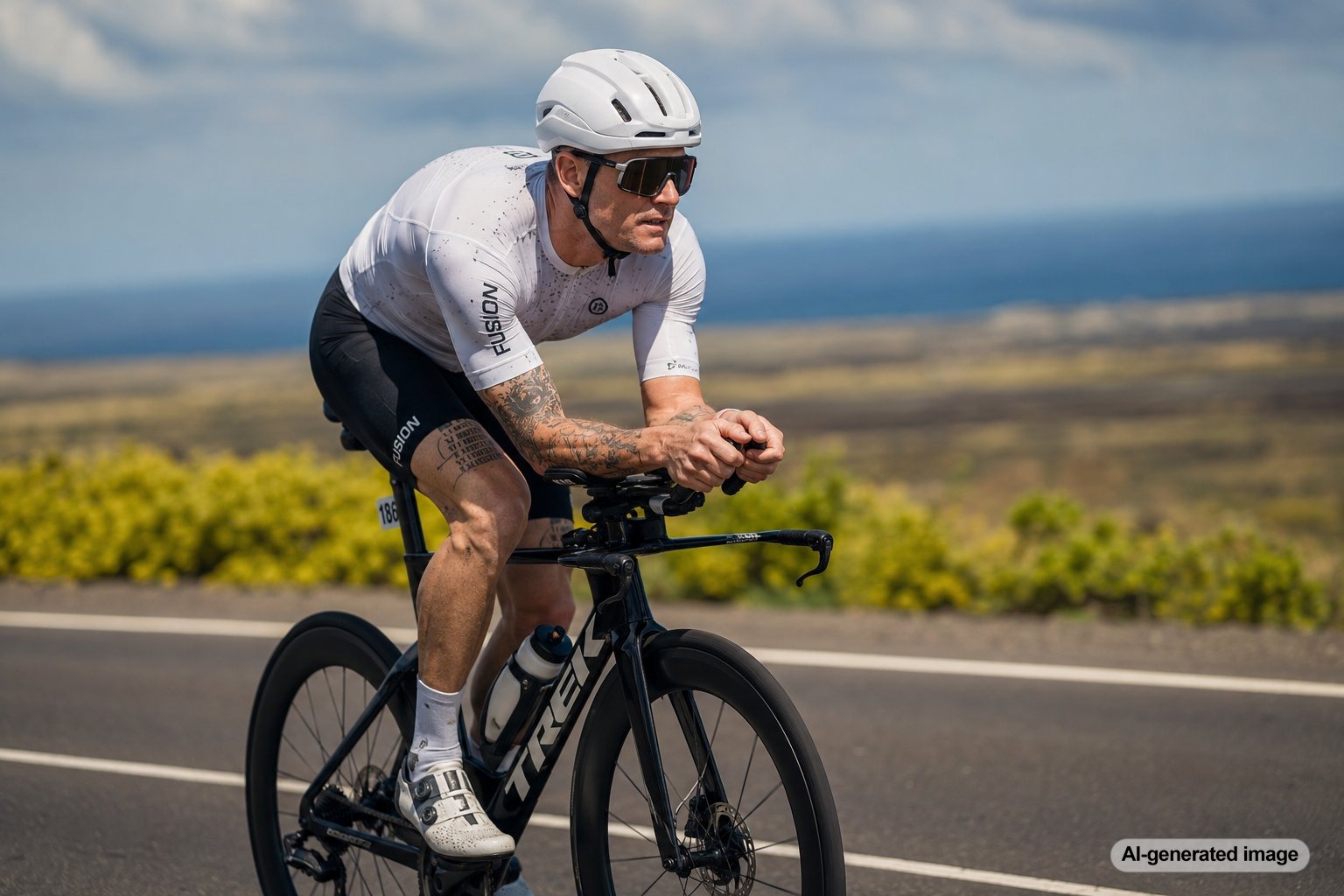
The bike course has a way of telling the truth. It rewards patience, exposes ego, and reminds every athlete that smart decision making is rarely about one dramatic moment. It is usually a chain of smaller choices made when the body is working, the clock is running, and the road keeps changing.
That lesson travels far beyond racing. In business, leadership, family, health, and adversity, the smartest decisions are often the ones that look quiet from the outside. They are the choices to hold back before the hill, stay steady in a headwind, take in fuel before you feel empty, and adjust when the plan no longer matches the conditions. For Greg Schaefer, whose story brings together endurance sports, entrepreneurship, family, advocacy, and life with Young-Onset Parkinson’s, the bike course is more than a race segment. It is a classroom in forward motion. Learn more about Greg’s wider story on the About Greg page.
Quick answer: what does the bike course teach about smart decision making?
- Pace matters early. A decision that feels exciting at mile 10 can become expensive at mile 80.
- Conditions are part of the plan. Wind, hills, heat, and fatigue do not care what the spreadsheet said.
- Small inputs create big outcomes. Nutrition, hydration, cadence, and focus all compound over time.
- Ego is a poor strategist. Chasing someone else’s race can pull you away from your own best outcome.
- Adaptability is not weakness. Adjusting in real time can be the smartest move on the course.
The bike course punishes decisions made too early and too loudly
On the bike, confidence can be useful. Overconfidence can be costly. The opening miles often feel smooth because the adrenaline is still high, the crowd is still fresh in your mind, and the legs have not yet received the full message about what the day will demand. That is exactly when poor decisions can disguise themselves as strength.
Smart racing asks a different question: not just “Can I do this right now?” but “Can I still live with this choice later?” That same question belongs in leadership and life. A founder can overextend the team too early. A manager can react too quickly in a tense meeting. A person facing a difficult season can spend energy trying to prove they are fine instead of protecting the capacity they will need tomorrow.
The bike course teaches that power without restraint is not always power. Sometimes the strongest move is staying within yourself while others surge ahead.
Good decisions account for the whole course, not just the next mile
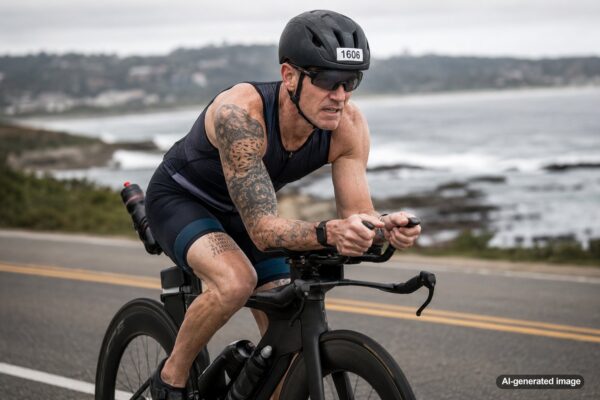
A bike course is not one surface, one wind direction, or one emotional state. It can include climbs that demand patience, descents that require attention, flats that tempt you into overreaching, and crosswinds that make every mile feel more expensive than expected.
That is where smart decision making becomes less about bravado and more about context. The best choice in one section may be the wrong choice in another. Pushing hard into a climb might make sense for one athlete and hurt another. Holding back in a headwind may look passive, but it may be the exact discipline that keeps the rest of the day intact.
In life and leadership, context changes too. The decision that worked during growth may not work during uncertainty. The pace that was sustainable before a diagnosis, a business transition, a family challenge, or a major setback may need to be reconsidered. Smart people do not ignore changing conditions. They read them.
Fuel is a decision, not an afterthought
One of the quiet lessons of the bike course is that smart decisions are often made before the crisis arrives. Nutrition and hydration rarely feel urgent at the beginning. Then, suddenly, they become the difference between steady movement and survival mode.
That pattern shows up everywhere. Teams do not usually burn out because of one hard day. They burn out because support, recovery, communication, and priorities were neglected for too long. Families do not stay strong only through big speeches. They stay strong through repeatable care, honesty, patience, and showing up when it would be easier to withdraw.
Fuel can mean calories on a bike. It can also mean sleep, perspective, community, faith, therapy, training, time with family, or a clear conversation that should have happened sooner. Smart decision making recognizes that capacity has to be maintained. You cannot keep withdrawing from a system you never replenish.
The course teaches you not to chase every rider
Few things test discipline like watching someone pass you. The instinct is immediate: respond, prove, chase, close the gap. Sometimes that response is strategic. Often, it is emotional.
The bike course teaches the value of knowing your own race. Someone else may be stronger on climbs, weaker on the run, riding beyond their ability, or following a completely different plan. If you let every passing rider dictate your decisions, you hand your race to people who do not know your body, your goals, your history, or your limits.
That is a powerful leadership lesson. Not every competitor’s move deserves a reaction. Not every opinion deserves a change in direction. Not every urgent request is actually important. Smart decision making requires enough self-awareness to separate useful information from noise.
Adaptation is a strength, not a failure of the original plan
Every athlete starts with a plan. Then the course begins to speak. The wind is stronger than expected. The legs do not feel the way they did in training. A bottle is missed. A hill arrives with more bite than the elevation chart suggested. At that point, the plan either becomes a tool or a trap.
Smart decision making does not worship the original plan. It respects preparation while staying awake to reality. There is a major difference between quitting on a plan because it gets hard and adjusting a plan because the facts have changed.
Greg’s broader message of forward motion lives in that distinction. Moving forward does not always mean moving at the pace you hoped for. It may mean recalibrating, asking for help, changing the target, or taking one more step when the old version of the plan no longer fits the road ahead.
What people often miss about decision making under pressure
Pressure does not always create new flaws. It often reveals existing habits. On the bike course, an athlete who ignores small signals in training may ignore them on race day. A rider who gets pulled into comparison may lose discipline when surrounded by stronger athletes. A person who treats rest as weakness may struggle to make wise choices when fatigue sets in.
The same is true outside of racing. Under pressure, leaders tend to default to their training. Families default to their communication patterns. Organizations default to their values, or to the absence of them. Smart decision making is not built only in the moment of stress. It is built in the habits that come before the stress arrives.
Bottom-line takeaway
The bike course teaches that smart decisions are rarely flashy. They are paced, informed, humble, and responsive. They protect the mission instead of feeding the ego. They recognize that today’s choice has to work not only in this mile, but in the miles still waiting ahead.
Practical takeaways from the bike course
- Ask what the decision will cost later. A choice can feel strong in the moment and still be unsustainable.
- Respect changing conditions. Plans should guide you, not blind you.
- Protect your capacity. Fuel, recovery, support, and perspective are strategic assets.
- Run your own race. Comparison is information at best, not instruction.
- Make adaptation part of the plan. Flexibility can keep the mission alive when circumstances shift.
FAQ
Why is the bike course such a strong metaphor for decision making?
Because it combines effort, uncertainty, pacing, risk, and delayed consequences. You cannot simply rely on intensity. You have to manage energy, read conditions, and make choices that protect the rest of the day.
How does this apply to leadership?
Leadership also requires pacing, context, and restraint. A leader has to know when to push, when to conserve, when to listen, and when to adjust. The smartest move is not always the loudest or fastest one.
What is the biggest mistake people make under pressure?
One common mistake is confusing reaction with decision making. Reacting is immediate and emotional. Decision making considers the goal, the conditions, the available resources, and the likely consequences.
How does this connect to Greg Schaefer’s message?
Greg’s platform is rooted in forward motion through family, business leadership, endurance sports, Parkinson’s advocacy, and lived adversity. The bike course reflects that same message: keep moving, stay aware, adjust when needed, and take the next right step.
Interested in bringing Greg’s message to your event or organization?
Learn more about Greg’s speaking work or get in touch to start the conversation.
Contact Greg or learn more about the Forward Motion Fund.
This article is for educational purposes only and is not medical advice. For diagnosis, treatment, or personalized medical guidance, please speak with a qualified healthcare professional.