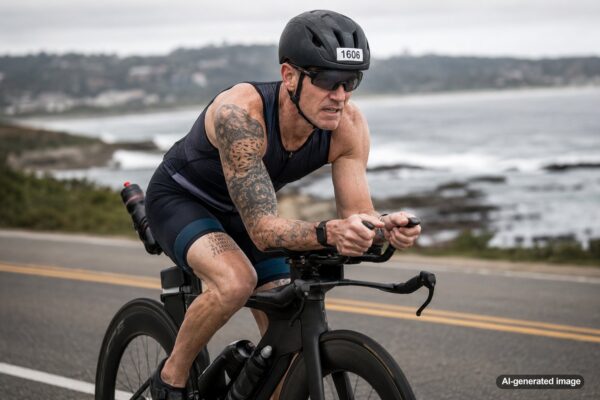

Endurance Sports & Ironman Training – The Athlete Pillar
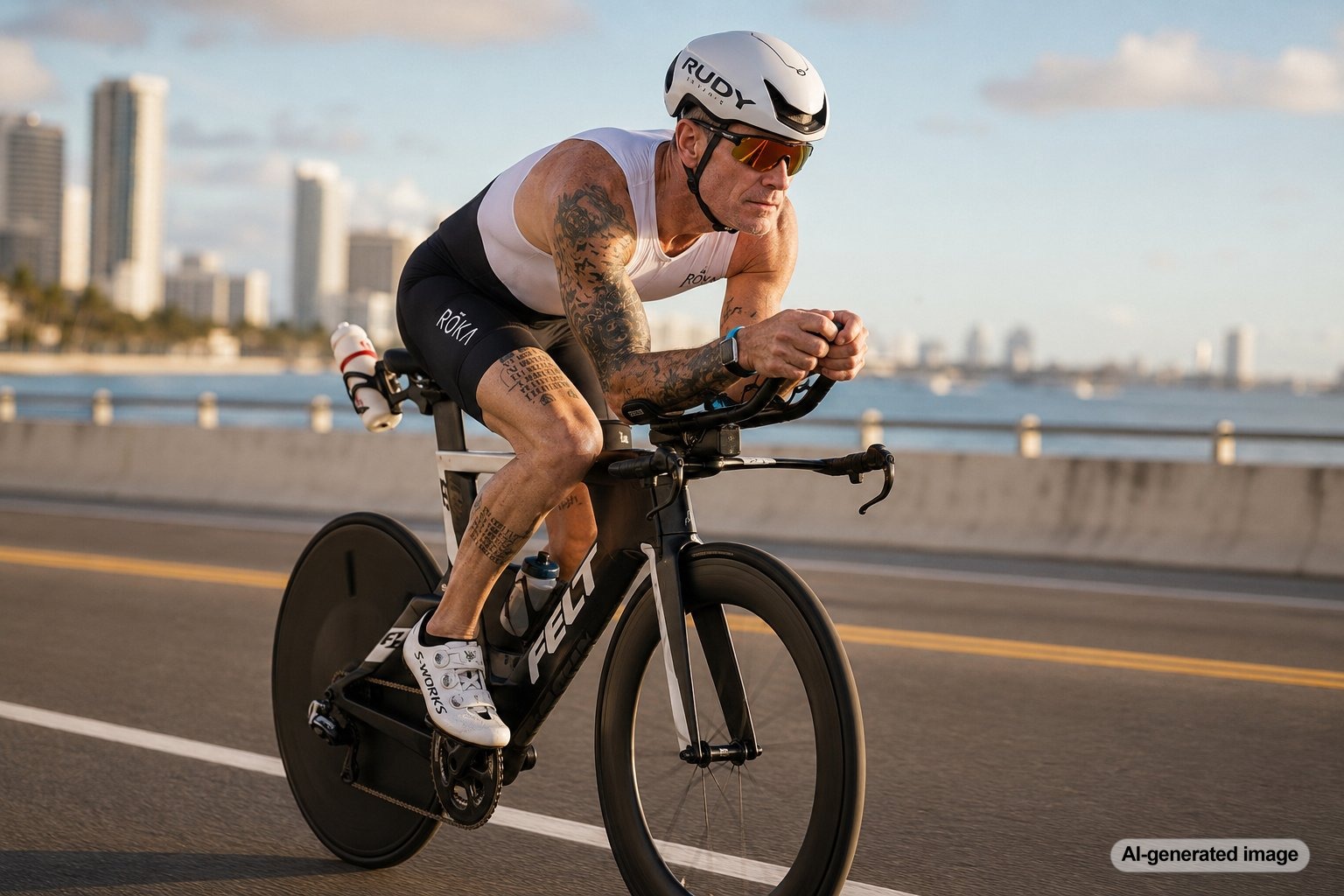
Endurance sports have a way of stripping things down to what matters. The training may involve miles, early mornings, long rides, tired legs, missed expectations, and carefully managed effort, but underneath all of it is a much deeper practice: learning how to keep moving when progress is slow, conditions change, and the finish line still feels far away. For Greg Schaefer, endurance athletics are not a side note in his story. They are one part of a life shaped by family, leadership, business, adversity, advocacy, and a commitment to forward motion.
As a 20-time Ironman, Greg understands that endurance is rarely built through one dramatic breakthrough. It is built through repeated choices, patient preparation, honest adjustments, and the willingness to show up again. That perspective also shapes the broader work Greg brings to organizations through his speaking: meaningful progress usually comes from what people are willing to do consistently, especially when circumstances are less than ideal.
What endurance training really develops
- Consistency: Progress depends more on repeated effort than occasional intensity.
- Patience: Endurance goals demand a long view because improvement rarely happens on command.
- Adaptability: Weather, fatigue, schedules, setbacks, and changing circumstances require adjustment.
- Self-awareness: Sustainable training requires knowing when to push, when to hold steady, and when to change the plan.
- Perspective: Long-distance events teach athletes to focus on the next manageable action rather than becoming overwhelmed by the entire distance.
The athlete pillar is about more than race day
Race day gets the photographs, the finish-line energy, and the visible result. The athlete pillar is built mostly somewhere else. It lives in the ordinary training sessions when no crowd is watching and nothing feels especially heroic. It shows up when an athlete follows a plan, adjusts intelligently, manages competing responsibilities, and returns after a difficult session.
That distinction matters because endurance sports can easily be misunderstood as a celebration of extremes. The deeper value often comes from disciplined repetition. A long-course athlete cannot rely on emotion alone. Motivation rises and falls. Training has to continue through ordinary days, busy weeks, imperfect conditions, and periods when progress is difficult to measure.
Greg’s athletic identity belongs within a larger story. His experience as a husband, dad, former CEO, entrepreneur, speaker, advocate, and athlete gives endurance a different context. The lessons matter not because everyone should become an Ironman, but because the habits required for endurance have practical parallels in leadership, work, family life, recovery from adversity, and mission-driven action. Readers can learn more about that broader story on Greg’s About page.
Consistency beats the search for perfect conditions
One of the most useful lessons from endurance training is that perfect conditions are not a realistic requirement for progress. Athletes train around weather, work obligations, travel, fatigue, family schedules, mechanical problems, changing routes, and days when the body simply does not feel as responsive as expected.
That does not mean ignoring good judgment or forcing every planned workout at any cost. In fact, mature endurance training requires the opposite. Consistency is not blind rigidity. It is the ability to preserve the larger objective while making sensible adjustments to the immediate plan.
Consider two athletes preparing for the same long-distance event. One treats every interruption as evidence that the plan has failed. The other expects interruptions and works within them, modifying a session when necessary while protecting the overall rhythm of preparation. Over months of training, the second mindset is usually more sustainable because it treats adaptability as part of the process rather than as a deviation from it.
The real work happens before you feel ready
Endurance training changes the relationship between preparation and confidence. People often assume they must feel confident before taking on something difficult. Athletes learn that confidence is frequently the result of preparation rather than its prerequisite.
The first long ride of a training cycle may feel intimidating. So can the first demanding brick workout, the first sustained run after a difficult stretch, or the first time an athlete returns to a familiar challenge with different circumstances than before. The useful question is not always, ‘Do I feel completely ready?’ It may be, ‘What is the next piece of preparation I can complete well?’
Over time, those completed sessions become evidence. Not evidence that race day will be easy, but evidence that the athlete knows how to work through uncertainty, recover from difficult efforts, and keep building.
Endurance requires pacing, not constant intensity
One of the clearest differences between endurance performance and short bursts of effort is the importance of pacing. Going hard is not the same as going well. In a long event, intensity that cannot be sustained eventually creates a cost.
The same principle applies to the training process. An athlete who treats every workout like a test may create unnecessary physical and mental strain. Endurance requires a more disciplined relationship with effort. Some sessions are meant to be demanding. Others are about volume, skill, rhythm, recovery, or simply accumulating quality work over time.
This is an overlooked lesson for high-performing people outside sports as well. Ambition can create the temptation to operate at maximum intensity all the time. Endurance thinking suggests a different model: choose an effort level that serves the objective, understand the demands ahead, and preserve enough capacity to continue.
Adaptation is part of the discipline
Training plans are useful because they create structure. They are not valuable because reality always cooperates with them. The stronger discipline is knowing how to remain committed to the goal without becoming unnecessarily attached to one version of the plan.
Athletes encounter unexpected variables constantly. A workout takes longer than expected. Conditions make a target pace unrealistic. Travel disrupts a routine. Equipment needs attention. Energy is different from one day to the next. The athlete who can assess the situation, make a responsible adjustment, and continue without turning every change into a crisis develops a form of resilience that reaches beyond sports.
What people often miss about endurance athletes
From the outside, endurance sports can look like a test of suffering tolerance. That interpretation misses much of what makes long-course training valuable. Strong endurance athletes are not simply willing to endure discomfort. They learn to manage effort, solve problems, respect the distance, control what they can, and respond intelligently to what they cannot.
Mental toughness is not always dramatic. Sometimes it is quiet. It may look like staying patient early in a race, adjusting expectations when conditions change, eating or drinking according to a plan, resisting the urge to chase someone else’s pace, or continuing to make sound decisions when fatigue makes every decision feel harder.
The next step matters more than the whole distance
A full Ironman distance can feel enormous when viewed all at once. So can a long training cycle, a major business challenge, a difficult personal transition, or a mission that will take years to advance. Endurance athletes learn to break distance into smaller units of action.
The next aid station. The next mile. The next turn. The next training session. The next decision.
That approach does not make the larger challenge disappear. It makes the challenge actionable. Instead of spending energy on the entire distance at once, attention moves toward the next thing that can actually be done.
This idea connects naturally with Greg’s broader message: One More Step… Just One More. It is not a promise that every step will feel good or that every outcome will be controllable. It is a practical orientation toward forward motion. When the whole distance feels too large, shrink the horizon and take responsibility for the next meaningful action.
Training can reveal who you are under pressure
Long-distance sports create repeated opportunities for self-observation. How do you respond when a session goes badly? What happens when another athlete is moving faster? Do you abandon the plan because you are frustrated? Can you stay disciplined when nobody is measuring your effort? Can you distinguish discomfort from a signal that something needs to change?
These questions are part of what makes endurance training such a useful development environment. The sport provides feedback quickly. Impatience has consequences. Poor pacing has consequences. Neglected preparation has consequences. But thoughtful decisions compound too.
That is one reason endurance experience can translate so naturally into conversations about leadership and team performance. Leaders also operate across long timelines. They must allocate energy, manage uncertainty, adjust strategy, remain consistent, and avoid letting one difficult moment define the entire effort.
Returning to the start line can matter as much as finishing
Greg’s relationship with endurance sports changed after his Parkinson’s diagnosis in 2023. After a year marked by uncertainty and pain, he returned to the start line in May 2024 and continued racing. That return is important within his story not because endurance sports erase adversity, but because athletics remained one expression of identity, discipline, and forward motion.
There is a meaningful difference between pretending circumstances have not changed and deciding that changed circumstances do not get to define every part of a life. Endurance sports can provide structure for that distinction. Goals may evolve. Expectations may change. Training may require greater adaptability. The athlete still has choices about how to engage with the next step.
This balance is central to Greg’s platform. Parkinson’s is part of his life, but it is not the only lens through which his work, family, leadership, athletics, or advocacy should be understood. The athlete pillar is strongest when it remains connected to the whole person.
Practical lessons from the endurance mindset
You do not need to be preparing for an Ironman to use the principles endurance sports develop. A few ideas translate especially well to everyday challenges:
- Make the next action smaller. When a goal feels overwhelming, identify the next task that can be completed rather than mentally carrying the entire project.
- Protect consistency before intensity. A sustainable rhythm often creates more progress than repeated cycles of overexertion and burnout.
- Separate the plan from the purpose. If circumstances require a change in approach, preserve the objective without treating the original method as sacred.
- Use difficult days as information. One bad session does not define an entire training cycle. Evaluate what happened, adjust what is useful, and continue.
- Respect recovery and capacity. Endurance is built through the full cycle of effort, reflection, adjustment, and readiness for the next demand.
Frequently asked questions
What is the biggest lesson endurance sports can teach?
One of the biggest lessons is that meaningful progress is usually cumulative. Long-term goals are reached through repeated actions, sensible adjustments, and patience rather than one extraordinary effort.
Is mental toughness just about pushing through discomfort?
No. In endurance sports, mental toughness can also mean pacing responsibly, changing a plan when circumstances require it, staying patient, maintaining focus, and making sound decisions while tired. Toughness without judgment is not the same as disciplined endurance.
Why does Ironman training translate well to leadership?
Both require long-range thinking, resource management, adaptability, consistency, and decision-making under pressure. Neither rewards uncontrolled intensity for very long. Sustainable performance depends on understanding the larger objective and managing effort across time.
Do you have to race long distances to develop an endurance mindset?
No. The underlying principles can be practiced in many settings. Consistency, patience, pacing, adaptability, and a focus on the next meaningful action are useful in athletics, work, family responsibilities, personal goals, and mission-driven projects.
How does endurance sports fit into Greg Schaefer’s broader work?
Endurance is one of several connected parts of Greg’s platform. His perspective is also shaped by family, entrepreneurship, business leadership, Parkinson’s advocacy, speaking, and mission-driven work. Athletics provide lived examples of discipline and forward motion, but they are most meaningful as part of that larger story.
Interested in bringing Greg’s message to your event or organization?
Learn more about Greg’s speaking work or get in touch to start the conversation.
Contact Greg or learn more about the Forward Motion Fund.
This article is for educational purposes only and is not medical advice. For diagnosis, treatment, or personalized medical guidance, please speak with a qualified healthcare professional.