

Why HIIT Training is a Game Changer for Parkinson’s Neuroplasticity
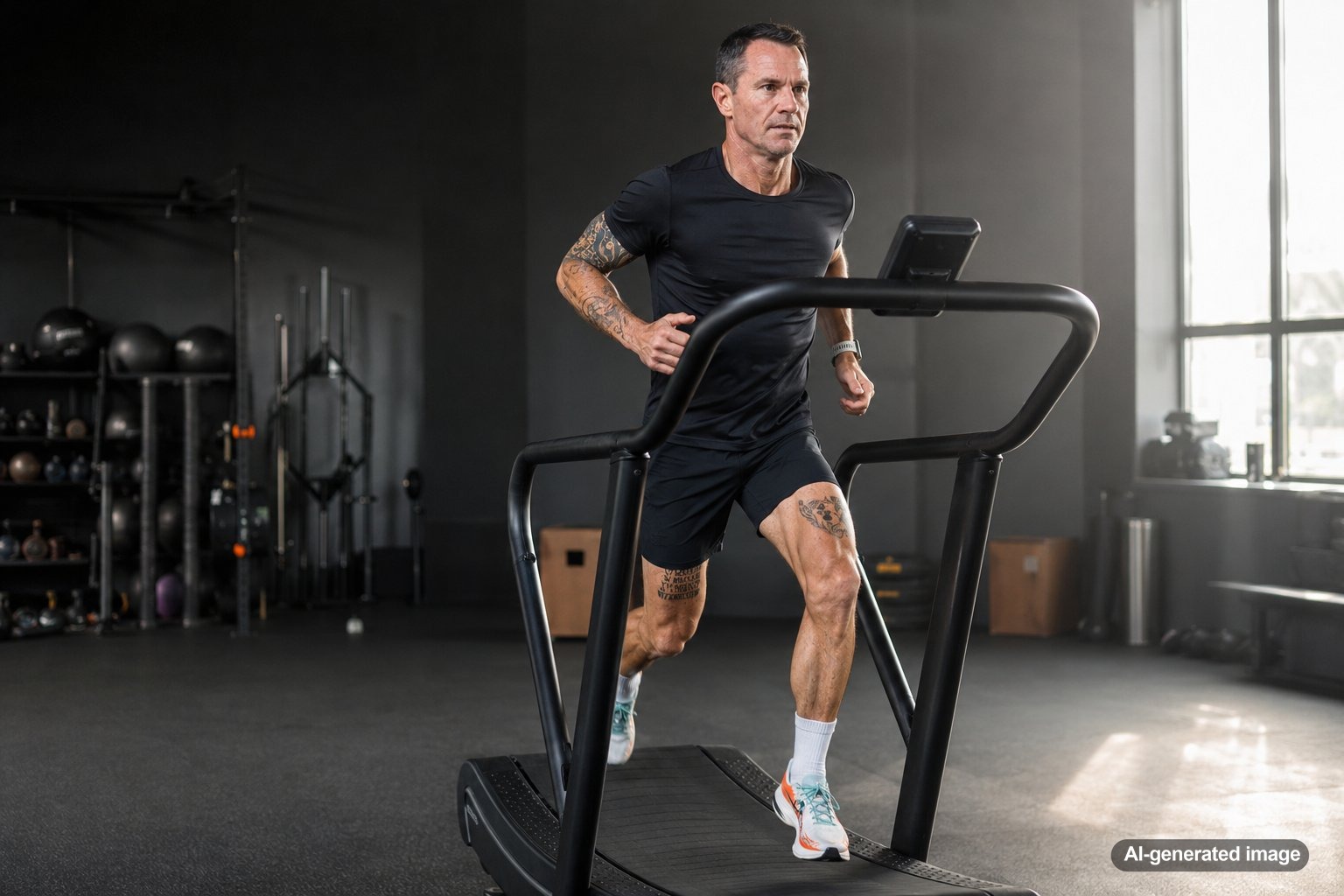
High intensity interval training, often called HIIT, has earned attention in the Parkinson’s community because it does more than challenge muscles. Done safely and appropriately, it may also challenge the brain in ways that support adaptation, learning, and confidence in movement.
For someone living with Parkinson’s, that matters. Parkinson’s can affect movement, energy, mood, balance, and identity. Exercise cannot erase those realities, but it can become a meaningful part of living with more agency. Greg Schaefer’s broader message of forward motion fits this idea well: progress is often built one intentional step, one difficult rep, and one brave return to the starting line at a time.
Quick answer
- HIIT alternates short periods of harder effort with easier recovery periods.
- For Parkinson’s, exercise may support motor and non-motor symptoms, overall health, and brain function.
- HIIT may be especially compelling because intensity, attention, rhythm, coordination, and recovery all place demands on the nervous system.
- It should be individualized, especially for people with balance concerns, heart conditions, fatigue, medication timing issues, or fall risk.
- The goal is not to prove toughness. The goal is safe, repeatable training that helps the body and brain keep practicing adaptation.
Why neuroplasticity matters in Parkinson’s
Neuroplasticity is the nervous system’s ability to adapt, reorganize, and strengthen useful pathways through repeated experience. In simple terms, the brain and body learn through practice. Every step pattern, posture correction, balance drill, cycling interval, treadmill session, or strength movement gives the nervous system information to process.
In Parkinson’s, this concept is especially important because movement can become less automatic. A person may have to think more deliberately about stride length, arm swing, posture, turning, or rhythm. Exercise gives the body structured opportunities to rehearse those movement patterns, especially when the activity is safe, challenging, and repeated over time.
The Parkinson’s Foundation notes that exercise and physical activity can improve many motor and non-motor Parkinson’s symptoms, and its exercise guidance emphasizes aerobic activity, strength training, balance, agility, multitasking, and flexibility as important components of a well-rounded program. Parkinson’s Foundation exercise guidance frames movement as a broad strategy rather than a single perfect workout.
What makes HIIT different from steady exercise?
Steady exercise has value. Walking, cycling, swimming, rowing, strength training, yoga, boxing-inspired classes, stretching, and balance work can all play useful roles depending on the person. HIIT is different because it asks the body to move between effort and recovery in a structured way.
A HIIT session might include short bursts of faster cycling, brisk treadmill walking, uphill walking, rowing, bodyweight movements, or low-impact conditioning, followed by easier recovery. The exact format should depend on fitness level, symptoms, safety, and medical guidance.
That shift between effort and recovery is part of why HIIT can be so engaging. It requires focus. It asks the person to regulate breathing, posture, speed, and control. It can also create a measurable sense of progress: one more interval, one more minute, one more carefully chosen challenge.
Why HIIT may support brain-body adaptation
HIIT is not powerful because it is punishing. It is powerful because it can create a strong learning environment. The nervous system gets repeated signals: increase effort, recover, coordinate, stabilize, repeat. For people with Parkinson’s, that combination can make training feel more purposeful than simply checking a box.
Several factors may help explain the interest in HIIT and Parkinson’s neuroplasticity. First, higher effort often demands more attention. Second, interval structure creates clear feedback. Third, repeated transitions between challenge and recovery may help people practice control under changing conditions. Fourth, the emotional side matters: completing a hard but safe interval can rebuild trust in the body.
The Michael J. Fox Foundation describes exercise as an important tool for living well with Parkinson’s and notes that regular movement supports strength, flexibility, mood, and brain function. MJFF’s exercise overview also emphasizes that the best routine is often one that is safe, sustainable, and matched to the individual.
What the research suggests, without overstatement
Research on exercise and Parkinson’s continues to evolve. A phase 2 randomized clinical trial published in JAMA Neurology examined high intensity treadmill exercise in people with early Parkinson’s who were not taking medication and looked at feasibility, safety, and motor symptom outcomes. That NIH-indexed clinical trial helped fuel deeper interest in intensity, aerobic conditioning, and Parkinson’s exercise research.
At the same time, no single exercise format should be treated as the answer for every person. APDA notes that aerobic activity or high intensity exercise may be particularly important for Parkinson’s and general health, while also emphasizing the value of a balanced approach. APDA’s exercise guidance points readers toward endurance, strengthening, balance, and stretching rather than a one-dimensional program.
That nuance matters. HIIT can be a valuable tool, but the broader principle is consistent, appropriate, progressive movement. For some people, HIIT may mean vigorous cycling intervals. For others, it may mean carefully supervised sit-to-stand intervals, brisk walking segments, or low-impact efforts that raise the heart rate without increasing fall risk.
Practical ways HIIT can be adapted for Parkinson’s
The safest version of HIIT is not always the hardest version. It is the version a person can repeat, recover from, and build on. A clinician, physical therapist, exercise professional, or Parkinson’s-informed coach can help shape the right approach.
- Use low-impact tools when needed. A stationary bike, recumbent bike, elliptical, or rowing machine may reduce fall risk compared with fast outdoor running.
- Build intervals around control. The work period should still allow safe posture, breathing, and movement quality.
- Respect medication timing and fatigue. Some people move better at certain times of day or during certain medication windows.
- Include balance and strength outside the intervals. HIIT is not a replacement for mobility, flexibility, resistance training, or balance work.
- Track recovery, not just effort. Sleep, soreness, mood, tremor changes, and energy can all help determine whether the training dose is appropriate.
What people often miss about HIIT and resilience
HIIT is often marketed as intensity for intensity’s sake. That misses the deeper lesson. In a Parkinson’s context, the real value may be the practice of returning to effort after recovery. Hard interval. Reset. Breathe. Begin again.
That pattern is familiar to endurance athletes, leaders, caregivers, and anyone navigating a life that did not go according to plan. It is also central to Greg’s message. Resilience is not pretending the hard thing is easy. It is learning how to keep moving with honesty, discipline, support, and purpose.
For organizations, teams, and communities, this is also why Greg’s story connects beyond the race course or the diagnosis. The same principle applies in business, family, health, and mission-driven work: meaningful progress is often built through repeated, deliberate returns to the work. To explore that message for an event or team setting, visit Greg’s speaking page.
FAQ
Is HIIT safe for everyone with Parkinson’s?
No. Safety depends on the individual. Balance, cardiovascular history, blood pressure, fall risk, medication timing, fatigue, orthopedic issues, and current fitness level all matter. A qualified healthcare professional can help determine what is appropriate.
Does HIIT have to mean running?
No. HIIT can be adapted through cycling, rowing, treadmill walking, pool-based work, bodyweight circuits, or other formats. For many people, low-impact options are more practical and safer.
How hard should HIIT feel?
It should feel challenging but controlled. If form breaks down, dizziness appears, balance becomes unsafe, or recovery is poor, the intensity may be too high. The purpose is productive stress, not reckless strain.
Can HIIT replace medication or medical care?
No. Exercise can be part of a broader Parkinson’s care plan, but it should not replace medical care, prescribed treatment, or professional guidance.
What is the best exercise for Parkinson’s?
The best program is usually safe, consistent, enjoyable enough to continue, and broad enough to include aerobic conditioning, strength, mobility, balance, and flexibility. HIIT may be one useful piece of that larger puzzle.
Interested in bringing Greg’s message to your event or organization?
Learn more about Greg’s speaking work or get in touch to start the conversation.
Contact Greg or learn more about the Forward Motion Fund.
This article is for educational purposes only and is not medical advice. For diagnosis, treatment, or personalized medical guidance, please speak with a qualified healthcare professional.


