

How Do You Qualify for an Ironman?
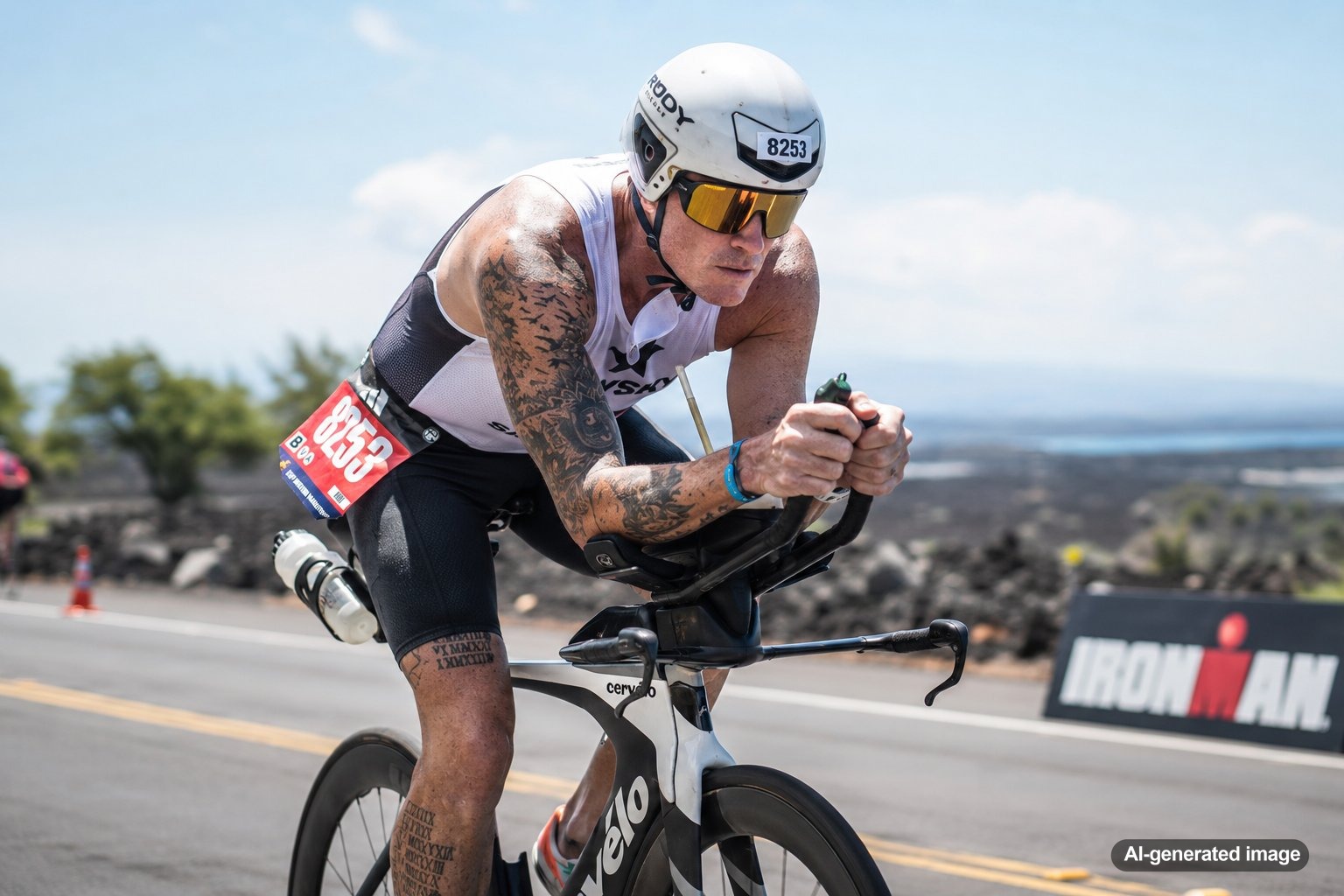
The phrase “qualify for an Ironman” can mean two different things, and that is where many people get confused. If you mean qualifying to enter a standard full-distance Ironman race, most athletes do not need to qualify in the traditional sense. They need to register, meet the event requirements, train responsibly, and be prepared to complete the distance within the rules and cutoffs.
If you mean qualifying for the Ironman World Championship, that is a very different goal. That usually requires racing well at an official qualifying event, earning or accepting a slot through the event’s qualification process, and meeting the current rules for your category. For athletes like Greg Schaefer, a 20-time Ironman, the deeper lesson is that qualification is never only about one finish line. It is about the long pattern of choices that gets you ready to stand at the start.
Quick answer: how do you qualify for an Ironman?
- To enter a regular Ironman race: You typically register for an open event, agree to the rules, and prepare for the full 140.6-mile distance.
- To complete an Ironman: You must finish the swim, bike, and run within the event’s official cutoff times.
- To qualify for the Ironman World Championship: You generally need to race an official qualifying event and earn a slot through the current age-group, professional, or special-category qualification process.
- To be truly ready: You need more than fitness. You need pacing, durability, nutrition discipline, emotional control, and the ability to keep solving problems late in the race.
First, understand which Ironman goal you mean
There is a big difference between entering an Ironman and qualifying for the Ironman World Championship. A full-distance Ironman is a 140.6-mile race: a 2.4-mile swim, a 112-mile bike ride, and a 26.2-mile marathon run. Many official Ironman events are open to registered age-group athletes until the race sells out, provided the athlete meets the event’s eligibility and participation requirements.
The Ironman World Championship is more selective. Athletes usually earn their way there through performance at designated qualifying races. The exact qualification structure can change from year to year, so serious athletes should always review the official rules for the specific race and championship cycle they are targeting.
In plain terms, entering an Ironman asks, “Can I commit to the distance?” Qualifying for a championship asks, “Can I compete at a high level against my field under race-day pressure?” Both are meaningful. They are just not the same challenge.
What you usually need to enter a full Ironman race
For a standard Ironman race, the entry process usually begins with selecting an event, registering before it sells out, and making sure you understand the athlete guide. That guide matters. It covers details such as check-in windows, equipment rules, cutoff times, safety expectations, transition procedures, and race-day logistics.
Most first-time athletes focus on the finish line, but the practical requirements are more layered. You need to be able to swim confidently in open water, ride safely around other athletes, handle long hours on the bike, run or walk the marathon course, and manage fueling across an entire day. You also need to respect the time cutoffs. An Ironman is not only a test of endurance; it is a test of execution.
Athletes often underestimate the non-glamorous parts of preparation: learning what your stomach can tolerate, practicing bottle handoffs, changing a flat, navigating crowded swim starts, and staying calm when the plan breaks. Those small skills can matter as much as big training days.
How Ironman World Championship qualification works
World Championship qualification is typically tied to official qualifying races. Age-group athletes compete within their divisions, and qualifying slots are awarded according to the rules for that race and qualification cycle. In some cases, athletes may qualify by winning an age group. In others, slots may be awarded through performance-based allocation or roll-down if athletes ahead decline their spots.
The important point is that World Championship qualification is not only about finishing. It is about placing, performance, and the current system in place for that event. A strong athlete can have an excellent race and still miss a slot if the field is deep. Another athlete may qualify because they executed well, placed high enough, and were present when slots were offered.
Because qualification rules can change, do not rely on old blog posts, message boards, or what a friend experienced several seasons ago. Check the official race page, athlete guide, and qualification details for the exact event you plan to race.
The difference between finishing fitness and qualifying fitness
Finishing an Ironman and racing for qualification require different mindsets. A finish-focused athlete can build a plan around steady progress, smart pacing, and completing the distance within the cutoff. That is already a serious achievement.
A qualification-focused athlete has to think differently. The margin for error gets smaller. Transitions matter. Bike pacing matters. Nutrition mistakes become more costly. The run is not simply something to survive; it becomes the place where months of discipline either hold together or fall apart.
That does not mean every qualifier trains recklessly or lives like a professional. Many are parents, business owners, full-time employees, caregivers, and people carrying real-life responsibilities. What separates them is often consistency over time. They stack ordinary days with unusual discipline.
What people often miss about Ironman qualification
1. Registration is not readiness. Signing up is a decision. Readiness is built through months of repeated choices. The gap between those two can be wide.
2. The bike sets up the run. Many athletes feel strong early, ride too hard, and pay for it later. A smart Ironman bike leg is not just about speed. It is about preserving the ability to run.
3. Nutrition is a skill, not an afterthought. Fueling has to be practiced. Race-day adrenaline does not make an untested nutrition plan better.
4. Mental toughness looks quiet most of the time. It is not always a dramatic speech or heroic surge. Sometimes it is staying patient when everyone around you is moving too fast. Sometimes it is taking one more step when the day gets heavy.
5. Qualification depends on the field. You can race well and still miss a World Championship slot. You can also learn from that race and come back sharper. The standard is external, but the response is yours.
Practical steps if your goal is your first Ironman
- Choose the right race. Look at course profile, climate, travel demands, elevation, swim conditions, and timing in your personal life.
- Build the calendar backward. Give yourself enough time to develop endurance gradually instead of cramming volume late.
- Respect recovery. More training is not always better. Adaptation happens when stress and recovery are both present.
- Practice race-day systems. Train with the gear, nutrition, pacing, and clothing you plan to use on race day.
- Learn the rules. Drafting, equipment, cutoff times, check-in, and transition rules are part of the race, not side details.
Practical steps if your goal is a World Championship slot
If your goal is qualification, start by studying the current qualification rules and reviewing results from the races you are considering. Some courses may suit stronger cyclists. Others may favor heat tolerance, climbing ability, technical bike handling, or strong runners. Choosing the right course is not a shortcut; it is strategic self-awareness.
From there, your training needs to become more specific. You are not just building the ability to finish. You are building the ability to perform under fatigue. That may include structured intensity, race-pace work, long-course nutrition practice, transition efficiency, strength training, heat preparation, and honest post-race analysis.
It also helps to separate ambition from ego. Wanting a slot is healthy. Pretending the work will be easy is not. The athletes who last in this sport tend to respect both the dream and the process.
What Ironman qualification teaches beyond racing
Ironman has a way of exposing what is already there. It reveals patience, discipline, stubbornness, fear, resilience, preparation, and sometimes the places where life has made someone stronger than they realized. That is part of why Greg’s story connects endurance sports with leadership, family, business, Parkinson’s advocacy, and mission-driven living.
The race is specific, but the lesson travels. Teams, organizations, founders, athletes, and families all understand what it means to keep moving when the road gets harder than expected. That is also why Greg’s speaking work is rooted in more than athletic accomplishment. It is about forward motion when the outcome is uncertain and the next step still matters.
FAQ
Do you have to qualify to enter an Ironman?
For many standard full-distance Ironman races, you do not need to qualify by performance. You generally register for an available event and meet the race’s participation requirements. Always check the official event page because policies, categories, and availability can vary.
How hard is it to qualify for the Ironman World Championship?
It is difficult because qualification depends on performance, field depth, age group, event rules, and the number of available slots. Finishing an Ironman is already demanding. Qualifying for the World Championship usually requires a much higher level of race execution.
Can a first-time Ironman athlete qualify for the World Championship?
It is possible, but not common. A first-time athlete would typically need strong endurance experience, excellent preparation, smart race execution, and a performance that ranks highly under the current qualification system.
What is the biggest mistake athletes make when chasing qualification?
One common mistake is racing the early parts of the day too aggressively. A qualification-level Ironman still requires patience. Burning matches on the swim or bike can destroy the run, even for very fit athletes.
Is Ironman qualification only about talent?
No. Talent helps, but long-course racing rewards consistency, durability, planning, humility, and problem-solving. Many athletes improve over years because they learn how to train, recover, fuel, pace, and compete with greater discipline.
The bottom line
To qualify for an Ironman, first be clear about the goal. Entering a full Ironman usually means registering and preparing for the distance. Qualifying for the Ironman World Championship means earning a slot through the current competitive process. Both require commitment. One asks you to finish the distance. The other asks you to race it at a level where every decision matters.
Either way, the heart of the work is the same: prepare honestly, respect the process, and keep moving forward one step at a time.
Interested in bringing Greg’s message to your event or organization?
Learn more about Greg’s speaking work or get in touch to start the conversation.
Contact Greg or learn more about the Forward Motion Fund.
This article is for educational purposes only and is not medical advice. For diagnosis, treatment, or personalized medical guidance, please speak with a qualified healthcare professional.


