

Indoor Cycling vs. Outdoor Training: Which Builds More Power?
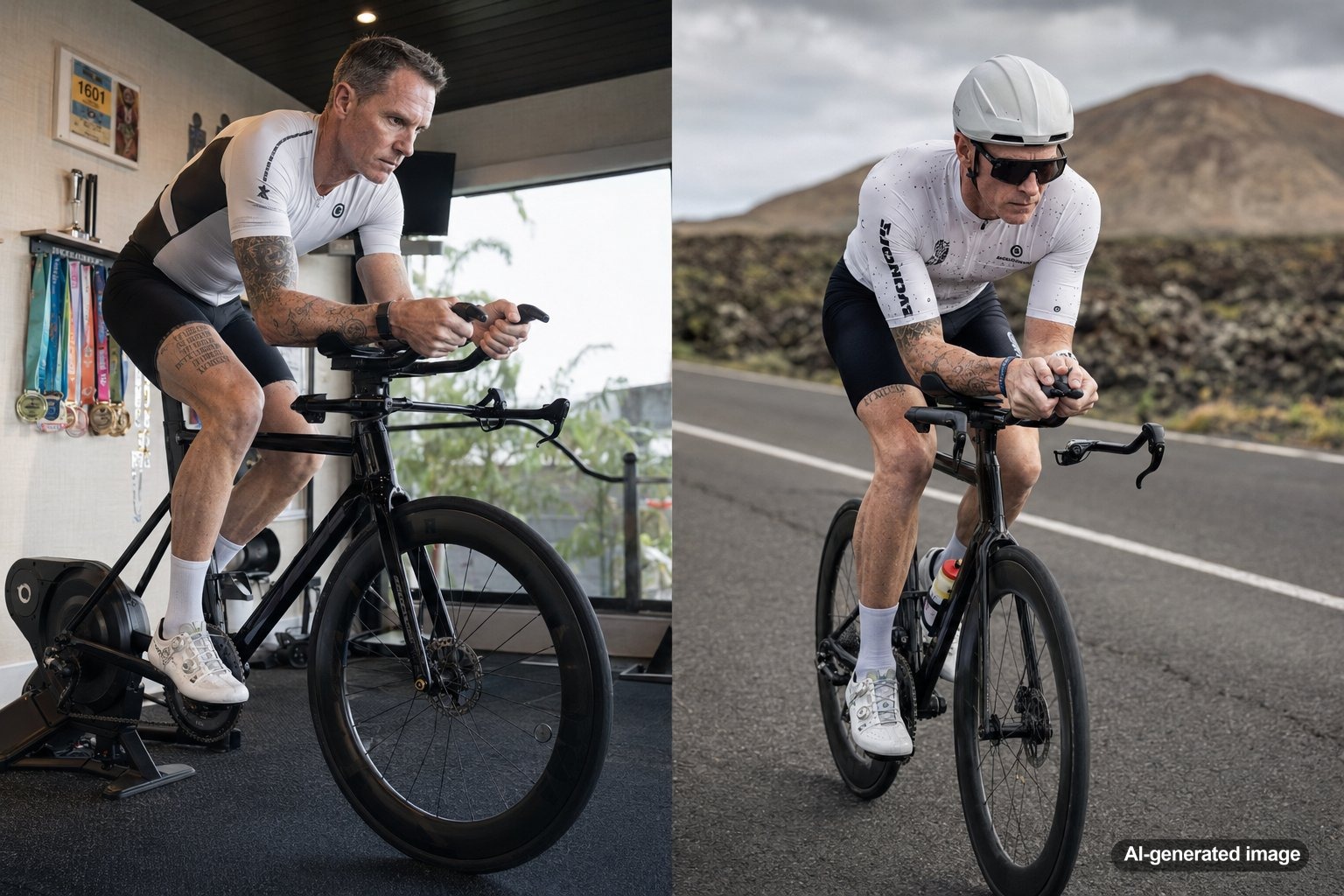
Indoor cycling and outdoor training both build power, but they do it in different ways. Indoor work gives you control. Outdoor riding gives you complexity. One is not automatically tougher, smarter, or more authentic than the other. The better question is what kind of power you are trying to build.
For an endurance athlete, power is not only a number on a screen. It is the ability to hold effort when your legs are tired, stay steady when conditions change, and make decisions when the ride stops being predictable. That is where this comparison becomes useful. The strongest riders usually do not choose one environment forever. They learn what each one teaches and use both with purpose. That same disciplined, forward-moving mindset is part of the broader message Greg brings through his speaking work: progress is built one honest effort at a time.
Quick answer
- Indoor cycling is often better for controlled power development because it removes traffic, terrain, weather, and stop-and-go interruptions.
- Outdoor training is better for usable, race-ready power because it forces you to apply effort while managing wind, hills, balance, gearing, surface changes, and decision-making.
- Indoor rides make it easier to repeat structured intervals, which can be valuable for threshold, cadence, and sustained effort work.
- Outdoor rides build the full athlete, including bike handling, pacing judgment, confidence, and adaptability.
- The best answer for most riders is both: use indoor training for precision and outdoor training for transfer.
The difference between measured power and applied power
Indoor cycling is excellent at one thing many athletes need: honesty. When the trainer is set, the workout begins, and the interval starts, there are fewer places to hide. No coasting down a hill. No soft-pedaling at a stop sign. No blaming a gust of wind. You either hold the target or you do not.
That makes indoor cycling especially useful for building measured power. If the goal is to complete five steady intervals, practice cadence changes, ride at a consistent threshold effort, or learn what a certain wattage feels like, the indoor environment can be hard to beat. It strips training down to the work itself.
Outdoor training asks a different question: can you use that power when the world is moving around you? A rider may be able to hold a beautiful number indoors but struggle outside when the road tilts up, the wind shifts, traffic interrupts rhythm, or a group ride changes pace. Outdoor power is less sterile. It is messier, more alive, and closer to what most races and long events actually demand.
Where indoor cycling has the advantage
Indoor cycling shines when the purpose of the ride is precision. If an athlete wants to focus on a specific power zone, repeat a workout exactly, or test progress under similar conditions, the trainer offers consistency. That consistency matters because it reduces noise. You can compare effort against effort without wondering how much the weather, traffic, or road surface changed the result.
Indoor riding also removes several practical barriers. It can be safer in poor weather, easier to fit into a packed schedule, and more efficient for athletes balancing work, family, training, and recovery. A focused 60-minute indoor session can produce more uninterrupted work than a longer outdoor ride filled with traffic lights and soft pedaling.
There is also a mental edge. Indoor training can teach an athlete to stay present when there is no scenery to distract from discomfort. That kind of discipline matters in endurance sports. It is not glamorous, but it builds a quiet kind of strength: the ability to keep working when nobody is watching and nothing about the moment feels dramatic.
Where outdoor training has the advantage
Outdoor riding builds the kind of power that must survive real conditions. Wind, hills, descents, turns, road texture, temperature, and other riders all shape the effort. You are not only producing watts. You are applying them while making constant small decisions.
This matters because cycling performance is not just physical output. It is also timing, judgment, body position, gearing, confidence, and patience. A rider who overpowers every climb may burn too many matches. A rider who cannot descend comfortably may lose time or energy even after building strong legs indoors. A rider who panics in crosswinds may have the fitness but not yet the full skill set.
Outdoor training also teaches pacing in a way that numbers alone cannot. Long rides reveal how effort changes after two, three, or four hours. They teach what happens when nutrition timing slips, when the weather turns, or when the athlete has to stay calm after a rough patch. For Ironman and endurance-minded athletes, those lessons are not side details. They are part of the sport.
A practical comparison
| Training factor | Indoor cycling | Outdoor training |
|---|---|---|
| Power control | Excellent for steady intervals and repeatable workouts | Variable because terrain, wind, and traffic affect rhythm |
| Skill development | Limited bike handling and environmental awareness | Strong for cornering, descending, pacing, and decision-making |
| Efficiency | High, especially for short focused sessions | Lower if routes include stops, traffic, or interruptions |
| Mental challenge | Requires focus without distraction | Requires adaptability under changing conditions |
| Race transfer | Strong for fitness base and structured power | Strong for applying fitness in real conditions |
What people often miss about power
Power is not only about the highest number you can hit. In endurance training, the more useful question is often: what power can you repeat, control, and recover from? A huge indoor interval does not mean much if it leaves an athlete unable to finish the rest of the workout. A strong outdoor surge does not mean much if it wrecks pacing for the next hour.
Another overlooked point is that indoor and outdoor numbers may not feel identical. Position, cooling, trainer setup, calibration, road surface, and riding style can all affect how an effort feels. Many riders notice that a wattage target feels different indoors than it does outside. That does not mean one environment is lying. It means context matters.
The most mature athletes learn not to worship the number. They respect it, study it, and use it, but they also listen to effort, breathing, form, and decision quality. That balance is where training becomes less about proving something every session and more about building something over time.
How to use both for stronger riding
A smart approach is to give each environment a job. Use indoor cycling when the goal is structured work: threshold intervals, cadence drills, steady aerobic sessions, short high-quality workouts, or days when weather and schedule make outdoor riding less practical.
Use outdoor training when the goal is application: long endurance rides, climbing practice, descending confidence, race simulation, handling, nutrition practice, and pacing under real conditions. The more important the event, the more important it becomes to test your fitness in the environment where you will use it.
For athletes who are rebuilding confidence, returning after a hard season, or trying to stay consistent through real-life demands, indoor riding can protect momentum. Outdoor riding can then restore trust. That combination is powerful: precision first, transfer second, confidence throughout.
Which builds more power?
If the question is controlled, measurable, repeatable power, indoor cycling often has the edge. It lets you remove distractions and put clean work into the legs.
If the question is functional power that carries into long rides, races, wind, hills, and imperfect conditions, outdoor training has the edge. It forces your fitness to become usable.
The strongest answer is not either-or. Indoor cycling builds the engine with precision. Outdoor training teaches that engine how to perform on the road. For endurance athletes, leaders, and anyone trying to keep moving through difficult terrain, that lesson reaches beyond cycling. Strength is not only what you can produce in perfect conditions. It is what you can carry forward when conditions change. That belief is also at the heart of the Forward Motion Fund and the simple, stubborn power of one more step.
FAQ
Can indoor cycling replace outdoor riding?
Indoor cycling can replace some outdoor workouts, especially structured sessions and days when safety or schedule is a concern. It should not replace every outdoor ride if your goal includes racing, group riding, long-course endurance, or confident handling in real conditions.
Is outdoor cycling harder than indoor cycling?
It depends on the workout. Outdoor riding can be harder because of wind, terrain, traffic, and constant decision-making. Indoor riding can be harder because there is less coasting and fewer distractions. Each environment challenges the athlete in a different way.
Why do power numbers feel different indoors and outside?
Several factors can change the feel of a power target, including cooling, position, equipment setup, trainer resistance, terrain, and mental focus. Rather than forcing the two environments to feel identical, use each one consistently and pay attention to patterns over time.
What is the best mix for endurance athletes?
A useful rhythm is to place precise interval work indoors and longer, more variable practice outdoors. The right mix depends on goals, experience, weather, schedule, and the demands of the event ahead.
Interested in bringing Greg’s message to your event or organization?
Learn more about Greg’s speaking work or get in touch to start the conversation.
Contact Greg or learn more about the Forward Motion Fund.
This article is for educational purposes only and is not medical advice. For diagnosis, treatment, or personalized medical guidance, please speak with a qualified healthcare professional.


