What The Ironman Swim Start Teaches You About Courage
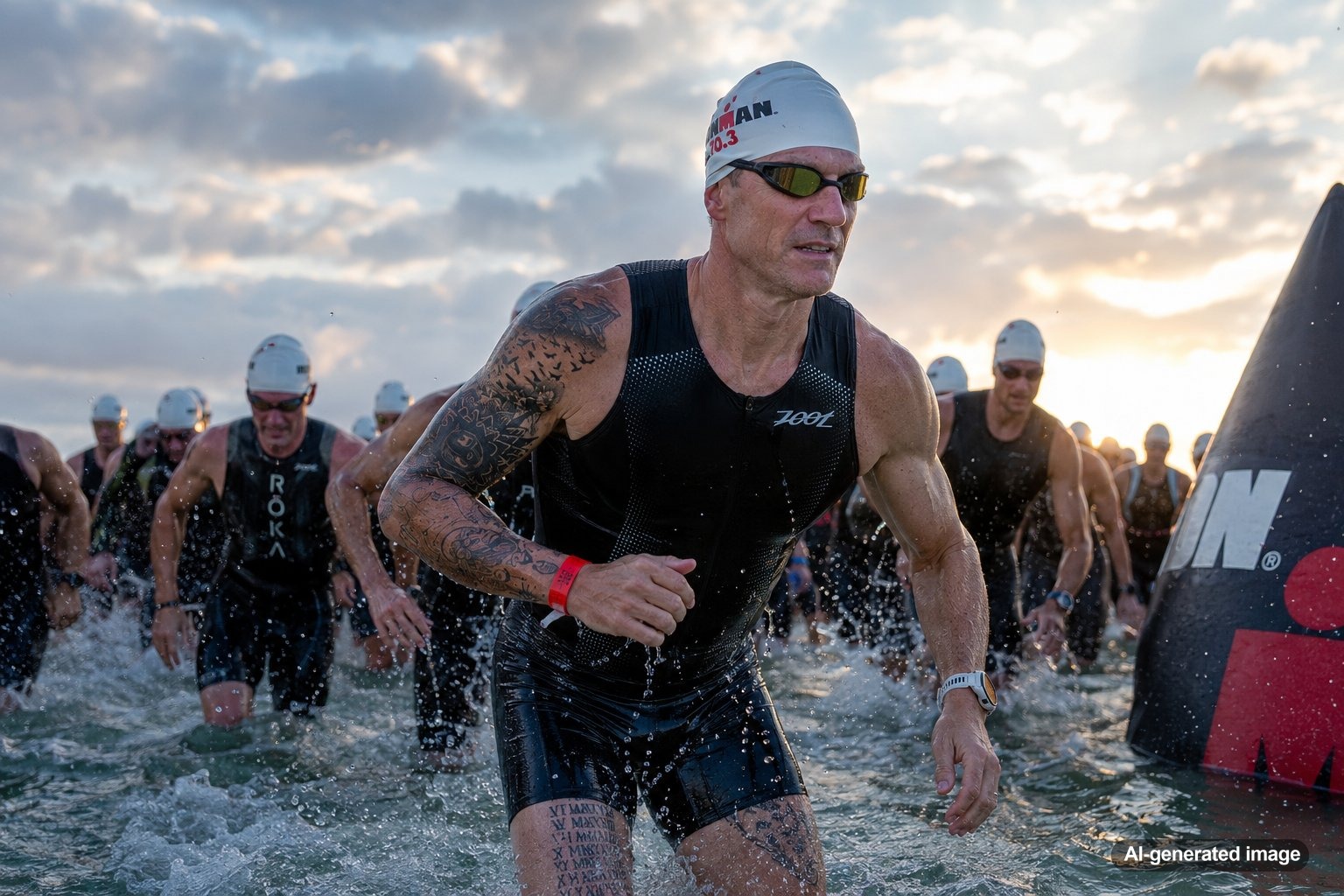
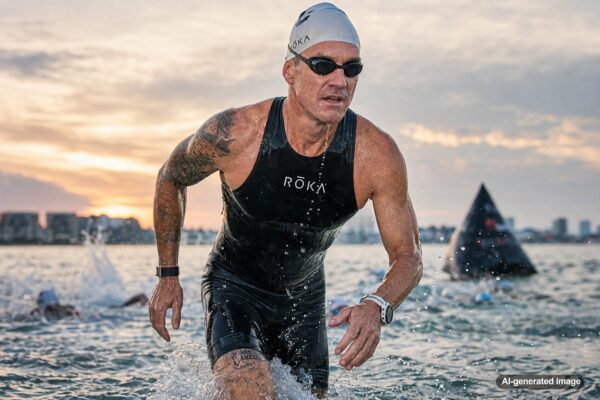
The Ironman swim start is not quiet courage. It is crowded, loud, cold, physical, and uncertain. Athletes stand at the edge of the water knowing the day ahead will ask more from them than comfort ever could. There are nerves in the air, goggles being adjusted, wetsuits being tugged into place, and thousands of private conversations happening inside people who are trying to look calm.
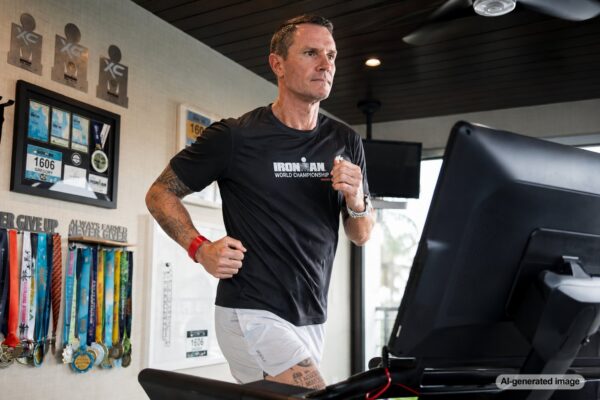
That moment teaches something important: courage is not the absence of fear. Courage is choosing forward motion while fear is still present. For Greg Schaefer, a 20-time Ironman, entrepreneur, speaker, dad, husband, and Parkinson’s advocate, that lesson reaches beyond sport. It belongs in business, family, diagnosis, leadership, and every season that asks a person to begin before they feel fully ready. Learn more about Greg’s story on the About Greg page.
Quick answer: what does the Ironman swim start teach about courage?
- Courage often begins before confidence shows up.
- The first step into uncertainty matters more than perfect conditions.
- Panic is easier to manage when you return to rhythm, breath, and the next small action.
- Everyone starts with fear, but not everyone lets fear make the decision.
- Forward motion is built through small choices repeated under pressure.
Courage starts at the edge, not after the fear disappears
At the swim start, no athlete gets a private guarantee. The water may be choppy. The crowd may be tight. The heart rate may spike before the race even begins. That is what makes the moment honest.
Many people imagine courage as a dramatic feeling of certainty. In reality, courage often feels like standing at the edge of something you respect, maybe even something that scares you, and deciding not to back away from your own commitment.
In Ironman, the swim start asks a simple question: will you begin even though you cannot control everything? That same question appears in boardrooms, hospitals, family conversations, personal reinvention, and recovery from setbacks. You rarely get full certainty before the next chapter begins.
The crowd teaches you to find your own rhythm
An Ironman swim start can feel chaotic. Arms move. Water splashes. Athletes search for clean space. The noise and motion can make it tempting to react to everything at once.
Experienced endurance athletes learn that chaos is not solved by matching chaos. It is managed by finding rhythm. One breath. One stroke. One sighting point. One decision not to let the outside environment take over the inside conversation.
That lesson matters far beyond racing. When life gets crowded with pressure, opinion, pain, deadlines, or uncertainty, courage is not always loud. Sometimes it is the discipline to slow the mind down enough to do the next useful thing.
The start line does not reward pretending
The swim start exposes people. Not in a shameful way, but in a clarifying way. It reveals who has trained, who has practiced staying calm, who has learned to respect discomfort, and who is willing to keep going when the first minutes feel harder than expected.
Pretending is not very useful in open water. You cannot fake your way through a long race by acting fearless. You have to work with what is true: the conditions, your body, your preparation, your nerves, and the decision directly in front of you.
That is one reason endurance racing can be such a powerful teacher. It strips courage down to something practical. Courage is not a speech. It is a behavior.
What people often miss about courage
People often celebrate the finish line, but the first few minutes can reveal just as much. A finish line shows perseverance. A start line shows willingness. The swim start is where an athlete chooses to enter the unknown before the day has given any proof that it will be manageable.
- Courage is not the same as confidence. Confidence can grow after action. Courage is what helps you act before confidence catches up.
- Courage is not recklessness. The best athletes respect the water, prepare seriously, and make smart decisions. Courage does not ignore risk. It responds with discipline.
- Courage is not a one-time trait. It is built through repeated moments of choosing the next step.
- Courage is often quiet. Sometimes it looks like breathing, adjusting, staying patient, and refusing to quit too early.
The lesson for leaders, teams, and families
The Ironman swim start is a useful metaphor because it is not clean or staged. It is messy, human, and real. That makes it a strong leadership lesson.
Teams rarely move through change in perfect conditions. Families rarely face hard seasons with complete clarity. Founders rarely build companies without uncertainty. People facing a diagnosis, loss, transition, or identity shift rarely feel fully ready for what comes next.
The swim start says: begin with respect, not denial. Begin with preparation, not panic. Begin with humility, not ego. Then keep moving. That is the core of forward motion. Not pretending the water is calm. Not waiting for fear to disappear. Just taking one more stroke, then one more, then one more.
How to carry the swim-start mindset into real life
You do not have to be an Ironman athlete to use the lesson. Most people have their own version of the swim start. It might be a difficult conversation, a business risk, a health challenge, a family responsibility, or the decision to rebuild after something changes.
- Name the fear without handing it control. Fear can be information. It does not have to be the final decision-maker.
- Choose the next action instead of solving the whole future. In the water, you cannot swim 2.4 miles in one thought. You swim one stroke at a time.
- Return to rhythm when pressure rises. Breath, pace, posture, and attention matter when the moment feels crowded.
- Respect preparation. Courage is stronger when it is backed by work, support, and honest self-awareness.
- Keep the mission bigger than the discomfort. The hard moment becomes more bearable when it is connected to something meaningful.
Why this lesson fits Greg’s message
Greg’s platform is built around the intersection of endurance, leadership, family, advocacy, and the decision to keep moving forward through adversity. The Ironman swim start captures that intersection in one powerful image: a person at the edge of uncertainty, choosing motion over retreat.
That is also why his message resonates with organizations and teams. Courage is not abstract when people are carrying real pressure. It becomes practical. It becomes a way to lead through change, support others, stay grounded, and keep taking the next right step.
For organizations looking for a speaker who can connect resilience to real-world leadership, Greg’s story offers more than inspiration. It offers a lived framework for moving through hard things with discipline, purpose, and humanity. Explore Greg’s speaking work to learn more.
FAQ
Why is the Ironman swim start so mentally challenging?
It combines uncertainty, physical intensity, crowds, open water, and the knowledge that a long day still lies ahead. That mix makes it a powerful test of composure and self-trust.
What does courage look like in endurance racing?
In endurance racing, courage often looks practical rather than dramatic. It can be staying calm, adjusting pace, breathing through discomfort, making smart decisions, and continuing when the moment gets hard.
How can non-athletes use this lesson?
Anyone can apply the swim-start mindset by focusing on the next honest step, staying grounded under pressure, preparing well, and refusing to let fear become the only voice in the room.
Is courage the same as mental toughness?
They are related, but not identical. Courage helps someone begin or continue despite fear. Mental toughness helps someone stay steady, adaptable, and disciplined through sustained difficulty.
The bottom line
The Ironman swim start teaches that courage is not clean, easy, or always confident. It is a decision made in motion. It is the choice to enter uncertain water with respect, preparation, and purpose.
Most of life does not hand us calm conditions before asking us to move. The lesson is not to wait until everything feels safe. The lesson is to breathe, choose the next stroke, and keep going.
Interested in bringing Greg’s message to your event or organization?
Learn more about Greg’s speaking work or get in touch to start the conversation.
Contact Greg or learn more about the Forward Motion Fund.
This article is for educational purposes only and is not medical advice. For diagnosis, treatment, or personalized medical guidance, please speak with a qualified healthcare professional.