

How The Open-Water Swim Sets The Tone For Race Day
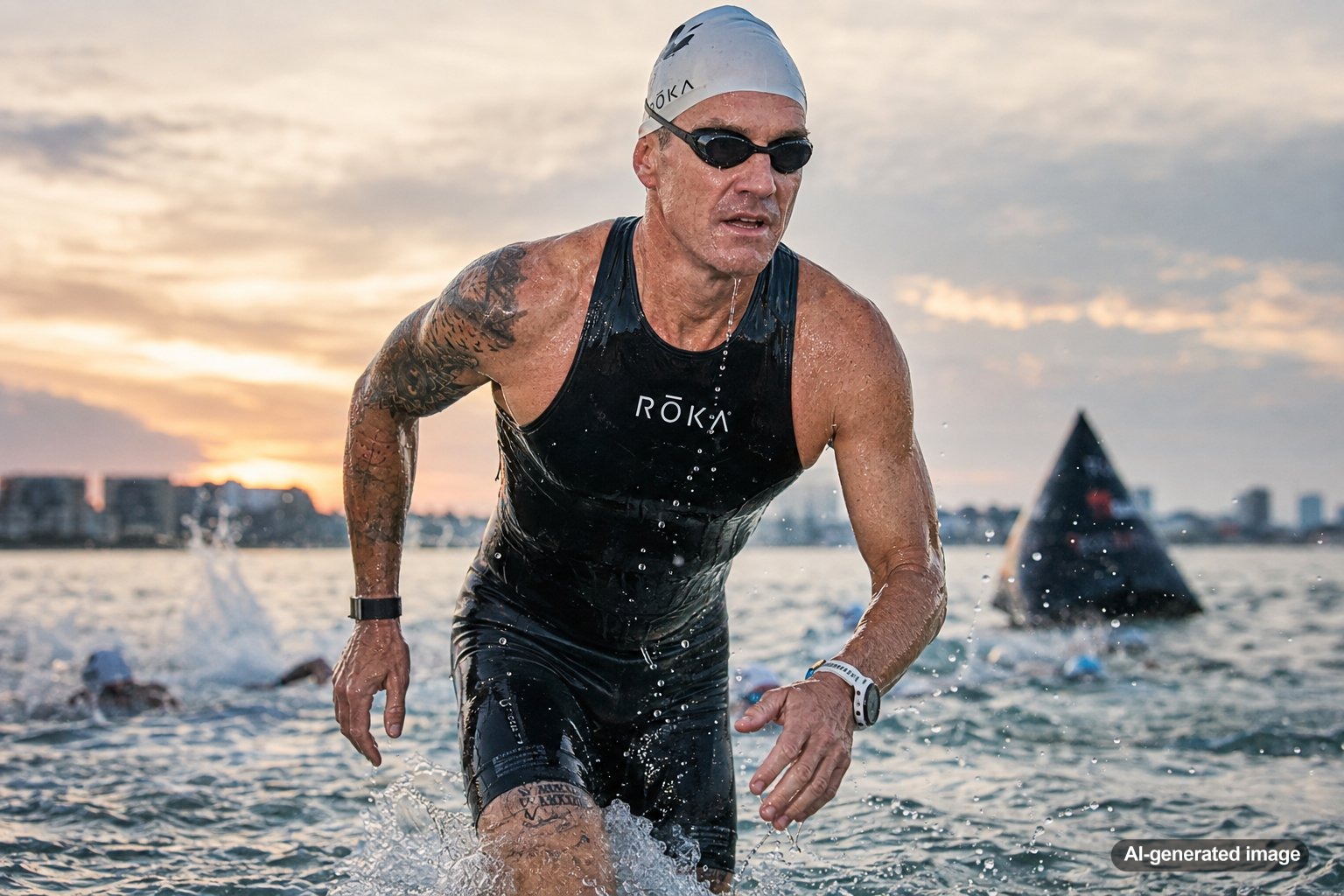
The open-water swim does more than start race day. It establishes the first rhythm of the competition, tests how well an athlete can stay composed in an unpredictable environment, and creates momentum that can carry into the bike and run. Unlike a controlled pool session, open water introduces movement, limited visibility, contact with other athletes, changing conditions, and the need to make decisions while the race is already unfolding.
For Greg Schaefer, a 20-time Ironman, endurance racing has long been connected to discipline, resilience, and the ability to keep moving when circumstances are not perfectly comfortable. Those same ideas also shape his speaking work. The swim offers an immediate reminder that a strong race is not built around controlling everything. It is built around responding well to what happens next.
Quick answer: How does the open-water swim set the tone?
- It tests whether you can settle into your own rhythm instead of reacting to everyone around you.
- It rewards calm decision-making when conditions feel crowded or uncertain.
- It can protect valuable energy for the bike and run when you avoid unnecessary surges.
- It creates an early opportunity to turn nerves into purposeful movement.
- It reminds you that race-day success depends on adjustment, not perfection.
The swim is the first real test of composure
Before the start, athletes have had time to think, prepare equipment, review the course, and imagine how the day might unfold. Once the swim begins, much of that planning meets reality at the same time. Bodies are moving in every direction. Water may be rougher than expected. A clean line toward the first buoy may suddenly become crowded. Breathing can feel hurried simply because the start carries so much energy.
The athlete who can recognize that initial rush without becoming controlled by it has an advantage. The goal is not necessarily to feel perfectly calm. It is to stay functional enough to make useful decisions. That might mean shortening the stroke temporarily, moving a few feet away from congestion, adjusting sighting frequency, or allowing another athlete to surge ahead instead of turning the opening minutes into an unnecessary contest.
This distinction matters because composure is not passive. It is active management of effort, attention, and emotion. In endurance racing, that skill has value far beyond the water.
Pacing decisions begin before the bike
It is easy to think of pacing primarily as a bike or run issue, but the swim is where race-day energy management begins. An athlete who spends the first several minutes repeatedly accelerating, fighting for position, or trying to match a pace that does not belong to them may leave the water having spent more energy than necessary.
A controlled swim does not mean a slow swim. It means understanding the difference between productive effort and reactive effort. Productive effort moves the athlete efficiently toward the next part of the race. Reactive effort is often driven by another swimmer’s pace, the pressure of the start, or frustration about position.
Experienced endurance athletes learn that the race rarely rewards every impulse. Sometimes letting a faster swimmer go is the better decision. Sometimes moving slightly wider creates cleaner water and a more sustainable stroke. Sometimes backing off for several breaths restores the rhythm needed to move efficiently for the next twenty minutes.
Open water forces you to adapt in real time
A pool provides lines, walls, predictable distances, and relatively stable conditions. Open water removes many of those reference points. That difference is part of what makes the swim such a valuable race-day test.
Athletes may have to adjust for wind, chop, glare, current, temperature, contact, or a buoy that is difficult to see from water level. None of those situations automatically ruins a race. They simply create decisions.
One athlete may respond to rough water by increasing effort in an attempt to force the original plan. Another may slightly adjust stroke timing, sight more deliberately, and focus on maintaining forward progress. The second approach reflects one of the central lessons of endurance sport: the plan matters, but the ability to adapt matters too.
That principle extends well beyond competition. Greg’s broader story has included business leadership, family, endurance sports, Parkinson’s advocacy, and the decision to keep moving after unexpected changes. His personal journey reflects the same practical reality athletes experience in open water: circumstances can change without asking permission, and forward motion often depends on how you respond.
The first few minutes do not have to define the whole swim
One of the most useful race-day lessons is that a difficult opening does not automatically predict a difficult finish. A crowded start, missed breath, poor line, or uncomfortable first few hundred yards can feel enormous because it happens so early. The mind may quickly start writing a story about what the rest of the day will look like.
That story does not have to be accurate.
An athlete can make a small correction and reset. Find space. Lengthen the exhale. Reestablish a familiar stroke rhythm. Sight the next buoy rather than replaying what happened thirty seconds ago. The ability to recover mentally from an imperfect moment is often more useful than trying to prevent every imperfect moment from happening.
This is where endurance racing becomes especially instructive. Progress is often built through a sequence of small corrections rather than one flawless performance. One better breath. One cleaner sighting decision. One calmer minute. One more step after the swim is over.
Confidence often comes from solving problems, not avoiding them
Confidence before a race can feel abstract. Confidence during a race is more concrete because it is built through evidence. You encounter something difficult, respond, and keep moving.
The open-water swim can create those moments early. Maybe the first pack is too aggressive, so you move to clearer water. Maybe you drift off course, recognize it, and correct your line. Maybe conditions feel different from practice, but you settle in rather than panic. Each successful adjustment becomes evidence that you are capable of managing the day in front of you.
That kind of confidence is different from telling yourself that everything will go perfectly. It is the belief that if something changes, you can respond intelligently. For endurance athletes, leaders, entrepreneurs, and teams, that is often the more durable form of confidence.
What athletes often miss about the swim
The swim does not need to be spectacular to create a strong race. Its biggest contribution may be allowing you to arrive at transition composed, oriented, and ready for the next decision.
- Clean effort can matter more than dramatic effort. Energy spent fighting every swimmer around you cannot be used later.
- Direction matters as much as speed. A fast pace loses value when poor sighting sends you away from the course.
- A reset can be a race skill. Slowing briefly to regain breathing or orientation may be more productive than forcing the same mistake.
- Early frustration is optional baggage. What happened at the start does not need to follow you onto the bike.
Practical ways to create a better opening rhythm
Race-day composure becomes easier when athletes have practiced the situations that can disrupt it. Open-water preparation can include swimming near other people, practicing sighting without completely interrupting stroke rhythm, experimenting with different starting positions, and learning how effort changes when water becomes less predictable.
It can also help to define a simple priority for the opening minutes. Instead of thinking immediately about finish time or placement, the first objective might be straightforward: establish breathing, find space, locate the next buoy, and settle into sustainable effort.
That sequence gives the mind something useful to do. Rather than reacting emotionally to every splash, bump, or surge, the athlete has a short list of controllable actions.
The same principle applies when the swim does not go as planned. Avoid trying to solve the entire race from the water. Solve the problem directly in front of you. Then solve the next one.
Transition is where the tone becomes momentum
Leaving the water creates an important mental threshold. The swim is finished. Whatever went well or poorly is now information, not an active event.
A useful transition mindset is to release the swim quickly and become fully engaged with the next discipline. That means focusing on the mechanics of transition, getting organized, checking effort, and allowing the body to settle into the bike rather than mentally reviewing every moment in the water.
A composed transition can preserve the value of a good swim and prevent a difficult swim from becoming a difficult bike. That ability to reset between chapters is one reason endurance racing offers such powerful lessons about resilience. Forward motion does not always require carrying every previous moment with you.
Frequently asked questions
Should the goal be to swim as hard as possible at the start?
Not necessarily. The right effort depends on the athlete, course, conditions, and race plan. For many endurance athletes, the priority is establishing a controlled rhythm while avoiding unnecessary effort caused by congestion or adrenaline.
What if the swim start feels overwhelming?
Focus on the next manageable action. That could mean finding more space, controlling the exhale, adjusting position, or concentrating on the next buoy. Breaking the situation into smaller decisions can make the opening minutes easier to manage.
Can a bad swim ruin the rest of race day?
A difficult swim can affect time, energy, or confidence, but it does not automatically determine everything that follows. Transition offers a natural opportunity to reset attention and begin making decisions for the bike rather than continuing to mentally race the swim.
Why is open-water practice different from pool training?
Open water introduces navigation, variable conditions, group contact, limited visual references, and other factors that a pool may not reproduce. Practicing those elements can help athletes become more familiar with the kinds of decisions race day may require.
What is the biggest mindset lesson from the open-water swim?
Adaptability matters. Athletes cannot control every condition or every person around them, but they can continue making decisions that protect effort, direction, and forward progress.
The tone is set by how you respond
The open-water swim can be fast, slow, crowded, smooth, uncomfortable, or unexpectedly enjoyable. What gives it meaning for the rest of race day is not simply the time on the clock. It is the way an athlete responds to the first real stretch of uncertainty.
Stay present. Make the next useful decision. Protect your energy. Adjust when necessary. Leave the water ready to begin again.
Those lessons are part of the endurance mindset, but they also fit a much larger idea behind Greg’s work and the Forward Motion Fund: progress does not require a perfect day. It requires a willingness to keep finding the next constructive move.
Interested in bringing Greg’s message to your event or organization?
Learn more about Greg’s speaking work or get in touch to start the conversation.
Contact Greg or learn more about the Forward Motion Fund.
This article is for educational purposes only and is not medical advice. For diagnosis, treatment, or personalized medical guidance, please speak with a qualified healthcare professional.


