
Why The Ironman Swim Is Really A Test Of Trust
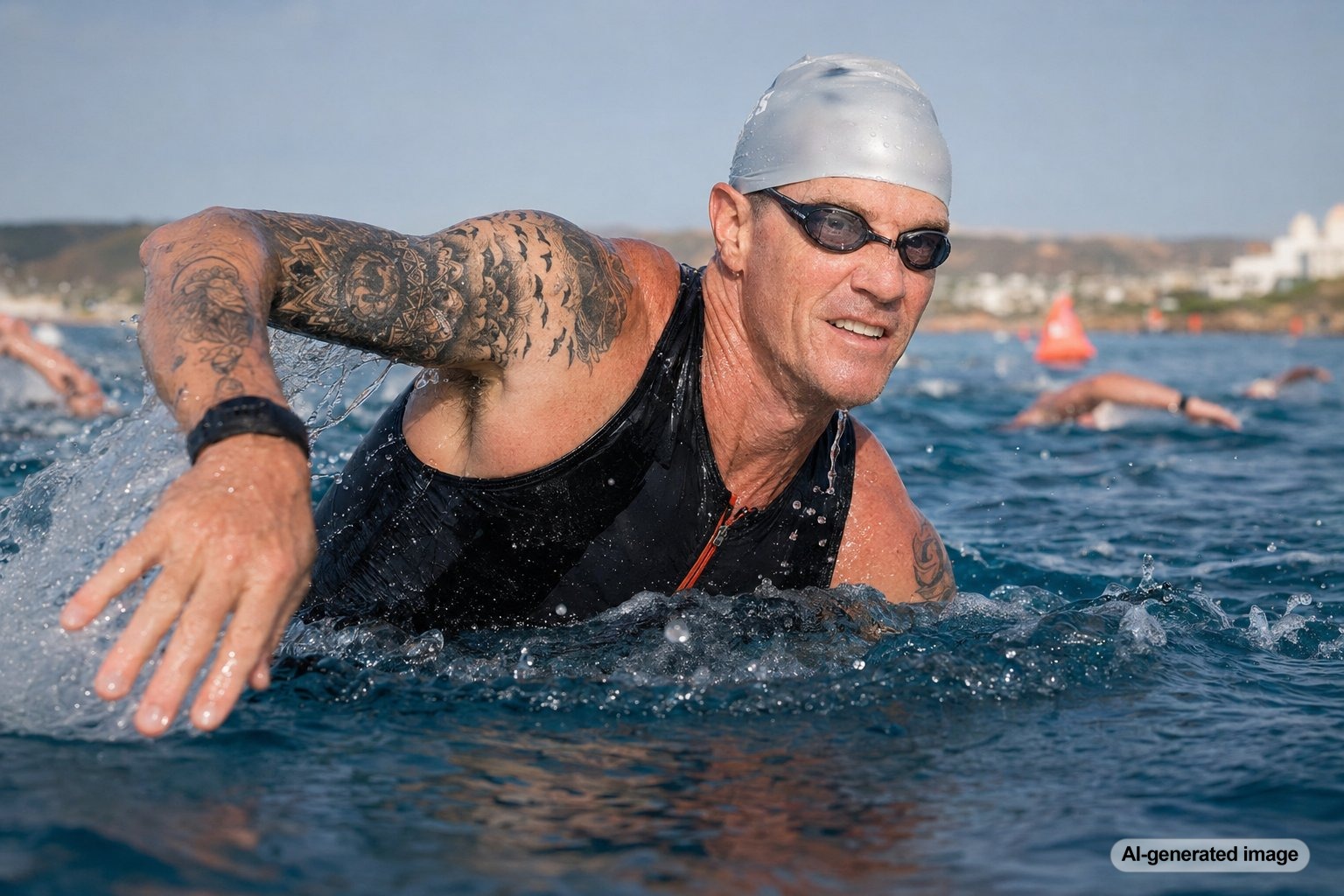
The Ironman swim asks a quiet question before the race ever reaches the bike or the run: do you trust what you have built? It is easy to talk about confidence on dry land, surrounded by gear, plans, splits, and people who believe in you. It is different when the horn goes off, bodies surge forward, the water turns loud, and every athlete has to find calm inside a place that does not naturally offer it.
That is what makes the swim such a powerful part of the race. It is physical, of course. It requires training, technique, strength, and endurance. But beneath all of that, the swim becomes a test of trust: trust in preparation, trust in patience, trust in the people who helped you get there, and trust in your ability to keep moving when the moment feels bigger than the plan. For Greg Schaefer, whose story lives at the intersection of family, business leadership, endurance, Parkinson’s advocacy, and forward motion, that lesson reaches far beyond the water. You can learn more about that broader mission on Greg’s About page.
Quick answer
- The Ironman swim is a test of trust because open water removes the illusion of total control.
- Success depends on preparation, breathing, pacing, and emotional steadiness.
- The swim rewards athletes who can stay present instead of fighting every wave, body, or anxious thought.
- Trust does not mean the race feels easy. It means you keep making the next right decision.
- The lesson applies to leadership, adversity, illness, family, and any moment that asks you to move forward without perfect certainty.
The swim removes the comfort of control
In a pool, the lane line is always there. The wall arrives on schedule. The water is measured, contained, and familiar. Open water changes the agreement. There may be chop, glare, current, crowded turns, limited visibility, and the constant need to sight without breaking rhythm. Even experienced athletes can feel that shift immediately.
That is why the Ironman swim is not only a test of fitness. It is a test of how a person responds when the environment stops cooperating. You can prepare beautifully and still meet conditions that ask for adjustment. You can feel ready and still have a moment where your breathing spikes or your rhythm disappears. The athlete who succeeds is not always the one who avoids discomfort. Often, it is the one who can notice the discomfort, settle back into the body, and return to the next stroke.
Trust begins long before race morning
Real trust is not wishful thinking. It is not pretending that fear is absent. Trust is earned in the unglamorous work: early sessions, repeated drills, hard conversations with coaches, missed targets, corrections, recovery, and the discipline to return again. By the time an athlete steps into the water, the question is no longer whether every workout was perfect. The question is whether the body and mind can rely on the pattern that has been built over time.
This is where endurance sports mirror business and life. A leader cannot wait for crisis to build credibility. A family cannot wait for hard news to build connection. A person facing adversity cannot wait for certainty to begin moving. Trust is formed in the smaller choices that rarely look dramatic when they happen. Then, when the water gets rough, those choices become the foundation underneath you.
The swim teaches patience when instinct says hurry
One of the most overlooked parts of the Ironman swim is restraint. The energy at the start can trick an athlete into racing too hard too early. There is noise everywhere: splashing, nerves, feet, elbows, watches, buoys, and the pressure of knowing there is still a long day ahead. Panic often has a pace, and it is usually too fast.
Trust asks for something different. It asks the athlete to breathe, lengthen, settle, and avoid burning the day in the first minutes. That kind of patience can feel counterintuitive because it is not passive. It is active discipline. It is choosing the sustainable rhythm over the emotional reaction. In leadership, that might look like not overcorrecting during a tough quarter. In family life, it might mean listening before solving. In advocacy, it might mean staying committed even when progress is slower than anyone wants.
You have to trust the people around you
Even though race day can feel deeply personal, no endurance athlete truly arrives alone. There are family members, friends, training partners, coaches, volunteers, race staff, medical teams, and supporters who make the day possible. In open water, that truth becomes more visible. Athletes depend on the course being marked, the safety teams being attentive, the volunteers being present, and the people on shore believing in the work that brought them there.
For Greg, that support-system lens matters. His platform is not just about individual toughness. It is also about family, partnership, community, caregiving, and the people who help someone keep taking one more step. That is part of the spirit behind the Forward Motion Fund, where forward motion is not framed as a solo performance. It is a shared commitment to research, support, challenged athletes, and young people who need a reason to believe in the next step.
Open water rewards presence
The swim can punish a wandering mind. Too much attention on the entire distance can make the task feel enormous. Too much focus on another athlete can pull a person out of rhythm. Too much fear about what might happen later can steal energy from what needs to happen now. The water keeps bringing the athlete back to the present moment.
Stroke. Breathe. Sight. Adjust. Repeat.
That simplicity is not small. It is the practical form of resilience. Not the kind printed on a poster, but the kind that lives inside one manageable action after another. The athlete does not need to solve the bike course during the swim. The athlete does not need to run the marathon while still in the water. The job is to do the next honest thing, then the next one, then the next one after that.
What people often miss about the Ironman swim
- It is not only about overcoming fear. Fear may be present, but the deeper lesson is learning how to work with it without letting it make every decision.
- It is not a warm-up. The swim shapes the emotional tone of the day. A steady swim can create confidence for what follows.
- It is not won by force alone. Efficiency, rhythm, and calm often matter as much as power.
- It is not separate from life. The same trust required in open water shows up in business transitions, health challenges, family responsibilities, and mission-driven work.
The real finish line starts with belief
When people watch an Ironman, they often remember the finish chute. The lights, the noise, the emotion, the relief. But long before that moment, the athlete has already crossed another kind of threshold. The swim asks whether you can begin without full control, continue without perfect comfort, and trust the work when the path ahead is moving under you.
That is why the Ironman swim matters. It is not just the first leg of a long race. It is an honest introduction to the entire day. It tells the athlete that preparation matters, but control is limited. It reminds them that strength and humility can exist in the same stroke. It proves that forward motion does not always feel fearless. Sometimes it feels like steady breathing in rough water.
FAQ
Why is the Ironman swim mentally difficult?
The swim can be mentally difficult because open water brings uncertainty, crowding, limited visibility, and the need to stay calm while the body is working hard. The challenge is not only covering the distance. It is regulating emotion while continuing to move efficiently.
What does trust mean in an Ironman swim?
Trust means relying on training, pacing, breathing, technique, and support instead of reacting to every uncomfortable moment. It does not mean ignoring risk or pretending the swim is easy. It means staying present enough to make steady decisions.
How does the swim connect to resilience?
The swim connects to resilience because it forces an athlete to keep going in an environment they cannot fully control. That is a useful metaphor for adversity, leadership, illness, family responsibility, and mission-driven work.
Is the Ironman swim only about athletic ability?
No. Athletic ability matters, but the swim also tests patience, awareness, emotional regulation, humility, and the ability to trust a long process. Those qualities often separate a frantic swim from a steady one.
Interested in bringing Greg’s message to your event or organization?
Learn more about Greg’s speaking work or get in touch to start the conversation.
Contact Greg or learn more about the Forward Motion Fund.
This article is for educational purposes only and is not medical advice. For diagnosis, treatment, or personalized medical guidance, please speak with a qualified healthcare professional.