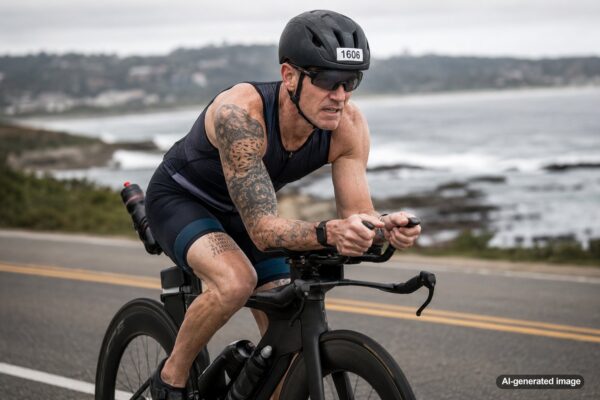

How To Keep Moving Forward When The Bike Course Gets Brutal

Every endurance athlete knows the moment. The course stops feeling like a challenge and starts feeling like a negotiation. The wind turns mean. The climb seems to stretch. The legs feel heavy, the clock feels loud, and the mind starts asking whether there is any smarter option than continuing.
That is the brutal part of the bike course, and it is not only about cycling. It is the part of life, leadership, work, family, health, and purpose where momentum gets tested. For Greg Schaefer, a 19-time Ironman, CEO, dad, husband, speaker, and advocate living with Young-Onset Parkinson’s, the lesson is not that hard miles disappear. It is that forward motion can be built one honest decision at a time. You can learn more about Greg’s story on the About Greg page, or explore how he brings these lessons to organizations through speaking.
Quick answer: how do you keep moving forward when the course gets brutal?
- Stop trying to solve the whole race at once. Narrow the focus to the next useful action.
- Respect the difficulty without surrendering your direction.
- Use systems, not emotions, when your confidence starts to fade.
- Separate discomfort from danger, and know when support or adjustment is needed.
- Remember that forward motion is not always fast. Sometimes it is simply faithful.
The brutal miles reveal what preparation really means
Preparation is easy to admire when everything feels smooth. The real test comes when conditions expose the gap between what you planned and what the day is actually giving you. On a difficult bike course, that may look like heat, headwinds, mechanical trouble, nutrition mistakes, or a climb that feels steeper than expected. In life and leadership, it may look like a diagnosis, a business setback, a family crisis, or a season where progress becomes harder to measure.
In those moments, preparation is not just fitness. It is the ability to return to the basics. Breathe. Fuel. Check your position. Make the next decision. Stay honest. The athlete who survives the brutal section is often not the one who feels fearless. It is the one who has practiced staying useful when the mind gets noisy.
Do not let the whole course enter your head at once
One of the fastest ways to break mentally is to let the entire remaining distance arrive at the same time. The athlete starts doing math that does not help. How many miles are left? How much slower am I than planned? What if the run is worse? What if everyone else is handling this better?
The better move is to shrink the problem. Get to the next mile marker. Hold form until the top of the climb. Take in fuel at the next scheduled point. Keep the cadence steady for two more minutes. This is not denial. It is disciplined focus. A brutal course becomes more manageable when it is divided into decisions small enough to execute.
There is a difference between slowing down and giving up
Endurance sports teach an important distinction that applies far beyond race day: adjusting pace is not the same as quitting. Sometimes the smartest athletes are not the ones who force the original plan no matter what. They are the ones who listen carefully, adapt intelligently, and keep the mission intact.
That distinction matters in business, advocacy, parenting, and personal adversity. A difficult season may require a different rhythm. A leader may need to regroup. An athlete may need to conserve energy. A family may need to change expectations. Forward motion does not demand that every mile look the same. It asks that you remain connected to the reason you started.
Use systems when emotion becomes unreliable
When the course gets brutal, motivation becomes a shaky tool. It may still show up, but it cannot be the only thing carrying you. Systems matter because they give you something to follow when your feelings are arguing against you.
For an endurance athlete, a system might include a fueling schedule, power targets, cadence checks, hydration reminders, and planned mental cues. For a leader, it might include daily priorities, communication rhythms, decision rules, and trusted advisors. For someone facing a personal challenge, it might include medical guidance, family support, movement habits, rest, and a small set of commitments that make the day less chaotic.
Systems do not remove the difficulty. They reduce the number of decisions you have to make while tired.
What people often miss about mental toughness
Mental toughness is often misunderstood as simply pushing harder. Real toughness is more mature than that. It includes judgment. It includes humility. It includes the ability to ask for help, change strategy, and keep going without pretending the pain is not real.
- Toughness is not panic disguised as effort. Forcing every mile can backfire if the body, team, or situation needs a smarter adjustment.
- Toughness is not silence. Strong people still need support systems, honest conversations, and trusted guidance.
- Toughness is not a perfect attitude. You can have doubt and still make the next right move.
- Toughness is not speed. Some of the most meaningful progress happens slowly.
The bike course eventually becomes a leadership classroom
A brutal course has a way of stripping leadership down to essentials. You cannot fake calm forever. You cannot inspire yourself with slogans if your habits are weak. You cannot outrun poor preparation forever. But you can build the kind of inner discipline that keeps showing up when the road gets hard.
That is why endurance lessons translate so naturally into organizations and teams. Every company has brutal miles. Every mission has a stretch where energy dips, pressure rises, and people wonder whether the work is still worth it. Leaders who understand forward motion know how to keep the team focused on the next meaningful step without minimizing the difficulty of the moment.
Practical ways to keep moving when the road turns against you
Start by naming the reality without dramatizing it. The course is hard. The day is not going exactly as planned. The pressure is real. Clear language lowers the emotional temperature and helps you make better decisions.
Next, return to what is controllable. In a race, that may be cadence, breathing, nutrition, posture, or effort. In life, it may be the next phone call, the next appointment, the next honest conversation, or the next hour of focused work. Control rarely arrives all at once. It returns through small, repeatable actions.
Finally, reconnect with purpose. The reason cannot be vague when the course gets brutal. It has to be strong enough to outlast discomfort. Family, mission, service, health, team, example, faith, commitment, and impact can all become anchors when the road asks more than you expected.
FAQ
How do endurance athletes stay mentally strong during a hard bike course?
Many athletes rely on preparation, pacing, fueling, mental cues, and short-focus goals. Instead of thinking about the entire distance left, they focus on the next manageable segment and keep making useful decisions.
What does forward motion mean outside of racing?
Forward motion means continuing to act with purpose even when progress is slower, harder, or less visible than expected. It can apply to leadership, family, health challenges, business, advocacy, and personal growth.
Is slowing down a failure?
No. Slowing down can be a smart adjustment. The goal is not always to preserve the original pace. Sometimes the goal is to stay in the race, protect the mission, and keep moving with wisdom.
Why does Greg Schaefer speak about endurance and resilience?
Greg’s perspective comes from the intersection of endurance racing, business leadership, family, Parkinson’s advocacy, and lived adversity. His message is grounded in experience rather than generic motivation.
Interested in bringing Greg’s message to your event or organization?
Learn more about Greg’s speaking work or get in touch to start the conversation.
Contact Greg or learn more about the Forward Motion Fund.
This article is for educational purposes only and is not medical advice. For diagnosis, treatment, or personalized medical guidance, please speak with a qualified healthcare professional.