

The Mental Game Of Racing A Full Distance Ironman
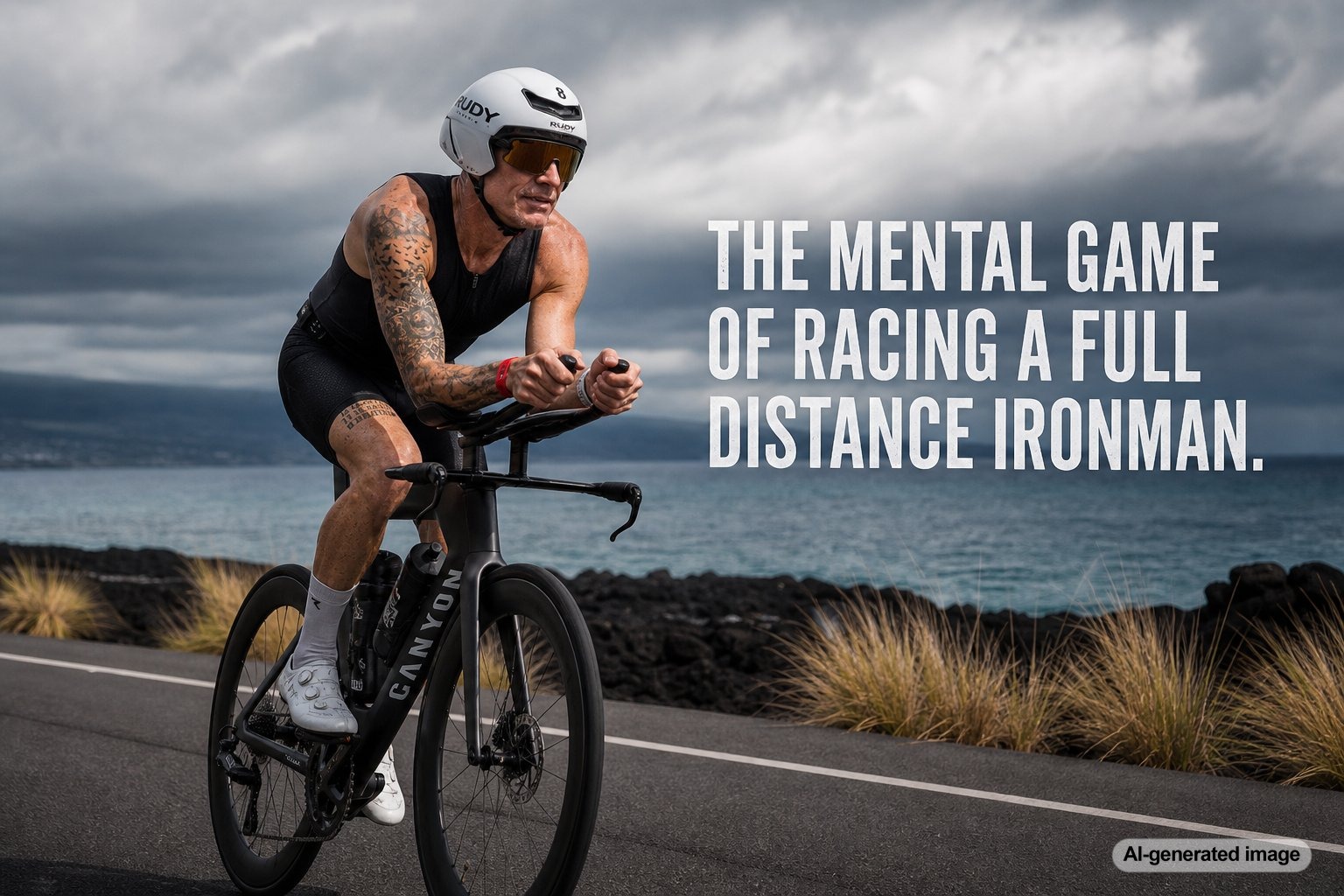
A full distance Ironman is not only a test of fitness. It is a long conversation with doubt, patience, discipline, discomfort, and identity. The swim, bike, and run matter, but the mental game often determines how an athlete responds when the day stops feeling smooth.
For Greg Schaefer, endurance racing sits inside a much larger story of family, business, adversity, advocacy, and forward motion. His path as a 19-time Ironman, CEO, dad, husband, speaker, and athlete living with Young-Onset Parkinson’s brings a grounded kind of credibility to the subject. Racing long is not about pretending the hard parts are easy. It is about learning how to keep taking the next right step when the day gets complicated. To learn more about Greg’s broader story, visit his About page.
Quick Answer
- The mental game of a full distance Ironman begins long before race day, during training blocks that teach patience and emotional control.
- Strong athletes manage effort, nutrition, expectations, and negative thoughts instead of chasing perfect conditions.
- The best mindset is not blind positivity. It is calm problem-solving under pressure.
- Successful racing often comes down to breaking the day into manageable pieces instead of carrying all 140.6 miles at once.
- Forward motion is both a race strategy and a life practice: one more step, just one more.
The Race Starts Before The Cannon
The mental game of an Ironman begins in the months before the race. Training asks athletes to repeat unglamorous work: early alarms, long rides, disciplined recovery, missed shortcuts, and quiet choices that rarely get applause. That process builds more than endurance. It builds trust.
Trust matters because race day will eventually ask a question that fitness alone cannot answer: Do you believe your preparation enough to stay calm when the plan bends? A full distance race is too long for everything to go perfectly. The athlete who expects a flawless day can become fragile when something changes. The athlete who has practiced adjustment can stay present.
That is one of the overlooked parts of Ironman mental toughness. It is not about being emotionless. It is about feeling frustration, fear, impatience, or fatigue without letting those feelings take over the steering wheel.
Patience Is A Performance Skill
In a full distance Ironman, patience is not passive. It is strategic. The first half of the bike can feel deceptively manageable. The energy of the crowd, the excitement of transition, and the confidence of fresh legs can tempt an athlete into racing too early. That decision may not show up immediately. It often appears hours later, when the marathon asks for payment.
The mental discipline is to race the mile you are in without borrowing confidence from a future you have not reached yet. That means accepting the right effort even when it feels too controlled. It means letting other athletes surge without reacting. It means remembering that restraint is not weakness when the day is long.
Experienced endurance athletes know that ego can be expensive. The athlete who can stay patient when everyone else looks strong may be the athlete who is still moving well late in the run.
Managing The Dark Patch
Almost every long race has a dark patch. It may arrive in the water, on a lonely stretch of road, or somewhere deep in the marathon when the finish line still feels far away. The mind starts asking dangerous questions: Why am I doing this? Can I keep going? What if I fall apart?
The goal is not to eliminate those thoughts. The goal is to stop treating every thought as truth. A hard moment is not the whole race. A bad mile is not a failed day. A wave of doubt is not an instruction to quit.
One of the most useful mental tools is reducing the scale of the problem. Do not race the whole marathon in your head. Get to the next aid station. Hold form until the next turn. Take in the next sip. Run the next minute. Walk with purpose if needed. Reset. Continue.
What Many Athletes Miss
The mental game is not only about pushing harder. Sometimes it is about calming down, simplifying the task, and refusing to let one uncomfortable stretch define the entire day.
The Difference Between Pain And Panic
Long-course racing creates discomfort. Heavy legs, heat, wind, stomach uncertainty, chafing, and fatigue are part of the landscape. Panic adds a second layer of suffering. It turns discomfort into a story: This is going badly. I am losing control. I cannot handle what is coming.
Mentally strong racing often means separating sensation from interpretation. The body may be tired, but that does not always mean the day is over. The pace may slow, but that does not mean the mission is gone. The conditions may change, but the athlete can still make the next useful decision.
This is where Greg’s broader message of forward motion connects so naturally to endurance sport. Forward motion is not always dramatic. Sometimes it is a quiet refusal to spiral. Sometimes it is choosing the next disciplined action when the emotional part of the brain wants to make the moment bigger than it is.
Identity Can Help, But It Can Also Hurt
Ironman athletes often carry strong identities. They are disciplined, driven, capable, and used to doing difficult things. That identity can be powerful. It can also become a trap if the athlete believes every race must prove something about their worth.
A healthier mental framework is to treat the race as an expression of commitment, not a verdict on identity. The result matters, but it does not get to define the whole person. That distinction creates room for smart decisions, safer choices, and a steadier emotional response when the day becomes unpredictable.
Greg’s platform carries this balance well. He is an athlete, but not only an athlete. He is a speaker, but not only a speaker. He is a Parkinson’s advocate, but not only a diagnosis. The strength of the story comes from the intersection: family, leadership, endurance, adversity, mission, and the decision to keep moving forward.
Practical Mental Takeaways For Race Day
The strongest race day mindset is built from simple, repeatable tools. They may not sound dramatic, but they are often what hold the day together when motivation fades.
- Name the moment accurately. Instead of saying, “I am falling apart,” try, “This is a rough section, and I need to solve the next five minutes.”
- Protect your pacing early. Racing too hard too soon often feels like confidence at first and regret later.
- Use short targets. Aid stations, turns, landmarks, and time blocks can make the race feel less overwhelming.
- Expect adjustment. A changed plan is not automatically a failed plan.
- Keep your reason close. When the race gets quiet, purpose can become fuel.
The Leadership Lesson Inside The Race
A full distance Ironman has obvious lessons for athletes, but many of its deeper lessons apply to leadership and life. Long challenges require composure. Teams need people who can stay calm when the situation changes. Families need steadiness in uncertain seasons. Organizations need leaders who can make the next clear decision without pretending the pressure is not real.
That is why endurance racing can become more than a personal achievement. It becomes a language for resilience, discipline, and responsible hope. Greg brings that language into his speaking work, where race-day lessons connect to leadership, adversity, purpose, and the human ability to move forward through difficult terrain.
FAQ
Is Ironman racing mostly physical or mental?
It is both. Fitness gives an athlete the capacity to cover the distance, but mindset shapes how that athlete responds to pressure, setbacks, pacing decisions, and discomfort across a very long day.
What is the hardest mental part of a full distance Ironman?
For many athletes, the hardest part is staying emotionally steady when the race no longer feels exciting. Late in the bike or deep in the run, the mind can become noisy. The skill is to keep making useful decisions without being ruled by the hardest moment.
How do athletes stay focused for 140.6 miles?
They rarely focus on the entire distance at once. They break the day into smaller segments, follow their fueling and pacing plan, use short-term goals, and reset mentally when the race gets difficult.
Does positive thinking matter in Ironman?
Positive thinking can help, but realistic thinking is more durable. A strong mindset is not pretending everything feels good. It is staying composed, honest, and action-oriented when the race becomes uncomfortable.
What can non-athletes learn from the Ironman mindset?
They can learn that resilience is often built through small, repeated choices. Long challenges are rarely solved all at once. Progress often comes from staying present, adapting when needed, and taking one more step.
Interested in bringing Greg’s message to your event or organization?
Learn more about Greg’s speaking work or get in touch to start the conversation.
Contact Greg or learn more about the Forward Motion Fund.
This article is for educational purposes only and is not medical advice. For diagnosis, treatment, or personalized medical guidance, please speak with a qualified healthcare professional.


