

How Open-Water Swimming Builds Mental Toughness For Race Day
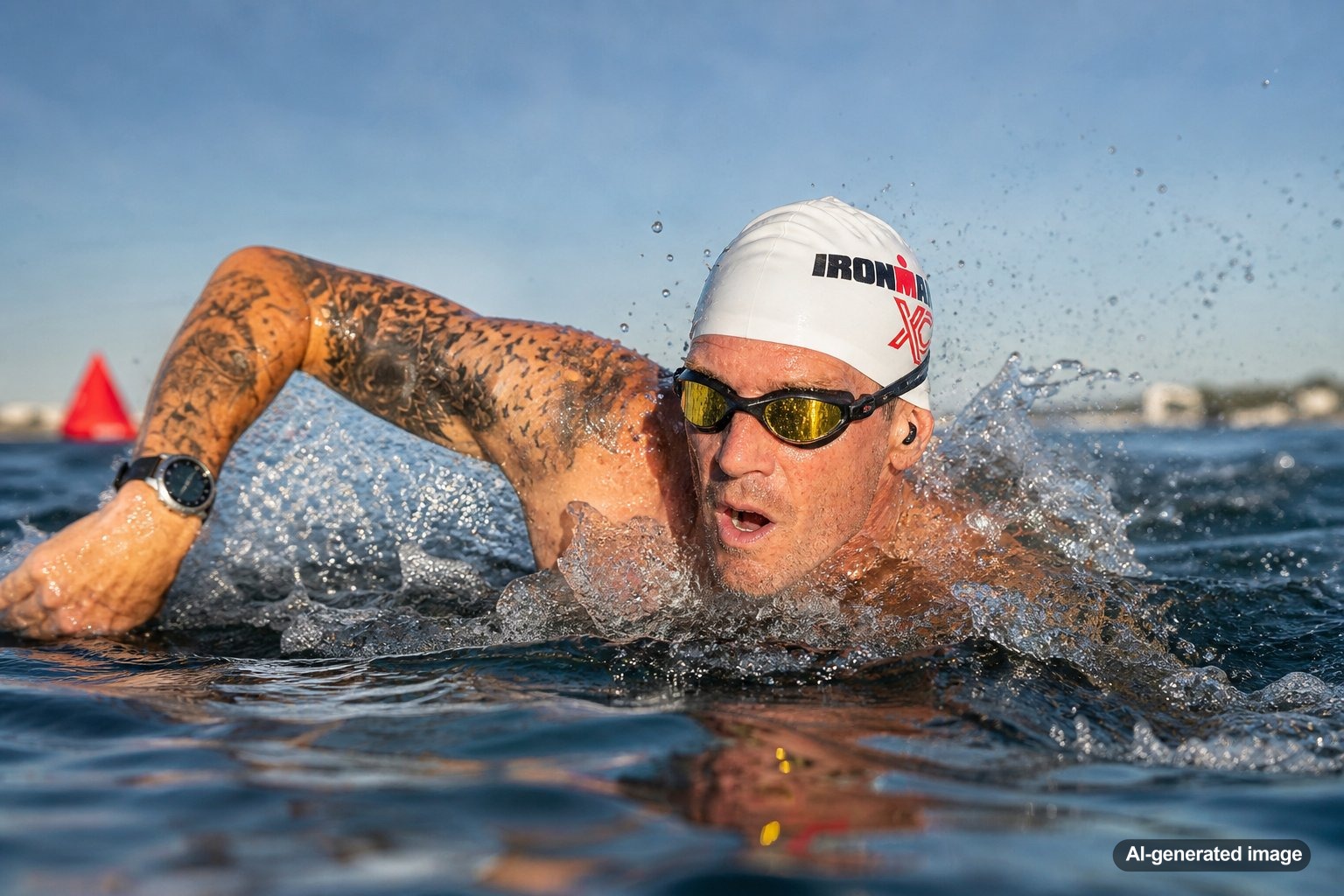
Open-water swimming has a way of telling the truth. There are no lane lines to keep you perfectly straight, no wall to touch every 25 yards, and no black line at the bottom of the pool to quietly reassure you that you are still on course. The water moves. People crowd your space. The horizon can look farther away than it did from shore. Race day becomes less about perfect conditions and more about how well you can stay calm inside imperfect ones.
That is exactly why open-water swimming can be such a powerful builder of mental toughness. For endurance athletes, especially those preparing for triathlon or Ironman racing, the swim is not just a physical segment. It is an early test of focus, patience, adaptability, and self-trust. It teaches the kind of steadiness that carries into every part of a hard race, and often into life beyond the course.
For Greg Schaefer, endurance sports have always been connected to more than finish lines. His story brings together family, leadership, athletic discipline, adversity, Parkinson’s advocacy, and the simple but demanding choice to keep moving forward. You can learn more about that broader mission on the About Greg page.
Quick answer
- Open-water swimming builds mental toughness because it forces athletes to stay composed without the controlled structure of a pool.
- Race-day confidence grows when swimmers practice sighting, contact, waves, temperature changes, and uncertainty before the event.
- The mental skill is not pretending the water is easy. It is learning to respond calmly when it is not.
- Open water rewards patience, rhythm, breathing control, and the ability to reset after small mistakes.
- The same mindset that gets an athlete through rough water can help carry them through the bike, run, and harder seasons of life.
Open water removes the illusion of perfect control
Pool swimming offers structure. You know the distance to the wall. You can see your lane. The water is usually calm, marked, and predictable. Open water takes much of that away. The course may be clear on paper, but once the horn sounds, the experience becomes alive and moving.
That uncertainty is not a flaw in the training. It is the training. A swimmer learns that confidence cannot depend on everything going exactly right. It has to come from preparation, awareness, and the ability to make good decisions while uncomfortable.
Race day often exposes the gap between fitness and composure. An athlete may have the conditioning to swim the distance, but still struggle if they panic when bumped, drift off line, miss a breath, or feel crowded in the first few hundred yards. Open-water practice closes that gap by making the unfamiliar familiar.
It teaches calm under contact and pressure
One of the biggest mental differences between pool swimming and open-water racing is proximity. On race day, other swimmers may be beside you, behind you, or directly in your line. Arms splash. Feet kick. Someone may cross your path. None of this means the race is going badly. It means the race has started.
Mentally tough athletes do not waste energy interpreting normal race chaos as disaster. They learn to breathe, adjust, protect their space, and keep moving. That skill is built through exposure. The more an athlete practices swimming near others, starting in groups, and settling into rhythm after contact, the less startling those moments become.
This matters because panic usually narrows attention. The mind jumps from one problem to another: Where am I? Why is everyone so close? Am I behind? What if I cannot settle down? Training gives the athlete a different pattern. Breathe. Sight. Find space. Reset the stroke. Continue.
It builds trust in the next stroke
Open-water swimming rewards the athlete who can make the next stroke without needing the entire race to feel manageable at once. That is a powerful mental habit. A long swim can feel overwhelming when viewed as one massive distance. It becomes more possible when broken into small, repeatable actions.
This is where Greg’s core message, One More Step… Just One More, fits naturally into the endurance mindset. In the water, it may sound more like one more breath, one more sighting point, one more calm stroke. The principle is the same. You do not need to solve the whole race in one moment. You need to stay present enough to do the next right thing.
That kind of trust is built in imperfect practice sessions. The swim where the current is not friendly. The morning when visibility is poor. The day when the water feels cold and your rhythm takes longer to find. Those sessions teach an athlete that discomfort is not automatically danger, and difficulty is not automatically failure.
It sharpens focus when distractions multiply
Open water gives the mind plenty to chase. A buoy looks farther away than expected. A swimmer on the left is drifting in. The pack is moving faster than planned. The sun makes sighting harder. A wave interrupts the breath. Every one of those details can pull attention away from the task.
Mental toughness is not the absence of distraction. It is the ability to choose what deserves attention. In open water, the athlete learns to sort signal from noise. The signal might be the next buoy, breathing pattern, body position, stroke rhythm, or decision to move slightly wider for cleaner water. The noise is everything that does not require a response.
This kind of focus becomes valuable later in the race. On the bike, wind, pacing, nutrition, and passing athletes can create the same mental clutter. On the run, fatigue makes everything louder. Open-water swimming gives athletes an early chance to practice staying centered while the environment keeps changing.
It develops adaptability, not just toughness
Some athletes think mental toughness means forcing the same plan no matter what happens. Open water teaches a more useful version. Real toughness includes adaptability. It asks, What is happening now, and what adjustment makes sense?
Maybe the athlete needs to sight more often because the course is crowded. Maybe they need to shorten the stroke slightly in choppy water. Maybe they need to breathe away from the waves, start wider than planned, or let the first surge pass before settling into their own effort. These are not signs of weakness. They are signs of race intelligence.
In business, leadership, family, advocacy, and endurance sports, rigid confidence can crack under pressure. Adaptive confidence bends, assesses, and keeps moving. That is one reason open-water training fits so well within a broader resilience practice. It teaches strength with awareness.
What athletes often miss about open-water confidence
Confidence is not built only by swimming farther
Distance matters, but race-day confidence also comes from practicing the small situations that tend to create stress. Those include mass starts, crowded turns, sighting into sun glare, swimming without stopping, recovering after swallowing water, and staying relaxed when the pace changes unexpectedly.
Athletes sometimes measure readiness by yardage alone. Yardage is important, but it does not automatically prepare the mind for open-water conditions. The stronger approach is to combine physical endurance with scenario-based practice.
For example, a swimmer can practice starting too fast for 30 seconds and then intentionally settling down. They can swim around buoys with others nearby. They can practice pausing for one breaststroke sighting movement, then returning to freestyle without drama. They can rehearse a phrase that brings them back to rhythm when their mind starts to race.
These small practices create a sense of earned confidence. On race day, the athlete is not hoping nothing difficult happens. They have already met difficulty in training and learned how to continue.
Practical ways open-water swimming strengthens race-day mindset
- Practice sighting as a rhythm, not a disruption. Many athletes lift their head too high or too late when anxious. Practicing sighting during normal training helps it become part of the stroke instead of a panic response.
- Rehearse the first five minutes. The opening minutes of a race can feel crowded and fast. Athletes who prepare for that intensity are less likely to overreact to it.
- Learn your reset cue. A reset cue might be a phrase, a breathing pattern, or a physical cue such as relaxing the hands. The goal is to interrupt panic before it takes over.
- Train in varied but safe conditions. Calm water builds skill, but varied conditions build adaptability. Safety should always come first, including appropriate supervision, visibility, and awareness of weather and water conditions.
- Separate discomfort from danger. Open water can feel uncomfortable without being unsafe. Learning that distinction helps athletes respond with judgment instead of fear.
The deeper lesson: keep moving without needing certainty
There is a reason open-water swimming often stays with athletes long after the race. It is a physical experience, but it also becomes a lesson in uncertainty. You cannot see everything. You cannot control everything. You cannot pause the water and ask for perfect conditions. You can breathe, look up, adjust, and continue.
That lesson reaches beyond endurance sports. Leaders face uncertainty. Families face uncertainty. People living through illness, change, loss, or transition face uncertainty. The question is not whether the water will always be calm. It rarely is. The question is whether we can keep our composure, make the next good choice, and move forward with purpose.
That is the kind of message Greg brings to audiences: not a polished fantasy of easy resilience, but the lived reality of discipline, family, business, racing, advocacy, and forward motion. For organizations and teams looking for a grounded voice on resilience and performance, Greg’s speaking work connects these lessons to real life in a way that is practical, human, and lasting.
FAQ
Does open-water swimming make you mentally tougher for triathlon race day?
Yes, it can. Open-water swimming helps athletes practice staying calm in conditions that are less controlled than the pool. The mental benefit comes from repeated exposure to uncertainty, contact, sighting, pacing, and the need to reset quickly.
What is the hardest mental part of open-water swimming?
For many athletes, the hardest part is managing the first wave of anxiety when the swim feels crowded, cold, fast, or visually disorienting. Once the athlete settles into breathing and rhythm, the experience often becomes more manageable.
How can beginners build confidence in open water?
Beginners can build confidence by practicing gradually, swimming with experienced partners or organized groups, choosing safe conditions, learning sighting skills, and becoming familiar with the feeling of swimming without pool walls or lane lines.
Why does open-water swimming matter if I am already fit?
Fitness helps, but race-day readiness also depends on composure. A fit athlete can still lose time or energy if they panic, swim off course, or react poorly to contact. Open-water practice trains the mind and body together.
Interested in bringing Greg’s message to your event or organization?
Learn more about Greg’s speaking work or get in touch to start the conversation.
Contact Greg or learn more about the Forward Motion Fund.
This article is for educational purposes only and is not medical advice. For diagnosis, treatment, or personalized medical guidance, please speak with a qualified healthcare professional.


