

How To Push Through Panic During A Triathlon Swim
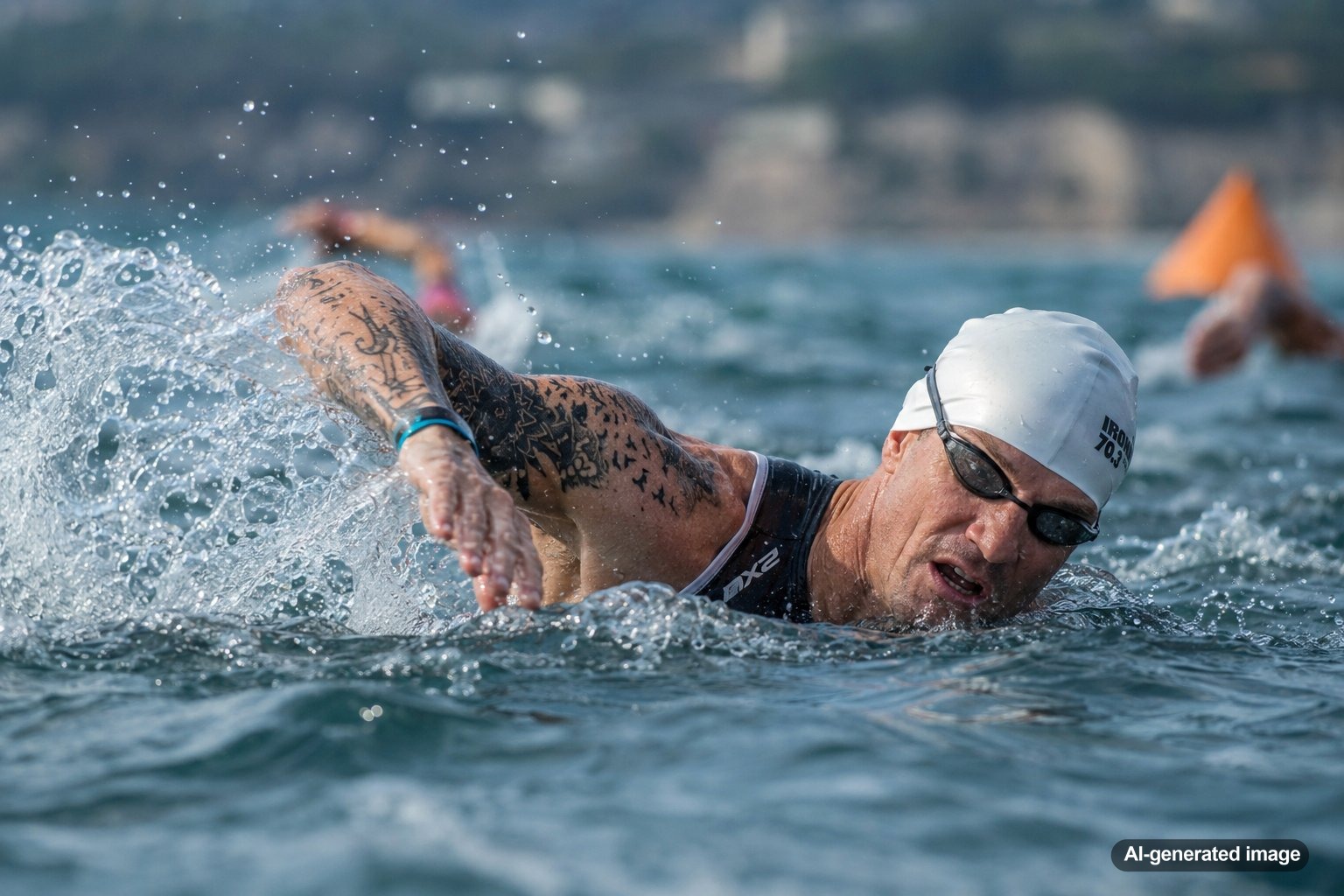
Panic during a triathlon swim can arrive fast. One moment you are moving with the field, and the next your breathing feels rushed, the water feels smaller, and finishing the swim suddenly seems much farther away. The goal in that moment is not to prove how tough you are by forcing your way forward. It is to regain enough control to make a safe, deliberate decision about your next few strokes.
For endurance athletes, that distinction matters. Greg Schaefer’s world has long been shaped by endurance, adversity, business leadership, family, and the discipline of continuing forward when circumstances change. You can learn more about Greg’s story and the experiences behind that perspective. In the water, forward motion does not always mean swimming harder. Sometimes it means slowing down, resetting, and taking one controlled step at a time.
Quick answer: What should you do when panic hits during a triathlon swim?
- Stop racing the people around you. Give yourself permission to slow down immediately.
- Make breathing the priority. Use an easier stroke, float, or move to a position that allows you to settle your breathing safely.
- Reduce the problem to the next small action. Think about the next breath, buoy, landmark, or short stretch instead of the entire course.
- Choose safety over pride. If you cannot regain control or you are in distress, signal for assistance and exit the swim if necessary.
Recognize the difference between racing hard and losing control
A triathlon swim is uncomfortable by nature. You may be surrounded by athletes, bumped unexpectedly, splashed in the face, pushed off your preferred line, or forced to breathe differently than you planned. None of those moments automatically means something has gone wrong.
Panic feels different because your attention can begin collapsing inward. Instead of noticing your line, your stroke, or the next buoy, your thoughts may narrow to one urgent message: get out of here. That mental shift can tempt you to swim harder, breathe faster, or fight the water.
That is often the moment to do the opposite. Back off the intensity. Create space if you can. Stop measuring yourself against the swimmers beside you. Your first job is no longer holding pace. Your first job is restoring enough control to think clearly.
Slow the situation down before you try to speed yourself up
When athletes panic, they sometimes try to solve the problem with more effort. More kicking. More aggressive strokes. More urgency. But effort and control are not the same thing.
If conditions and your ability allow it, shift temporarily to an easier stroke, float, or otherwise reduce your workload. The specific choice depends on your swimming ability, the conditions, and the event environment. The point is to interrupt the feeling that you must keep attacking the course at race pace.
Think small. Instead of asking, “How am I going to finish this swim?” ask, “Can I make the next breath controlled?” Then make the next one controlled. Then find the next buoy. Then take a few relaxed strokes. A large problem becomes more manageable when you stop demanding that your mind solve the entire race at once.
Use your breathing as an anchor, not another performance test
Your breathing does not need to look perfect while you are resetting. This is not the time to obsess over a planned breathing pattern or whether your technique looks efficient. Use the breathing pattern that helps you regain composure and maintain awareness of your surroundings.
Exhaling deliberately can also give your mind a simple job. Rather than thinking about the crowded start, the distance remaining, or what your finish time might become, focus your attention on one cycle at a time: exhale, breathe, settle, repeat.
This is a useful distinction for endurance athletes: technique matters, but rigid attachment to technique can become a problem when conditions change. Adaptability is part of endurance. The strongest decision may be to temporarily abandon your perfect race plan so you can recover the ability to race at all.
Create physical space when the crowd is feeding the panic
Sometimes the problem is not the distance. It is the traffic. Feet, elbows, splashing, limited visibility, and constant contact can make an already demanding swim feel chaotic.
If the course and race conditions allow, moving slightly away from the densest group may be worth a few extra yards. You may give up a little drafting benefit or the shortest possible line, but you can gain something more valuable in that moment: room to swim your own stroke.
This is where athletes have to separate ego from execution. Losing a few seconds is not failure. Adjusting your line is not weakness. A smart race is built on decisions that help you continue, not decisions that look tough from the outside.
Break the swim into landmarks instead of one intimidating distance
Long open-water distances can become mentally overwhelming when you think about them as one uninterrupted task. Panic makes that tendency even stronger. The finish suddenly feels impossibly far away.
Reduce the scale. Swim to the next buoy. If that still feels too far, focus on a shorter visual reference or a manageable number of strokes. Once you reach it, choose the next target.
This approach mirrors a broader endurance principle: you do not always need confidence about the entire journey. You need enough commitment for the next useful action. That idea also sits at the heart of Greg’s wider message of forward motion: one more step, then another.
Give yourself permission to abandon the original race plan
A race plan is valuable until circumstances make it the wrong plan. Maybe you intended to start aggressively. Maybe you wanted to stay on certain feet. Maybe you had a pace target in mind. Once panic enters the picture, protecting the original strategy can become less important than adapting intelligently.
You may need to slow down for several minutes. You may need to swim wider. You may need to pause. You may need assistance. You may even need to end the swim.
None of those decisions can be evaluated accurately through pride alone. The relevant question is whether continuing is safe and whether you have regained enough control to do so deliberately.
Know when pushing through is the wrong move
Mental toughness should never become an excuse to ignore genuine distress. If you cannot regain control, cannot continue safely, or experience concerning physical symptoms, seek assistance immediately. Race support personnel are there for a reason. Know the event’s safety procedures before you enter the water, and remember that ending one race is always preferable to turning a difficult moment into a dangerous one.
Train the response before race day
The best time to decide what you will do during swim panic is not after panic begins. Build a simple reset plan during training so you have familiar options available when stress rises.
Practice changing pace without treating it like failure. Practice switching temporarily to an easier stroke. Practice sighting calmly after your rhythm is disrupted. In appropriate and supervised conditions, become familiar with the sensation of stopping, floating, regrouping, and restarting. Open-water training with appropriate support can also help you become more familiar with limited visibility, waves, navigation, and other variables that differ from pool swimming.
You can also develop a short mental cue that is easy to remember under pressure. It does not need to be dramatic. “Slow down.” “Next breath.” “Find the buoy.” “Settle and move.” Simple language is easier to use when your attention is already overloaded.
What experienced endurance athletes understand about panic
One of the most overlooked lessons in endurance sport is that toughness is not constant aggression. Toughness includes adjustment. It includes patience. It includes recognizing when the fastest route back to progress is temporarily slowing down.
That lesson reaches beyond triathlon. Leaders face it when a business plan stops working. Families face it when circumstances change without permission. Athletes face it when their bodies, conditions, or expectations force a new plan. The ability to respond without surrendering your larger purpose is one of the most useful forms of resilience.
Greg’s speaking work explores that intersection of endurance, adversity, leadership, and forward motion with organizations and teams navigating challenges of their own.
Frequently asked questions
Is panic during a triathlon swim unusual?
Open-water racing can create intense stress for athletes because of factors such as crowding, contact, waves, visibility, navigation, temperature, and the pressure of competition. The important issue is not whether you think you should feel nervous. It is whether you can respond safely and deliberately when stress rises.
Should I keep swimming if I start to panic?
Do not automatically force yourself to maintain race pace. Slow down and assess whether you can regain control safely. If you remain in distress or do not feel able to continue safely, signal for assistance and follow the event’s safety procedures.
Can better swim fitness prevent panic?
Fitness and preparation may improve confidence, but panic is not simply a fitness test. Open-water skills, race-start experience, familiarity with contact, navigation practice, pacing, and having a reset plan can all be useful parts of preparation.
What is the best mental cue to use?
Choose something short enough to remember when you are stressed. “Next breath” or “slow and steady” can work because each phrase directs attention toward an immediate action rather than the entire distance remaining.
What if I have to stop the race?
Stopping one event does not erase your preparation or define you as an athlete. A safe decision made under difficult circumstances is still a decision you can learn from. Review what happened, identify what you can practice, and use the experience to prepare differently next time.
The bottom line
You do not push through triathlon swim panic by pretending it is not happening. You push through, when it is safe to do so, by reducing the intensity, regaining control, creating space, focusing on the next manageable action, and letting go of the race plan you thought you had to follow. Forward motion can be fast or slow. What matters is that it remains deliberate.
Interested in bringing Greg’s message to your event or organization?
Learn more about Greg’s speaking work or get in touch to start the conversation.
Contact Greg or learn more about the Forward Motion Fund.
This article is for educational purposes only and is not medical advice. For diagnosis, treatment, or personalized medical guidance, please speak with a qualified healthcare professional.


