

How To Build A Race Day Mindset That Holds Up Under Pressure
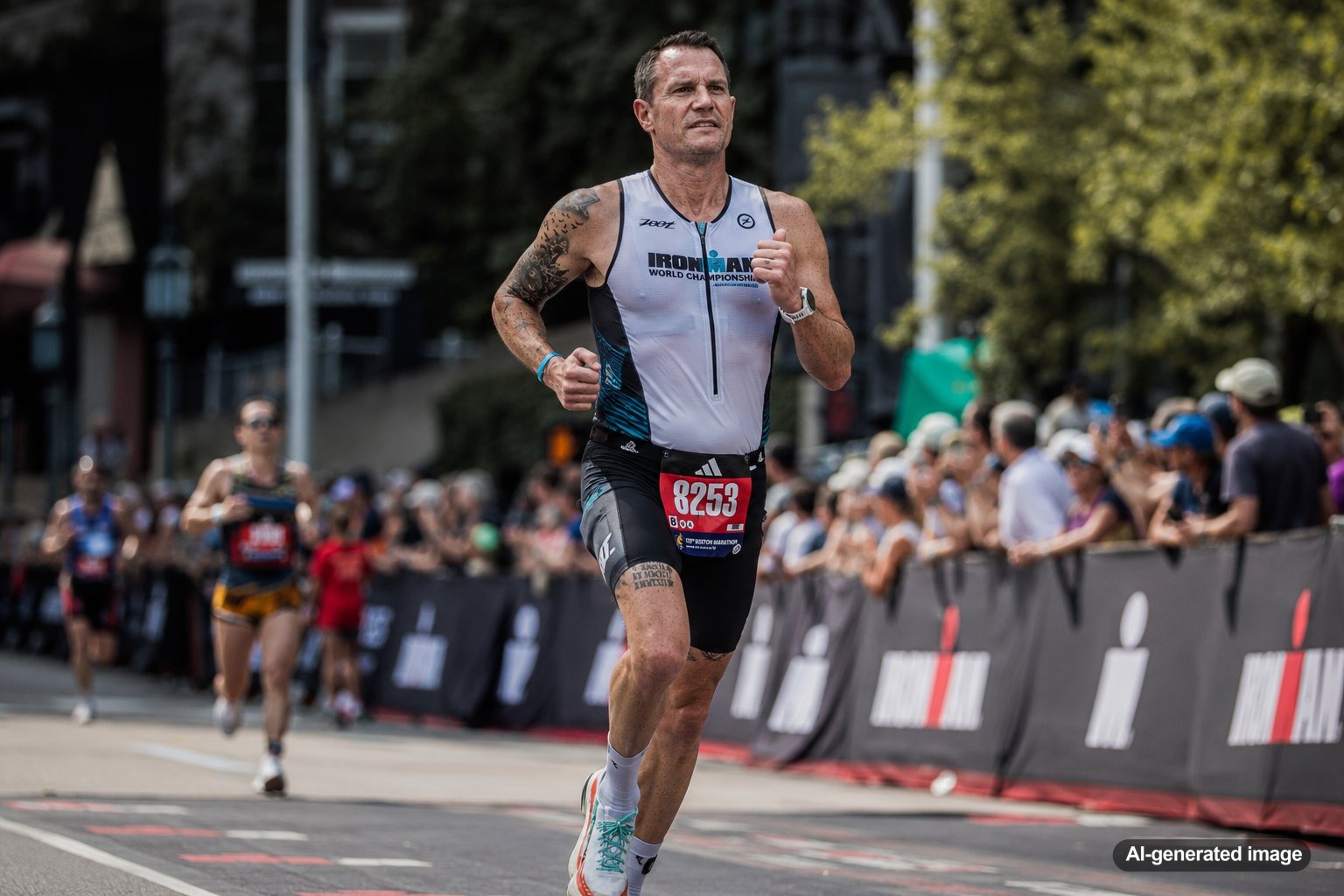
Race day has a way of revealing what training cannot fully predict. You can know your pacing plan, trust your gear, study the course, and still find yourself facing a moment where the body feels loud and the mind starts bargaining. That is where mindset stops being a slogan and becomes a skill.
For an endurance athlete, entrepreneur, speaker, parent, or anyone walking into a high-pressure moment, the goal is not to feel fearless. The goal is to stay present enough to make the next useful decision. Greg Schaefer’s story lives in that space between preparation and uncertainty, where forward motion is not about pretending pressure is easy. It is about learning how to keep moving when the pressure is real. You can learn more about Greg’s path on the About Greg page.
Quick answer
- A strong race day mindset starts before the race, not at the start line.
- Pressure feels more manageable when you narrow your focus to the next controllable action.
- The best mindset is flexible, not fragile. It can adjust when the day changes.
- Simple cues, calm pacing, and honest self-talk can help you stay grounded.
- Race day resilience is built through practice, discomfort, and one more step at a time.
Mindset starts with a realistic plan
A race day mindset that holds up under pressure is not built on blind optimism. It begins with a plan that respects the distance, the conditions, the course, and the fact that not everything will go perfectly. Athletes often get into trouble when their entire mental approach depends on the day unfolding exactly as imagined.
A stronger approach is to build the plan in layers. There is the ideal plan, the adjusted plan, and the survival plan. The ideal plan is what you hope to execute if conditions cooperate. The adjusted plan is what you do when weather, pacing, nutrition, or fatigue creates friction. The survival plan is the stripped-down version: breathe, fuel, move, reassess, repeat.
This kind of preparation does not make an athlete negative. It makes the athlete durable. When pressure rises, the mind does not have to panic because it has already rehearsed the possibility of change.
Focus on what is controllable
Pressure often grows when attention spreads too wide. You start thinking about the finish line, the people tracking you, the missed split, the hill ahead, the athlete who passed you, and the possibility that the day may not go your way. None of that helps you make the next good choice.
A grounded race day mindset brings attention back to what can be controlled in the moment. That might mean relaxing your shoulders, returning to your breathing, taking in fuel, checking your pace, shortening your stride, or resetting your posture. These are small actions, but under pressure small actions are powerful because they give the mind somewhere useful to land.
This is where Greg’s core message, One More Step… Just One More, becomes more than a phrase. It is a practical way to shrink a massive challenge into something the mind can handle. The next step may not solve the whole race, but it keeps the race alive.
Use cues that are simple enough to remember when it hurts
Race day is not the time for complicated mental scripts. When fatigue builds, your brain needs simple cues. Strong athletes often rely on short phrases that are easy to repeat and tied to a specific action.
- Calm is fast. Use this when anxiety is making you rush.
- Fuel before feelings. Use this when mood drops and nutrition may be part of the problem.
- Check the form. Use this when fatigue starts changing posture or rhythm.
- One more step. Use this when the whole distance feels too large.
The cue does not need to sound impressive. It needs to work when the moment is uncomfortable. A good cue interrupts panic, redirects attention, and reconnects the athlete with a useful behavior.
Separate pain from panic
Endurance racing includes discomfort. That does not mean every difficult sensation is an emergency. A strong mindset learns to distinguish between pain that requires wise attention and discomfort that can be managed with patience, pacing, and calm decision-making.
Panic tends to speak in absolutes: I am done, I cannot do this, the day is ruined. A trained mindset asks better questions: Have I fueled? Am I too hot? Am I going too hard? Can I slow down for ten minutes and reassess? Is this a warning sign or a hard patch?
This distinction matters because many races are not decided by the absence of low points. They are shaped by how an athlete responds to them. A bad mile does not have to become a bad race. A rough section does not have to define the entire day.
Practice pressure before race day
Mental toughness is easier to trust when it has been tested. Training is not only about building fitness. It is also a place to practice staying calm when the workout gets messy.
That may mean training in less-than-perfect weather, practicing nutrition when the stomach feels uncertain, finishing a workout without dramatic self-talk, or learning to adjust pace without treating the adjustment as failure. It may also mean rehearsing transitions, gear checks, wake-up routines, and pre-race timing so the mind is not flooded by avoidable stress.
Pressure feels different when it is familiar. The athlete who has practiced resetting in training has a better chance of resetting on race day.
Build a mindset that allows adjustment
One of the most overlooked parts of race day mindset is flexibility. Some athletes mistake toughness for stubbornness. They believe that sticking to the plan at all costs proves strength. In reality, the strongest race day mindset often knows when to adjust.
A flexible athlete can slow down before blowing up. They can change fueling when the original plan is not working. They can accept wind, heat, rain, cramps, nerves, or unexpected course challenges without turning every change into a personal failure. Flexibility protects forward motion.
This is true beyond racing too. Leaders, teams, families, and people facing life-altering adversity all need a version of this skill. The plan matters. The ability to keep moving when the plan changes matters even more.
What people often miss
A race day mindset is not just about being intense. Intensity can help, but steadiness usually carries you farther. The athlete who can stay calm, adapt, and keep making useful choices often has an advantage over the athlete who depends only on emotion.
Race day self-talk should be honest, not fake
There is a difference between encouragement and denial. Telling yourself everything feels amazing when it clearly does not can create a mental disconnect. Honest self-talk is more useful: This is hard, but I can manage the next five minutes. I need to slow down and reset. I have been here before. Keep moving.
That kind of self-talk respects reality without surrendering to it. It does not require pretending the moment is easy. It simply refuses to let discomfort make every decision.
Connect the race to something larger than the clock
Goals matter. Finish times, splits, placements, and personal records can be meaningful. But when pressure gets heavy, it can help to remember why the race matters beyond the numbers.
For some athletes, the deeper reason is family. For others, it is recovery, identity, health, community, gratitude, or proving that a difficult chapter did not get the final word. For Greg, endurance and forward motion are connected to family, business leadership, Parkinson’s advocacy, and the mission behind the Forward Motion Fund.
A larger why does not remove the pain of racing. It gives the pain context. It reminds the athlete that the effort has meaning even when the day gets hard.
FAQ
How do you stay calm before a race?
Stay close to routines that are familiar. Lay out gear early, simplify the morning, avoid last-minute comparison, and use short breathing or focus cues. Calm often comes from reducing unnecessary decisions.
What should I think about during a hard part of a race?
Think smaller. Focus on the next aid station, the next mile, the next turn, or the next minute. Under pressure, the mind usually performs better with a near target than with the entire race in view.
Is race day mindset something you can train?
Yes. Mindset improves when you practice pacing, adjusting, calming down, fueling, and finishing difficult sessions with discipline. Training the mind does not mean avoiding discomfort. It means learning how to respond to it.
What if my race plan falls apart?
Pause the mental spiral and return to the basics: breathe, fuel, check your effort, assess what is still possible, and choose the next useful action. A changed plan is not automatically a failed race.
How does mindset apply outside endurance sports?
The same principles apply to leadership, business, family, advocacy, and personal adversity. Pressure becomes more manageable when you focus on what is controllable, adjust when needed, and keep taking the next right step.
The bottom line
A race day mindset that holds up under pressure is built from preparation, flexibility, honest self-talk, and the ability to return to the present moment. It is not loud. It is steady. It does not promise that every mile will feel good. It helps you keep moving when the mile gets hard.
That is the lesson racing keeps teaching: you do not have to solve the whole distance at once. Sometimes the strongest thing you can do is take one more step, then another, then another.
Interested in bringing Greg’s message to your event or organization?
Learn more about Greg’s speaking work or get in touch to start the conversation.
Contact Greg or learn more about the Forward Motion Fund.
This article is for educational purposes only and is not medical advice. For diagnosis, treatment, or personalized medical guidance, please speak with a qualified healthcare professional.


