What Racing With Uncertainty Teaches You About Control

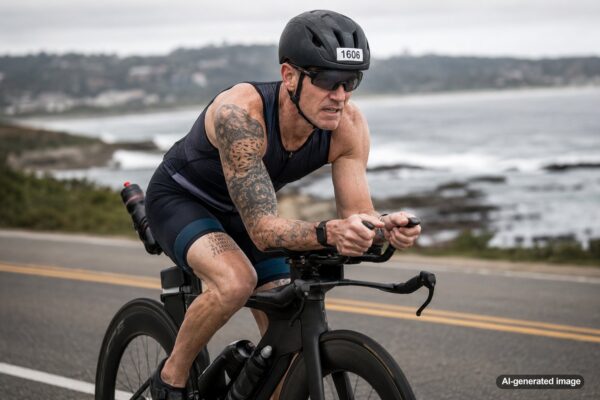
Every start line carries uncertainty. You can study the course, follow a training plan, prepare your equipment, and rehearse your nutrition, but you cannot control the weather, mechanical problems, unexpected pain, another athlete’s decisions, or how your body will respond deep into the race. Racing makes that truth impossible to ignore.
The lesson is not that control is meaningless. It is that control has boundaries. Strong athletes learn to invest their attention in the choices that remain available instead of wasting energy arguing with circumstances that have already arrived. That distinction matters far beyond endurance sports. It applies to leadership, business, health challenges, family responsibilities, and any season in which the next mile is unclear.
Quick answer
- You cannot control every condition, but you can control how deliberately you prepare.
- Adaptability is not a failure of the plan. It is part of executing the plan well.
- Small decisions often matter more than dramatic emotional reactions.
- Uncertainty becomes more manageable when you focus on the next useful action.
- Real confidence comes from knowing you can respond, not from believing nothing will go wrong.
Preparation creates options, not certainty
Training is often described as a way to gain control. In reality, preparation does something more useful: it gives you options when control disappears.
A long-distance athlete may prepare for heat, wind, hills, equipment trouble, pacing mistakes, and nutrition problems. None of that work guarantees a smooth day. It creates a library of responses. When the temperature rises, the athlete knows how to adjust effort. When a planned pace becomes unrealistic, the athlete can protect the larger objective instead of forcing a number that no longer fits the conditions.
This is one reason experience matters. Experienced racers are not necessarily calm because they expect perfection. They are often calm because they have encountered enough imperfect situations to trust their ability to make another decision.
The same principle appears in leadership. A strong leader cannot guarantee that a market will remain stable, a project will stay on schedule, or a difficult conversation will unfold exactly as expected. The leader can prepare the team, clarify priorities, create backup plans, and build enough trust that people can respond without panic. Greg’s work across endurance sports, entrepreneurship, family, advocacy, and speaking reflects this broader truth: preparation is valuable because it strengthens your response, not because it eliminates every unknown.
The difference between control and influence
One of the most useful distinctions in racing is the difference between what you control, what you influence, and what you must accept.
- You control choices such as effort, attention, attitude, communication, and whether you follow the next sensible step.
- You influence outcomes through preparation, pacing, recovery, teamwork, and consistent habits.
- You accept conditions that cannot be changed in the moment, including weather, course changes, delays, and many unexpected disruptions.
Problems grow when those categories become confused. Trying to control an uncontrollable condition burns energy without improving the situation. Treating an influenceable factor as fixed can lead to passivity. Ignoring a controllable choice gives away agency that is still available.
Consider a race that becomes much hotter than expected. The athlete cannot lower the outdoor temperature. The athlete may be able to influence body temperature through pacing, hydration, shade, cooling strategies, and aid-station decisions. The athlete can control whether frustration becomes reckless effort or a signal to reassess.
This framework is practical because it interrupts the emotional spiral. Instead of asking, “Why is this happening?” for the tenth time, you can ask, “What category is this in, and what is the next useful response?”
Adaptability is part of discipline
Discipline is sometimes mistaken for rigid obedience to the original plan. Endurance racing exposes the weakness in that definition. A plan created before the race cannot account for every detail that will appear during it.
Real discipline includes the willingness to adjust without losing the purpose behind the plan. Slowing down early may protect the ability to finish strongly. Changing nutrition may prevent a manageable problem from becoming a race-ending one. Walking briefly through an aid station may be more disciplined than chasing a pace that no longer serves the day.
Adaptability does not mean changing direction whenever discomfort appears. It means distinguishing between ordinary difficulty, useful warning signs, emotional noise, and meaningful new information. That judgment develops through practice, honest reflection, and the humility to accept that the original plan was based on incomplete knowledge.
In business, the same distinction separates steady leadership from stubbornness. A mission can remain stable while tactics change. A team can stay committed to the outcome while revising the route. Flexibility is not the opposite of conviction. Often, it is what allows conviction to survive contact with reality.
Small decisions protect the whole race
Uncertainty can tempt people into dramatic thinking. A difficult ten-minute stretch begins to feel like proof that the entire day is falling apart. A missed target becomes a reason to abandon every other standard. Racing teaches a quieter response: protect the next decision.
That may mean taking in fluids, adjusting cadence, checking equipment, relaxing tense shoulders, eating before hunger becomes severe, or reducing effort before a small problem expands. None of these actions feels heroic. Together, they can preserve the race.
This pattern matters outside athletics because difficult seasons are often shaped by ordinary decisions made repeatedly under stress. Returning a call. Asking for help. Keeping an important appointment. Speaking honestly with a spouse, colleague, or teammate. Finishing the next necessary task without demanding that it solve the entire future.
Greg’s core message, “One More Step… Just One More,” is not a promise that one step fixes everything. It is a way to restore movement when the full distance feels too large. The Forward Motion Fund carries that same mission-driven emphasis on continuing to act with purpose when certainty is unavailable.
Confidence is trust in your response
Fragile confidence depends on conditions going according to plan. Durable confidence comes from a different belief: even when the day changes, I can remain present, gather information, and make another decision.
This kind of confidence is not bravado. It does not deny fear, fatigue, disappointment, or doubt. It acknowledges them without handing them complete authority.
An athlete may feel uncertain and still reduce pace intelligently. A leader may feel pressure and still communicate clearly. A parent may feel overwhelmed and still choose patience in the next conversation. Courage and uncertainty can occupy the same moment.
The goal is not to become emotionally untouched by disruption. It is to shorten the distance between disruption and a useful response.
What people often miss about controlling the controllables
- Acceptance is not surrender. Accepting current conditions helps you stop wasting energy on denial and start using the choices that remain.
- A changed goal can still be meaningful. Finishing safely, supporting another athlete, or learning from the day may become more important than the original time target.
- Emotions carry information, but not always instructions. Frustration may signal that expectations need to change. It does not automatically mean you should quit or push harder.
- Support is part of performance. Coaches, family members, teammates, volunteers, and trusted advisors can help restore perspective when your own view narrows.
A practical reset for uncertain moments
When a race, project, or life situation begins to feel out of control, a simple reset can create enough space for a better decision.
- Name what changed. Use factual language. Avoid turning one problem into a prediction about the entire outcome.
- Separate control, influence, and acceptance. Identify where action is still possible.
- Check the basics. In racing, that may include pace, hydration, nutrition, equipment, breathing, and body signals. In leadership, it may include priorities, resources, communication, and timing.
- Choose the next useful action. Make it specific and small enough to complete now.
- Reassess after movement. New information often appears once you stop spiraling and start responding.
This process does not remove uncertainty. It prevents uncertainty from controlling every decision that follows.
What racing teaches beyond the finish line
The finish line is visible, but the deeper lesson is less obvious. Racing teaches that certainty was never the source of forward motion. Preparation, judgment, support, purpose, and repeated choices were.
You may not get the weather you expected. Your body may not deliver the performance you imagined. A carefully built strategy may need to change within the first hour. Yet the day can still hold meaning. You can still compete with integrity. You can still learn something honest about yourself. You can still help another person. You can still take the next step.
That perspective does not make hard circumstances easy. It makes them workable. It replaces the impossible task of controlling everything with the demanding but achievable task of responding well.
Frequently asked questions
What does “control the controllables” mean in racing?
It means directing attention toward choices you can make, such as pacing, nutrition, effort, focus, and communication, while accepting that factors such as weather and unexpected disruptions cannot always be changed.
How can an athlete prepare for uncertainty?
An athlete can practice different conditions, test equipment and nutrition, develop backup plans, learn personal warning signs, and rehearse how to adjust effort. The purpose is not to predict every problem. It is to improve the quality of the response.
Does adapting a race plan mean the original plan failed?
No. A plan is a decision-making tool, not a contract with conditions that may no longer exist. A thoughtful adjustment can be evidence that the athlete is executing the larger strategy well.
How does this mindset apply to leadership?
Leaders also operate with incomplete information. They can clarify priorities, prepare teams, communicate honestly, adjust tactics, and focus on decisions that remain available rather than pretending every outcome can be controlled.
Can uncertainty ever be completely eliminated?
No. The more useful goal is to build the capacity to respond without losing your values, purpose, or ability to make sound decisions.
Interested in bringing Greg’s message to your event or organization?
Learn more about Greg’s speaking work or get in touch to start the conversation.
Contact Greg or learn more about the Forward Motion Fund.
This article is for educational purposes only and is not medical advice. For diagnosis, treatment, or personalized medical guidance, please speak with a qualified healthcare professional.