

What The Run Off The Bike Teaches You About Resilience
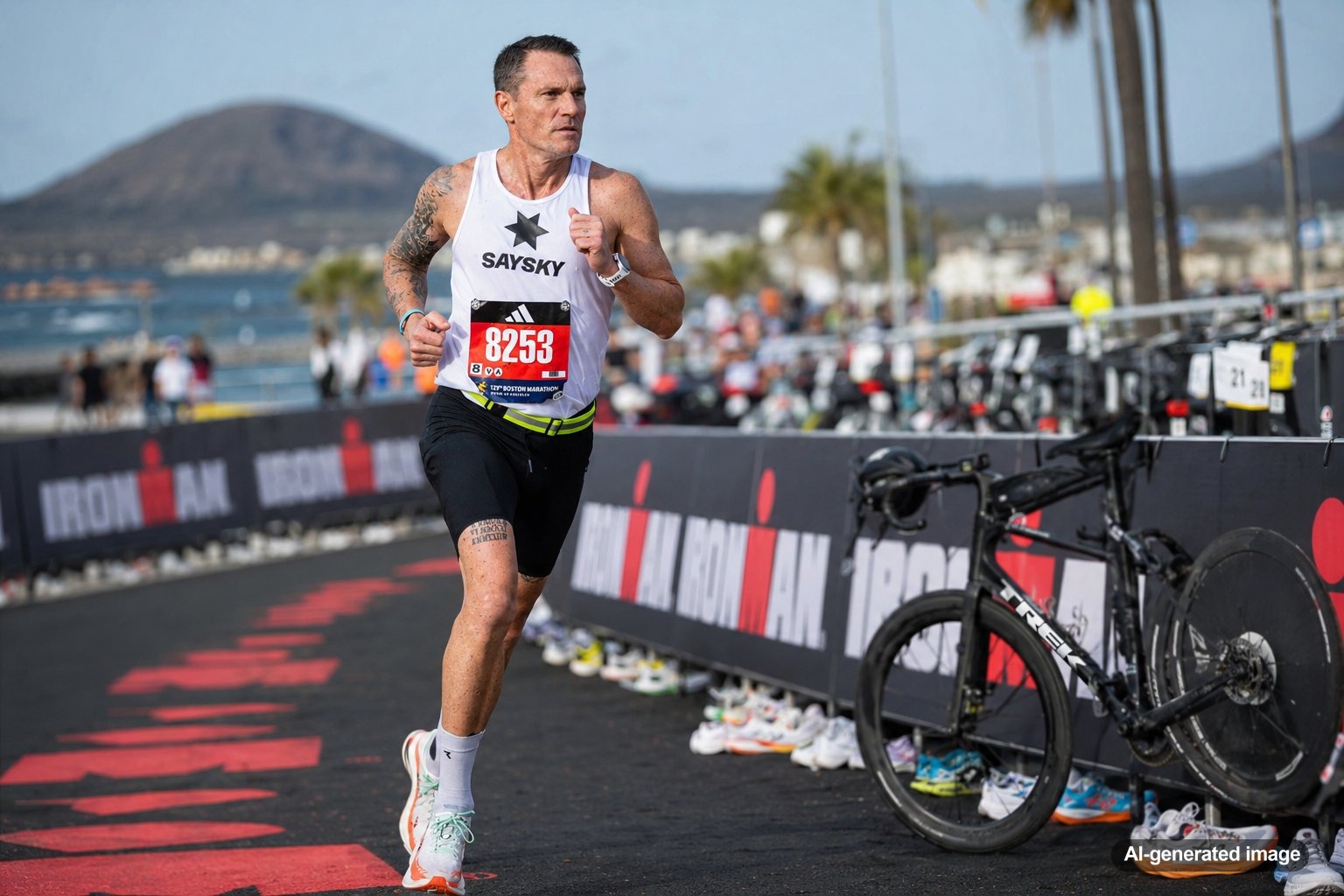
The run off the bike is one of the most honest moments in endurance sports. You have already worked for hours. Your legs are heavy. Your rhythm feels unfamiliar. What looked manageable on paper now asks something much more personal from you: can you keep moving when your body, mind, and expectations are all negotiating at once?
That is why the run off the bike is such a powerful teacher of resilience. It does not reward fantasy. It rewards patience, adjustment, discipline, and the willingness to take the next step before the whole path feels clear. For Greg Schaefer, a dad, husband, CEO, speaker, 20-time Ironman, and athlete living with Young-Onset Parkinson’s, that lesson reaches far beyond racing. It is part of a broader message of forward motion, leadership, family, adversity, and purpose. You can learn more about Greg’s story on his About page.
Quick answer: what does the run off the bike teach about resilience?
- Resilience starts with acceptance. You cannot run the mile you imagined until you deal honestly with the mile you are in.
- Transitions matter. The hardest part is often not the next challenge itself, but the shift from one season, pace, or identity into another.
- Small adjustments can save the day. Resilience is rarely dramatic. It often looks like slowing down, breathing, fueling, resetting, and continuing.
- Your first feeling is not the final story. The opening miles may feel awkward, but rhythm can return after you stop fighting the moment.
- One more step is a real strategy. When the full distance feels too large, narrowing the focus can keep you moving.
The bike teaches control. The run tests surrender.
On the bike, there is a certain structure to the effort. You can watch numbers, manage watts, stay tucked into position, and measure the course through cadence, nutrition, and pacing. It is difficult, but it can feel controlled.
The run is different. Once you come off the bike, the body tells the truth quickly. Your stride may feel strange. Your heart rate may rise sooner than expected. The legs that carried you through the ride may not respond with the smoothness you hoped for. That gap between expectation and reality is where resilience begins.
In life, the same thing happens after major transitions. A diagnosis, business change, loss, family challenge, career shift, or personal setback can make familiar ground feel unfamiliar. You may still be the same person, but the way forward suddenly feels different under your feet.
The run off the bike teaches that resilience is not pretending nothing changed. It is learning how to move with what has changed.
Resilience begins when you stop arguing with the moment.
Many athletes lose emotional energy in the first part of the run because they are busy comparing the moment to the plan. They think about the pace they wanted, the legs they expected, the confidence they had before the race, or the version of themselves they hoped would show up.
That comparison rarely helps. The course does not care about the plan once the moment arrives. The only useful question becomes: what does this mile require from me now?
That question applies far beyond triathlon. In business, leadership, illness, family life, and personal adversity, there is often a point where the old plan no longer fits. Resilience is the ability to tell the truth without surrendering your direction. It says, This is harder than expected, but I am still here. I can still make the next good decision.
The first mile does not get to define the whole run.
The early miles off the bike can be awkward. That does not mean the entire run is lost. It means the body is changing modes. The athlete is moving from one kind of work into another.
That distinction matters. Too often, people interpret discomfort as proof of failure. They think the hard start means they are not strong enough, not prepared enough, or not built for what comes next. But sometimes the body and mind simply need time to find a new rhythm.
Resilience requires that kind of patience. The beginning of a hard season may not feel graceful. You may feel frustrated, uncertain, or out of sync. But a rough transition is not the same as a finished story. The work is to stay present long enough for rhythm to become possible again.
Small corrections are often more powerful than big declarations.
Endurance racing has a way of exposing empty motivational language. A bold internal speech might help for a few seconds, but it will not replace pacing, hydration, fueling, patience, and clear thinking. The run off the bike rewards practical resilience.
Sometimes resilience looks like shortening your stride. Sometimes it means walking an aid station with purpose instead of unraveling between stations. Sometimes it means letting go of a pace goal so you can protect the larger goal of finishing strong. Sometimes it means remembering that forward is still forward, even when it is not fast.
This is one of the most overlooked lessons of mental toughness: it is not always about pushing harder. Often, it is about adjusting sooner. Strong people do not only endure. They adapt.
The support around you changes what is possible.
No one truly races alone. Even when the athlete is the one on the course, the effort is connected to family, friends, training partners, coaches, volunteers, medical professionals when needed, and the people who helped make the start line possible.
The run off the bike can make that truth visible. A voice from the side of the course, a volunteer handing over water, a family member waiting at the right corner, or a stranger cheering at the right second can help an athlete reconnect with purpose.
The same is true in life. Resilience is personal, but it does not have to be solitary. Support does not weaken the story. It strengthens it. For Greg, that message connects naturally to the mission behind the Forward Motion Fund, which reflects a commitment to research, caregiver and partner support, challenged athletes, and youth and education initiatives through aligned organizations.
What leaders can learn from the run off the bike
Leadership often has its own version of the run off the bike. A company changes direction. A team loses momentum. A founder sells a business and has to redefine the next chapter. A leader faces a personal challenge while still showing up for other people.
In those moments, resilience is not a poster on the wall. It is behavior. It is how a leader communicates when the room is tense. It is how they prioritize when energy is limited. It is how they stay honest without spreading panic. It is how they keep a team focused on the next right action instead of pretending the challenge is not real.
The run teaches leaders to respect transitions. People cannot always move instantly from one demand to the next without friction. Teams, like athletes, need rhythm, clarity, and recovery. The strongest leaders notice when the pace needs to change before the whole system breaks down.
What people often miss about resilience
Resilience is not the absence of struggle. It is the ability to keep making honest, useful choices inside the struggle.
People often imagine resilience as a dramatic comeback. Sometimes it is. More often, it is quieter. It is the decision not to panic after a hard mile. It is the discipline to stay inside the process. It is the humility to adjust. It is the courage to keep going when the applause is gone and the work is still in front of you.
That is why the phrase One More Step… Just One More carries weight. It is not a slogan built on pretending life is easy. It is a practical way to narrow the distance when the whole road feels too large. One more step does not solve everything at once. It keeps you connected to motion, and motion can become momentum.
Practical takeaways from the run off the bike
- Name the transition. When life changes, do not waste energy pretending it has not. Recognize that a new rhythm may take time.
- Focus on the next useful action. In a race, that might be fuel, breath, posture, or pace. In life, it might be one conversation, one decision, one appointment, or one act of courage.
- Separate discomfort from defeat. A hard opening mile does not mean the race is over. A hard season does not mean your purpose is gone.
- Let support in. Resilience grows stronger when it is connected to people who help you keep moving.
- Protect the bigger mission. Sometimes the wisest move is not forcing the original pace. It is adjusting so you can continue toward what matters.
FAQ
Why is the run off the bike so difficult?
It is difficult because the body is shifting from cycling mechanics to running mechanics after an extended effort. Beyond the physical change, the athlete must also manage expectations, pacing, energy, and emotion in real time.
How does that connect to resilience in everyday life?
It mirrors the way people respond after major transitions. The ground can feel unfamiliar, even when the goal still matters. Resilience is learning how to keep moving while adapting to a new reality.
Is resilience mostly mental toughness?
Mental toughness is part of it, but resilience is broader. It includes honesty, patience, support, adjustment, discipline, and the ability to make sound decisions under pressure.
What is the biggest lesson from the run off the bike?
The biggest lesson is that the first hard moments do not have to define the finish. You can feel uncomfortable, adjust intelligently, and still keep moving forward.
Interested in bringing Greg’s message to your event or organization?
Learn more about Greg’s speaking work or get in touch to start the conversation.
Contact Greg or learn more about the Forward Motion Fund.
This article is for educational purposes only and is not medical advice. For diagnosis, treatment, or personalized medical guidance, please speak with a qualified healthcare professional.


