

What Swimming In A Pack Teaches You About Handling Pressure
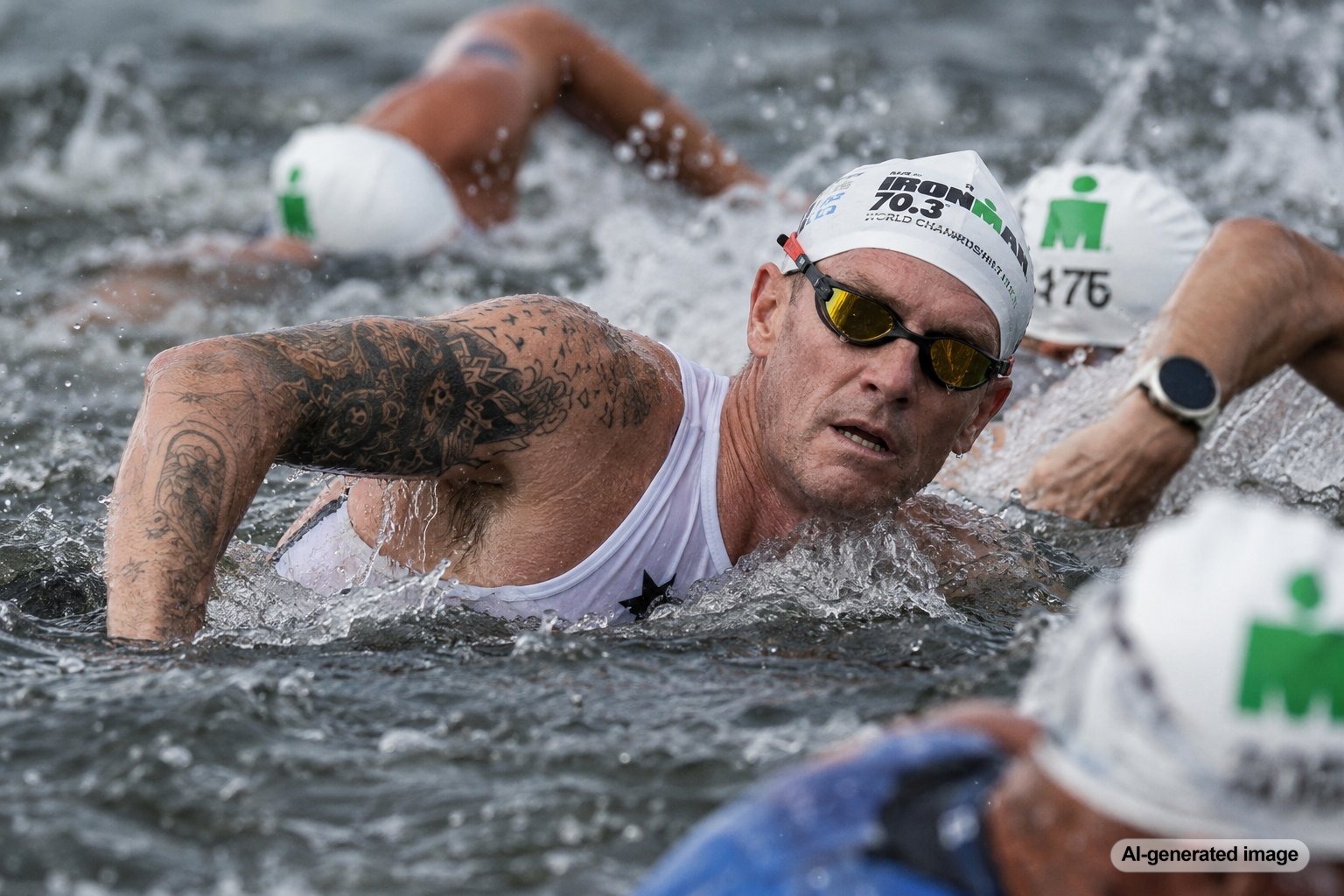
Swimming in a pack can feel nothing like the calm version of swimming people imagine from the pool. In open water, bodies are close, arms are moving, feet are kicking, visibility is limited, and the plan you had on shore can get tested within seconds. The lesson is not just about swimming faster. It is about learning how to stay composed when pressure comes from every direction.
That is why the pack is such a powerful teacher. It turns pressure into something physical, immediate, and honest. For an endurance athlete, a leader, a founder, a parent, or anyone walking through uncertainty, the same principle applies: you do not always get perfect space, perfect timing, or perfect conditions. You still have to find your line and keep moving forward. Greg Schaefer’s story sits at that intersection of endurance, business, family, adversity, and mission. You can learn more about that broader journey on his About page.
Quick answer: what does swimming in a pack teach you about pressure?
- Pressure feels louder when you lose your rhythm. The first job is to settle your breathing and return to the next useful action.
- You cannot control every body around you. You can control your position, your response, and your decision to keep moving.
- Contact is not always conflict. In a pack swim, bumping, drafting, adjusting, and regrouping are part of the environment.
- Clarity matters more than panic. You need small reference points, not a perfect map of the whole race.
- Pressure can sharpen you. When handled well, it teaches focus, resilience, and trust under stress.
The pack removes the illusion of perfect conditions
A pool lane gives you a wall, a line, clean water, predictable turns, and a controlled rhythm. Open water gives you movement, chop, glare, cold, noise, and people trying to occupy the same space at the same time. The pack does not ask whether you are comfortable. It asks whether you can stay present.
That matters because many pressure situations in life work the same way. A company does not wait until your calendar is empty to face a hard decision. A family challenge does not arrive only when you are rested. A diagnosis, setback, loss, or major transition can collapse the space around you. The question becomes: can you still breathe, assess, adjust, and take one more step?
In the water, panic wastes energy quickly. So does resentment. If you spend the whole swim angry that someone clipped your hand or crossed your path, you give away focus you need for the next stroke. Pressure teaches a hard but useful truth: you can acknowledge what happened without surrendering your rhythm to it.
Rhythm is a pressure-management tool
When the pack tightens, the body wants to react. The breath shortens. The shoulders rise. The stroke gets choppy. The mind starts to narrate danger before the situation is truly understood. Experienced swimmers learn to return to rhythm before trying to solve everything else.
That does not mean pretending the pressure is not real. It means choosing the first controllable action. Exhale. Lengthen the stroke. Sight without lifting the whole body out of position. Move a little left or right. Find a pair of feet to follow. Rebuild momentum.
The same applies outside the water. Under pressure, people often try to solve the entire future at once. Strong leaders and resilient people do something more practical: they identify the next stabilizing move. They make the next call, ask the next honest question, take the next step, or create enough order to keep going.
Contact does not have to become chaos
One overlooked lesson of pack swimming is that contact is not always a crisis. Someone brushes your shoulder. A foot appears in front of you. A swimmer drifts across your line. It can be frustrating, but it is not necessarily personal. It is often just the reality of shared space under effort.
That distinction matters. Pressure gets harder when every bump is interpreted as an attack. In races, business, advocacy, and life, not every obstacle is a verdict. Some are simply conditions. The person who can tell the difference saves energy for what actually matters.
In a pack, calm does not mean passive. You may need to create space, change your angle, protect your breathing side, or make a decisive move. But the move comes from awareness, not panic. That is a different kind of strength.
You learn to find reference points when visibility is limited
Open water does not give you constant clarity. You may sight a buoy, lose it behind a swell, catch it again, and adjust. The job is not to stare at the finish line every second. The job is to keep checking your direction often enough that small deviations do not become major detours.
Pressure in life often feels similar. You rarely get the full picture at once. You get a conversation, a symptom, a setback, a financial decision, a family need, a race date, a mission, a responsibility. The healthiest response is not to demand certainty before moving. It is to create honest reference points.
- What matters most right now?
- What is the next right action?
- Who needs to be included?
- What can wait?
- What would keeping faith with the mission look like today?
Those questions do not remove pressure, but they keep pressure from becoming drift.
The draft can help, but you still have to swim
In open water, drafting behind another swimmer can save energy and help you hold pace. It is a smart skill. It also carries a lesson: support can help you move more efficiently, but it does not remove your responsibility to keep swimming.
That balance matters in endurance and in life. Strong people are not people who never need help. Strong people learn how to use support without outsourcing their effort. They accept guidance, community, family, coaching, care, and encouragement while still owning their next stroke.
This is part of what gives Greg’s message its depth. The phrase One More Step… Just One More is not about pretending the road is easy. It is about the discipline of continuing with support, purpose, and honesty when the water gets crowded. That same spirit is reflected in the Forward Motion Fund, which connects movement with mission-driven impact.
Pressure exposes what you practice
A pack swim does not create composure out of nowhere. It reveals whether composure has been practiced. If an athlete only trains in perfect conditions, crowded water can feel like a shock. If the athlete has rehearsed contact, sighting, imperfect breathing, and course correction, pressure becomes demanding but not unfamiliar.
That is one of the clearest bridges between endurance sports and leadership. Teams do not rise to vague slogans when pressure hits. They fall back on practiced behaviors: communication, trust, preparation, humility, focus, and recovery. Families do the same. Athletes do the same. Advocates do the same.
The point is not to manufacture hardship for its own sake. The point is to train honestly enough that pressure does not become a stranger.
Practical takeaways from the pack
Whether you are an athlete, leader, speaker, caregiver, founder, or someone trying to keep moving through a difficult season, the pack swim offers a few grounded reminders.
- Start with breath. A calmer breath creates a better decision.
- Do not confuse discomfort with danger. Some pressure is uncomfortable but manageable.
- Protect your line without fighting every bump. Energy is limited. Spend it on direction, not drama.
- Use support wisely. Drafting, guidance, and community can help, but effort still belongs to you.
- Keep checking your reference points. Small corrections made early are easier than major corrections made late.
- Practice pressure before it matters most. Preparation builds familiarity, and familiarity builds steadiness.
What people often miss about pressure
People often think handling pressure means feeling fearless. In the water, that idea breaks down quickly. Courage is not the absence of nerves. It is the ability to keep acting with purpose while your body and mind are under strain.
Another mistake is assuming composure has to look dramatic. Most of the time, composure is quiet. It is the decision not to surge too early. It is the choice to reset your breathing after contact. It is the discipline to sight again instead of blindly following the pack. It is the willingness to keep moving even when the environment feels messy.
That kind of steadiness is not flashy, but it is powerful. It is also transferable. The same person who learns to stay calm in crowded water may become better equipped to sit in a tense meeting, face a diagnosis, lead through uncertainty, or support a family member through change.
FAQ
Why is swimming in a pack so mentally challenging?
It combines physical effort with limited space, reduced visibility, contact, noise, and uncertainty. The mind has to process stress while the body is already working hard, which makes calm decision-making more important.
Can pack swimming make someone better at handling pressure outside sports?
Yes, in a practical sense. It teaches skills that transfer well: breathing under stress, adapting quickly, staying focused, using support, and continuing even when conditions are not ideal.
Is the goal to avoid the pack completely?
Not always. Sometimes finding cleaner water is smart. Other times, staying with the pack can help with pacing and drafting. The key is to make the choice intentionally rather than reacting from fear or frustration.
What is the biggest leadership lesson from pack swimming?
Pressure rarely gives you perfect space. Leadership often requires calm action while conditions are crowded, uncertain, and emotionally charged. The best response is not panic or force. It is clarity, rhythm, and the next right move.
The bottom line
Swimming in a pack teaches that pressure is not always something to escape. Sometimes it is something to understand, respect, and move through with discipline. You learn to breathe when the water gets tight. You learn to adjust without losing yourself. You learn that one difficult moment does not define the whole race.
Most of all, the pack reminds you that forward motion is often built in imperfect conditions. Not after the pressure disappears. Not after the water clears. Right there, in the middle of it, one stroke at a time.
Interested in bringing Greg’s message to your event or organization?
Learn more about Greg’s speaking work or get in touch to start the conversation.
Contact Greg or learn more about the Forward Motion Fund.
This article is for educational purposes only and is not medical advice. For diagnosis, treatment, or personalized medical guidance, please speak with a qualified healthcare professional.


