

How To Talk To Your Children About A Chronic Illness Diagnosis
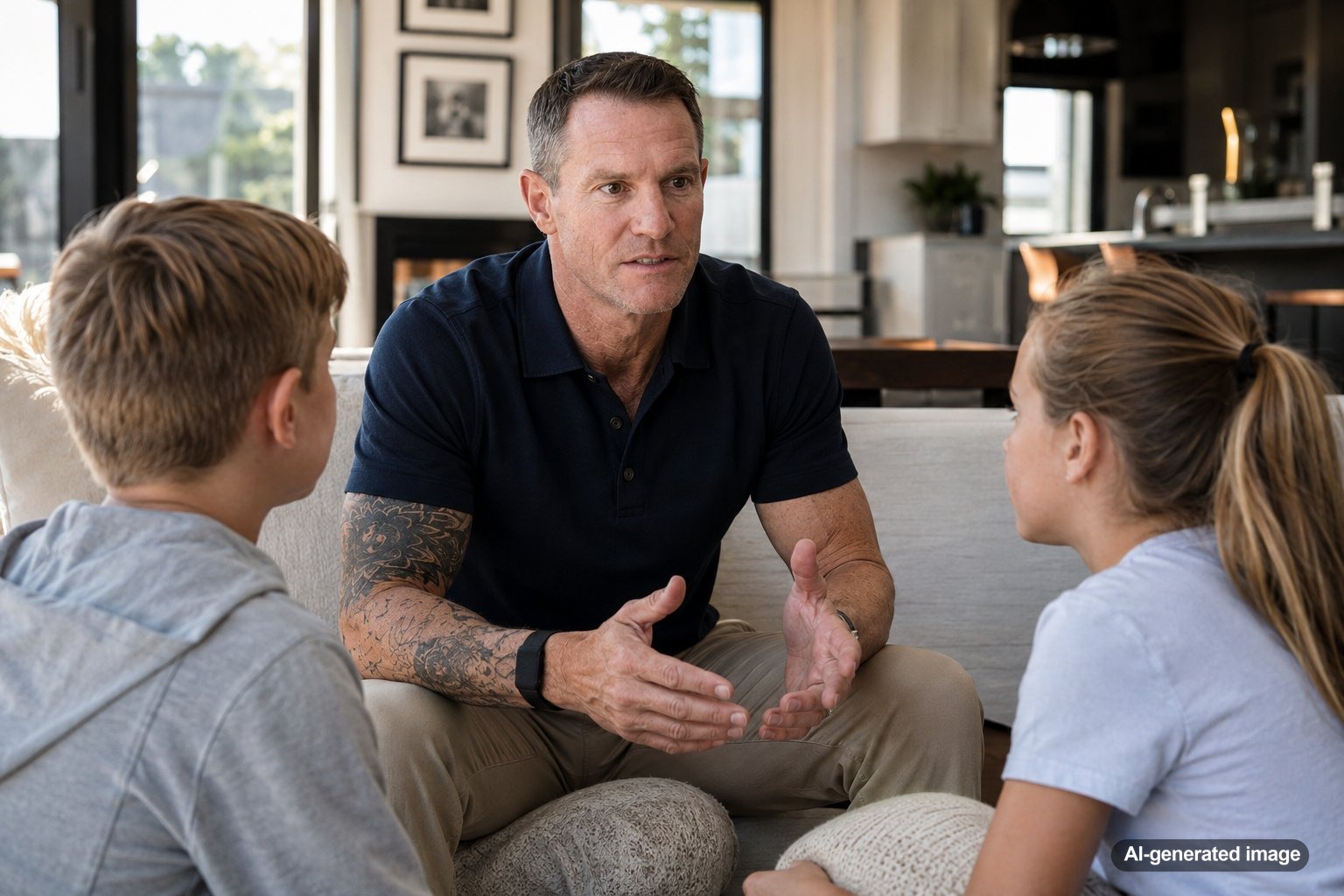
Talking to children about a chronic illness diagnosis is one of the hardest conversations a parent can face. There is no perfect script, and there does not need to be. What children usually need most is honesty that fits their age, reassurance that they are still safe and loved, and permission to keep asking questions as life changes.
For a parent living with Parkinson’s or another long-term condition, the conversation is not only about explaining medical facts. It is about protecting trust. Greg Schaefer’s story lives in that same honest space: family, business, endurance, advocacy, and the daily decision to keep moving forward. For readers who want to understand more about Greg’s broader mission, his story offers context for why family-centered resilience matters.
Quick answer
- Tell children enough truth to reduce fear, but not so much detail that it overwhelms them.
- Use simple, age-appropriate language and invite questions over time.
- Make it clear that the illness is not their fault and not their responsibility to fix.
- Keep routines, love, and connection as steady as possible.
- Get support from qualified professionals when the conversation brings up major anxiety, confusion, or behavior changes.
Start with what your child needs to know right now
Adults often feel pressure to explain everything at once. Children usually do better with a clear first layer of truth. That might sound like, “I have a health condition that affects how my body moves sometimes. Doctors are helping me manage it. You can always ask me questions.” The details can grow as the child grows.
For younger children, the goal is basic safety and clarity. They may wonder whether they caused it, whether they can catch it, or whether the parent will disappear from their life. A short answer, repeated calmly, can be more helpful than a long explanation. For teens, the questions may be more complex. They may want to know what changes at home, whether family roles will shift, and what the future might look like.
Be honest without handing them the full weight
Children can often sense when something is wrong. If they see symptoms, medical appointments, fatigue, stress, or whispered conversations, silence may lead them to imagine something worse. Honest communication helps reduce the burden of guessing.
That does not mean a parent has to share every fear, test result, or uncertain possibility. A helpful balance is to be truthful about what is known, clear about what is not known, and steady about what remains unchanged. For example: “We do not know exactly how everything will look years from now, but we do know we are taking this one step at a time, and our family will keep talking about it together.”
Match the message to their age and temperament
Two children in the same family may need very different conversations. One child may ask practical questions. Another may go quiet. One may want to help immediately. Another may act like nothing happened and bring it up weeks later from the back seat of the car.
Age matters, but personality matters too. A preschool child may need simple reassurance and repetition. A school-age child may need names for what they see, such as tremor, stiffness, fatigue, or changes in energy. A teenager may need more privacy, more detail, and more room to react in a way that does not look neat or grateful.
Say directly that it is not their fault
This point can feel obvious to adults, but it is not always obvious to children. Some children quietly connect a parent’s illness to their own behavior, stress in the house, a recent argument, or something they wished in anger. A direct sentence can lift a weight they may never name out loud.
Use plain language: “Nothing you did caused this. Nothing you said caused this. Your job is to be a kid, not to fix my illness.” That last part matters. Many children are naturally loving and helpful, but they should not feel responsible for managing a parent’s health, emotions, or identity.
Keep the door open after the first conversation
The first talk is rarely the whole talk. Children process difficult news in pieces. They may ask one question, move on to a snack or a game, and then return days later with something deeper. That does not mean the first conversation failed. It means they are digesting it in their own way.
Try simple check-ins: “Have you been thinking about what we talked about?” or “Did anything feel confusing this week?” Avoid turning every check-in into a serious family meeting. Sometimes the best conversations happen while driving, walking, doing dishes, or sitting together after practice.
Let them see strength and reality together
One overlooked challenge is the temptation to perform constant toughness. Children do not need a parent to pretend everything is easy. They also do not need to be flooded with adult fear. What helps is a grounded version of resilience: honest, steady, and human.
That might mean saying, “Today is a harder day for my body, so I am going to rest. We can still have movie night.” Or, “I am frustrated today, but I am working through it.” This shows children that strength is not the absence of difficulty. It is the practice of staying connected, asking for help, and taking one more step.
Give them a way to help without making them caregivers
Many children feel better when they can do something useful. The key is keeping help age-appropriate and emotionally safe. A child can bring a water bottle, choose a family walk route, help plan a low-energy activity, or make a card before an appointment. Those small actions can create connection.
They should not become the emotional manager of the home. They should not be the person who has to monitor symptoms, absorb adult fears, or mediate family stress. If responsibilities are changing at home, name them clearly and protect the child’s room to still be a child.
Watch for quiet signals that they need more support
Some children ask direct questions. Others show their distress through sleep changes, irritability, stomachaches, school struggles, withdrawal, perfectionism, or sudden clinginess. These signs do not always mean something is seriously wrong, but they may be a signal that the child needs more conversation, more routine, or support from a counselor, pediatrician, school professional, or qualified clinician.
Parents do not have to carry this alone. Chronic illness affects the whole family system, and support for partners, children, and caregivers is part of the work. That belief connects naturally to the mission behind the Forward Motion Fund, which recognizes that forward motion is often supported by a community, not carried by one person in isolation.
What children often need to hear
- “You are safe, and you are loved.”
- “This is not your fault.”
- “You can ask questions, even if they feel awkward.”
- “Some days may look different, but I am still your parent.”
- “We have people helping us.”
- “You do not have to be brave every second.”
FAQ
Should I tell my child right away after a diagnosis?
There is no single timeline for every family. Many parents need time to understand the diagnosis, steady themselves, and decide what to say. Once symptoms, appointments, or household changes are visible, a simple and honest explanation may help prevent confusion or fear.
How much detail should I share?
Share enough to answer the child’s real question. Young children may only need a few clear sentences. Older children and teens may need more context, especially if the illness affects family routines, finances, energy, transportation, or caregiving roles.
What if I get emotional during the conversation?
It is okay for children to see emotion. A calm repair can be powerful: “I am sad right now because this is hard to talk about, but you are safe and I am glad we can talk together.” The goal is not to be emotionless. The goal is to stay connected.
Should I mention uncertainty?
Yes, but carefully. Children can handle some uncertainty when it is paired with steadiness. Try saying what you know, what you do not know yet, and what the family is doing next.
When should we get outside help?
Consider outside support if a child shows ongoing anxiety, major behavior changes, school difficulties, withdrawal, sleep problems, or persistent fear. A pediatrician, counselor, school support professional, or qualified healthcare professional can help guide the next step.
Interested in bringing Greg’s message to your event or organization?
Learn more about Greg’s speaking work or get in touch to start the conversation.
Contact Greg or learn more about the Forward Motion Fund.
This article is for educational purposes only and is not medical advice. For diagnosis, treatment, or personalized medical guidance, please speak with a qualified healthcare professional.


