
What Triathletes Learn From The Chaos Of The Swim Start
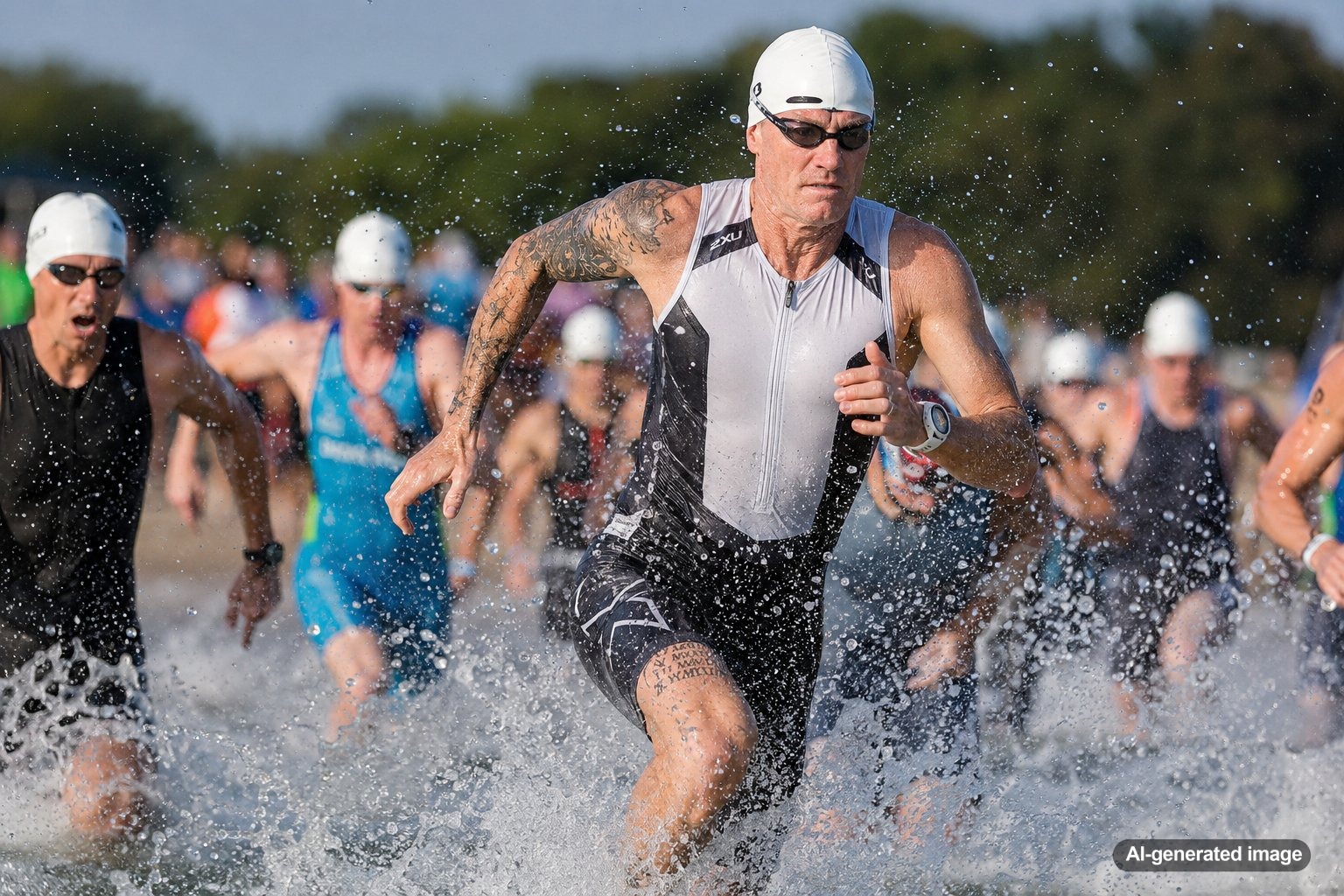
The swim start in a triathlon rarely feels graceful. It is loud, crowded, physical, and uncertain. Athletes enter the water with a plan, but the first few minutes often test whether that plan can survive contact with reality. Arms cross. Feet appear where there should be open water. Breathing gets shorter. The line to the first buoy seems to move every time another swimmer cuts across it.
That chaos is part of what makes the swim start such a powerful teacher. It reminds athletes that composure is not the absence of disruption. It is the ability to keep making useful decisions while disruption is happening. For a speaker, endurance athlete, entrepreneur, and advocate like Greg Schaefer, those lessons sit at the heart of a life built around forward motion: not perfect conditions, not clean starts, but the next smart step.
Quick answer: what triathletes learn from the swim start
- Calm is a skill, not a personality trait. It is practiced under pressure.
- The first plan is rarely the final plan. Athletes have to adapt without abandoning the goal.
- Direction matters more than panic. Sighting, breathing, and rhythm help turn noise into movement.
- Contact does not mean failure. It is often just part of the course.
- Forward motion can be small and still be powerful. One stroke, one breath, one buoy at a time.
The swim start is controlled disorder
From the beach or dock, a triathlon swim start can look like a burst of nervous energy. From inside the water, it feels different. The athlete is not just swimming. They are managing proximity, cold water, adrenaline, visibility, breathing, pace, and the emotional weight of the race ahead.
That mix is what makes the moment so honest. You can train in calm lanes for months, but race day begins with other people, moving water, noise, and uncertainty. The athlete who expects total control may feel overwhelmed. The athlete who expects some disorder can respond more intelligently.
This is one of the first lessons: preparation does not remove chaos. Preparation gives you tools to move through it. In a race, that may mean relaxing the shoulders, finding clear water, shortening the stroke for a few seconds, or lifting the eyes to locate the buoy. In life and leadership, it may mean pausing before reacting, choosing the next priority, and refusing to let the loudest moment define the entire day.
Composure begins with the breath
In open water, panic often begins when breathing feels interrupted. A wave hits at the wrong time. Another swimmer splashes across your face. A crowded pack makes it hard to settle into the rhythm you expected. The body wants to rush, but rushing can make the problem worse.
Experienced triathletes learn to treat the breath as a reset button. Not a magic fix. Not a guarantee. Just a practical place to return. One controlled exhale. One calmer inhale. One decision to keep moving instead of letting the moment take over.
That lesson travels far beyond the water. Many high-pressure moments begin the same way: the room gets loud, the stakes feel high, and the mind wants to sprint. Composure often starts before the solution appears. It starts with creating enough space to think clearly.
You do not need the perfect line to stay in the race
Every triathlete wants the cleanest possible path to the first buoy. Few get it. Someone drifts into your line. You realize you started too far inside. The current nudges the pack. You sight and discover you are not exactly where you thought you were.
The mistake is believing that a messy line means the race is already going badly. It may only mean you need to correct. A small adjustment early can save energy later. A moment of humility can be faster than stubbornly fighting for a line that no longer makes sense.
That is a powerful endurance lesson: do not confuse correction with defeat. Athletes, leaders, parents, founders, caregivers, and advocates all face moments when the original line changes. The goal is not to pretend nothing shifted. The goal is to notice, adjust, and keep moving with purpose.
Contact is not always conflict
One of the most overlooked lessons of the swim start is learning how not to overreact to contact. A hand taps your foot. A shoulder brushes yours. Someone crosses too close. It can feel personal for a split second, but most of the time it is not personal at all. It is just crowded water.
That distinction matters. If every bump becomes a story, the athlete burns emotional energy that should be saved for the course. The stronger response is often quieter: protect your space, adjust your position, return to rhythm, and keep going.
There is a practical leadership lesson inside that. Not every difficult moment is an attack. Not every obstacle needs drama. Sometimes the best response is not escalation, but steadiness. The swimmer who can absorb contact without losing direction has an advantage.
The pack can help or hurt depending on awareness
Swimming near other athletes is not always a problem. Drafting can conserve energy. A nearby swimmer can help you hold pace. The motion of the pack can pull you into a stronger rhythm. But the pack can also crowd your stroke, block your sighting, or tempt you into a pace that is not yours.
Triathletes learn to ask a simple question in real time: is this group helping me or costing me? If the answer changes, they move. They look for cleaner water. They let a faster swimmer go. They stop fighting for space that is taking more energy than it is worth.
That awareness applies to teams and communities too. The right people can help you move with courage. The wrong dynamics can pull you away from the mission. Greg’s broader work through speaking and the Forward Motion Fund reflects that same understanding: forward motion is personal, but it is rarely solitary.
What people often miss about the first five minutes
The swim start gets attention because it is dramatic, but the deeper lesson is not about toughness in the loudest sense. It is about restraint. The athlete who survives the first five minutes well is not always the strongest swimmer. Often, it is the swimmer who refuses to let adrenaline write checks the body has to pay later.
- Starting too hard can create problems later. Early speed means little if it disrupts breathing and rhythm.
- Staying too passive can also cost energy. Sometimes the better choice is to move decisively into clearer water.
- Sighting is a discipline. Looking up too rarely leads to drift. Looking up too often breaks rhythm. The balance matters.
- Confidence is built through exposure. Calm in open water usually comes from practice, repetition, and learning what to expect.
These are not flashy lessons, but they are useful ones. The first minutes of a race reward athletes who can stay awake inside the chaos. Not frozen. Not frantic. Awake.
The swim start teaches the discipline of one more step
In a long race, the swim start is only the beginning. That can be comforting. A hard opening does not decide the entire day. A crowded first buoy does not define the bike. A rough breath does not erase months of preparation.
The athlete’s job is to keep breaking the race into pieces small enough to handle. Get through the pack. Find rhythm. Reach the first buoy. Settle between buoys. Exit the water. Stand up. Move to transition. Each step matters because it leads to the next.
That is where endurance sports become more than sport. They teach a kind of practical resilience that does not require perfect feelings. You can be nervous and still move. You can be uncomfortable and still make a wise decision. You can be uncertain and still find the next marker.
FAQ
Why is the triathlon swim start so chaotic?
The swim start combines crowded athletes, open water, adrenaline, limited visibility, and the pressure of race day. Even prepared swimmers can feel unsettled until they find breathing rhythm and space.
What is the biggest mental lesson from the swim start?
The biggest lesson is that calm can be practiced. Athletes learn to manage pressure through breath, sighting, pacing, and small decisions instead of trying to force the entire race into control.
Does a rough swim start mean the race is going badly?
Not necessarily. A rough start can simply mean the athlete needs to adjust. Many strong races begin with imperfect first minutes. The key is to correct early and return to rhythm.
How does the swim start connect to resilience outside of sport?
It shows that forward motion often begins in imperfect conditions. Whether in business, family, advocacy, health, or leadership, the lesson is not to wait for calm before taking the next useful step.
Bottom line
The chaos of the swim start teaches triathletes to stay present when the water gets crowded. It teaches them to breathe before reacting, correct without shame, protect rhythm without panic, and keep the next buoy in sight. Those lessons matter because life rarely gives anyone a clean start every time.
Greg Schaefer’s message lives in that same space. Keep moving. Keep choosing the next step. Not because the water is calm, but because forward motion still matters when it is not. To bring that message to an audience, team, or organization, explore Greg’s speaking work.
Interested in bringing Greg’s message to your event or organization?
Learn more about Greg’s speaking work or get in touch to start the conversation.
Contact Greg or learn more about the Forward Motion Fund.
This article is for educational purposes only and is not medical advice. For diagnosis, treatment, or personalized medical guidance, please speak with a qualified healthcare professional.