
What The Swim Start Teaches You About Courage
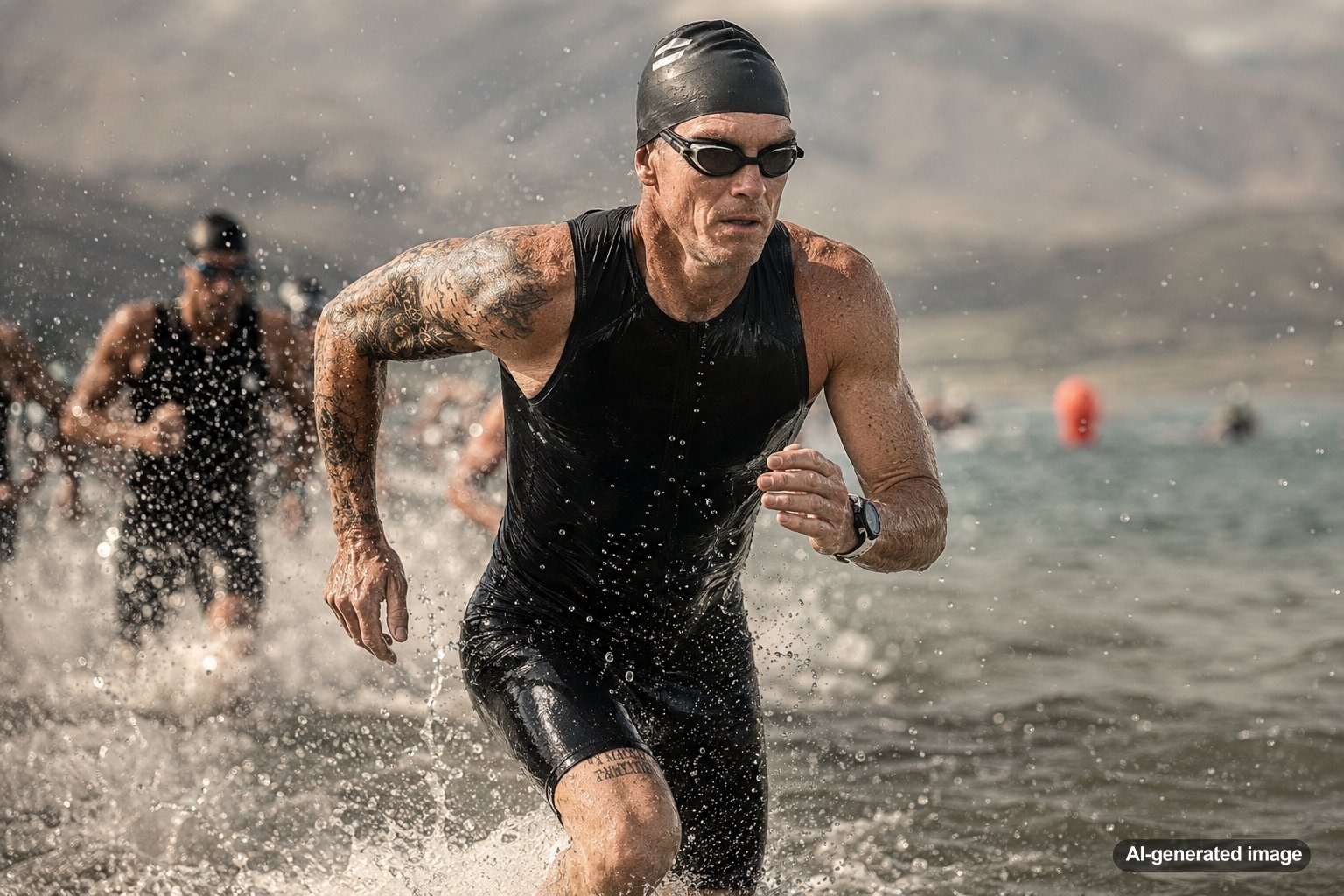
The swim start teaches you that courage is not a loud, polished, fearless thing. It is usually much quieter than that. It is standing near the water with your heart moving faster than your feet, knowing the first few minutes may be crowded, cold, chaotic, and uncomfortable, and still choosing to move toward the line.
That moment matters because it strips courage down to something honest. Before the rhythm settles in, before the course opens up, before the body remembers what it has trained for, there is a small decision: enter the water anyway. For Greg Schaefer, whose story brings together family, business, endurance racing, Parkinson’s advocacy, and forward motion, that lesson reaches far beyond race day. It is a useful picture of how people move through hard seasons in life, leadership, health, and work.
Quick answer
- The swim start teaches that courage begins before confidence arrives.
- Fear does not always mean stop. Sometimes it means pay attention, breathe, and proceed with care.
- The first strokes are often the hardest because uncertainty is loudest at the beginning.
- Courage grows when preparation, humility, and forward motion meet in the same moment.
- In racing and in life, the goal is not to feel invincible. It is to take the next honest step.
Courage begins before everything feels settled
At the edge of an open-water swim, very little feels neat. The water may be dark. The crowd may be pressing in. The course markers may look farther away than they did on paper. Even experienced athletes can feel the weight of that first entry because the start is not only physical. It is emotional, mental, and deeply human.
That is one of the clearest lessons of the swim start: courage does not wait for perfect conditions. It does not require every doubt to disappear. It asks for enough trust to begin. Not reckless trust. Not denial. The kind that comes from preparation, repetition, and the decision to keep moving when discomfort tries to take over the whole story.
There is a natural connection here to Greg’s broader message of forward motion. You do not need the entire road solved before you take one more step. You need the next step. Sometimes that step is a race start. Sometimes it is a hard conversation, a new chapter after diagnosis, a leadership decision, or a return to something meaningful after a season of uncertainty. To learn more about the full arc of Greg’s work and mission, visit his About Greg page.
The first minutes are not the whole race
One of the most overlooked truths about a swim start is that the beginning can feel much messier than the rest of the day. The water is crowded. Everyone is searching for space. Breathing may feel uneven. It can be tempting to mistake those first few moments for a prediction of the entire race.
Life often works the same way. The first days after a difficult diagnosis, the first months of rebuilding a business, the first steps into advocacy, the first attempt at a new identity, or the first conversation after a setback can feel overwhelming. But the beginning is not the whole story. It is only the beginning.
In endurance racing, a smart athlete learns to stay present long enough for the rhythm to arrive. That may mean slowing down, finding clean water, focusing on a steady breath, or simply refusing to panic because the start feels imperfect. In everyday courage, the same pattern applies. You do not have to solve every mile at once. You have to stay with the moment long enough to find your rhythm.
Fear can be information, not instruction
Fear is not always a sign that something is wrong. Sometimes it is the body and mind doing their job: noticing risk, protecting energy, and calling attention to the seriousness of the moment. The mistake is treating fear as the final authority.
At a swim start, fear can remind an athlete to breathe, check positioning, avoid rushing, respect the water, and move with awareness. That is useful. Fear becomes limiting when it says, “Because this is uncomfortable, you do not belong here.” Courage answers differently: “This is uncomfortable, and I can still take the next stroke.”
That distinction matters in leadership and personal resilience. A founder may feel fear before making a difficult decision. A parent may feel fear while trying to stay steady for a family. A person living with a challenging diagnosis may feel fear while choosing what comes next. Courage does not erase those realities. It creates room to act with honesty inside them.
Preparation makes courage more practical
The swim start may look like a single dramatic moment, but it is built on quiet work most people never see. Early alarms. Long training days. Missed comfort. Repeated practice. Learning how to handle nerves. Testing equipment. Building endurance one session at a time.
That is why courage should not be confused with impulse. The strongest form of courage is often disciplined, prepared, and humble. It respects the challenge. It knows the water is real. It also knows that preparation has created a foundation sturdy enough to begin.
For teams and organizations, this is a powerful leadership lesson. People do not become resilient because someone tells them to be tough. They become more capable when they build habits, systems, trust, and shared purpose before the pressure arrives. Then, when the swim start moment comes, they are not relying on slogans. They are relying on practiced strength.
What the swim start asks of us
The swim start asks a simple but difficult question: can you move forward while still feeling human? Not perfect. Not certain. Not untouched by fear. Human.
That is the heart of courage. It is not pretending the water is calm when it is not. It is not minimizing the challenge or dressing discomfort up as easy inspiration. It is entering the moment with enough humility to respect it and enough resolve to continue.
What people often miss
People often celebrate the finish line, but the swim start may reveal more about courage. The finish shows endurance after the work has been done. The start shows willingness before comfort has arrived. That is where identity begins to shift: not when everything feels clear, but when a person chooses forward motion in the middle of uncertainty.
Practical takeaways from the water
The first takeaway is to separate discomfort from danger. Not every uncomfortable moment is a stop sign. Some moments require caution, wisdom, and support, but they still invite movement.
The second is to respect the power of the first small action. Entering the water, making the call, showing up to the meeting, asking for help, returning to training, or telling the truth can break the spell of fear. Momentum often begins smaller than we expect.
The third is to remember that courage is easier to sustain when it is connected to purpose. Racing for ego alone can become fragile. Moving for family, mission, service, community, or something bigger than yourself creates a deeper reason to keep going when the water gets rough.
That is why Greg’s message resonates with organizations, athletes, caregivers, leaders, and people navigating adversity. His story is not about pretending hard things are simple. It is about the discipline of continuing with meaning. Organizations interested in bringing that message to a team, conference, or event can learn more about Greg’s speaking work.
FAQ
What does the swim start symbolize?
The swim start symbolizes the moment before certainty. It represents the choice to begin while fear, pressure, and uncertainty are still present.
Is courage the same as being fearless?
No. Courage is not the absence of fear. It is the ability to move with awareness, preparation, and purpose while fear is still part of the experience.
Why is the beginning often the hardest part?
Beginnings are difficult because rhythm has not arrived yet. In a race, the body is still settling. In life, the mind may still be searching for proof that things will be okay. The first step often requires trust before evidence feels complete.
How can this lesson apply outside endurance sports?
The lesson applies to leadership, family, health challenges, career transitions, advocacy, and personal growth. Any meaningful challenge may have a swim start moment: the place where you must begin before you feel fully ready.
Interested in bringing Greg’s message to your event or organization?
Learn more about Greg’s speaking work or get in touch to start the conversation.
Contact Greg or learn more about the Forward Motion Fund.
This article is for educational purposes only and is not medical advice. For diagnosis, treatment, or personalized medical guidance, please speak with a qualified healthcare professional.