

Why Parkinson’s Awareness Needs More Real Conversations
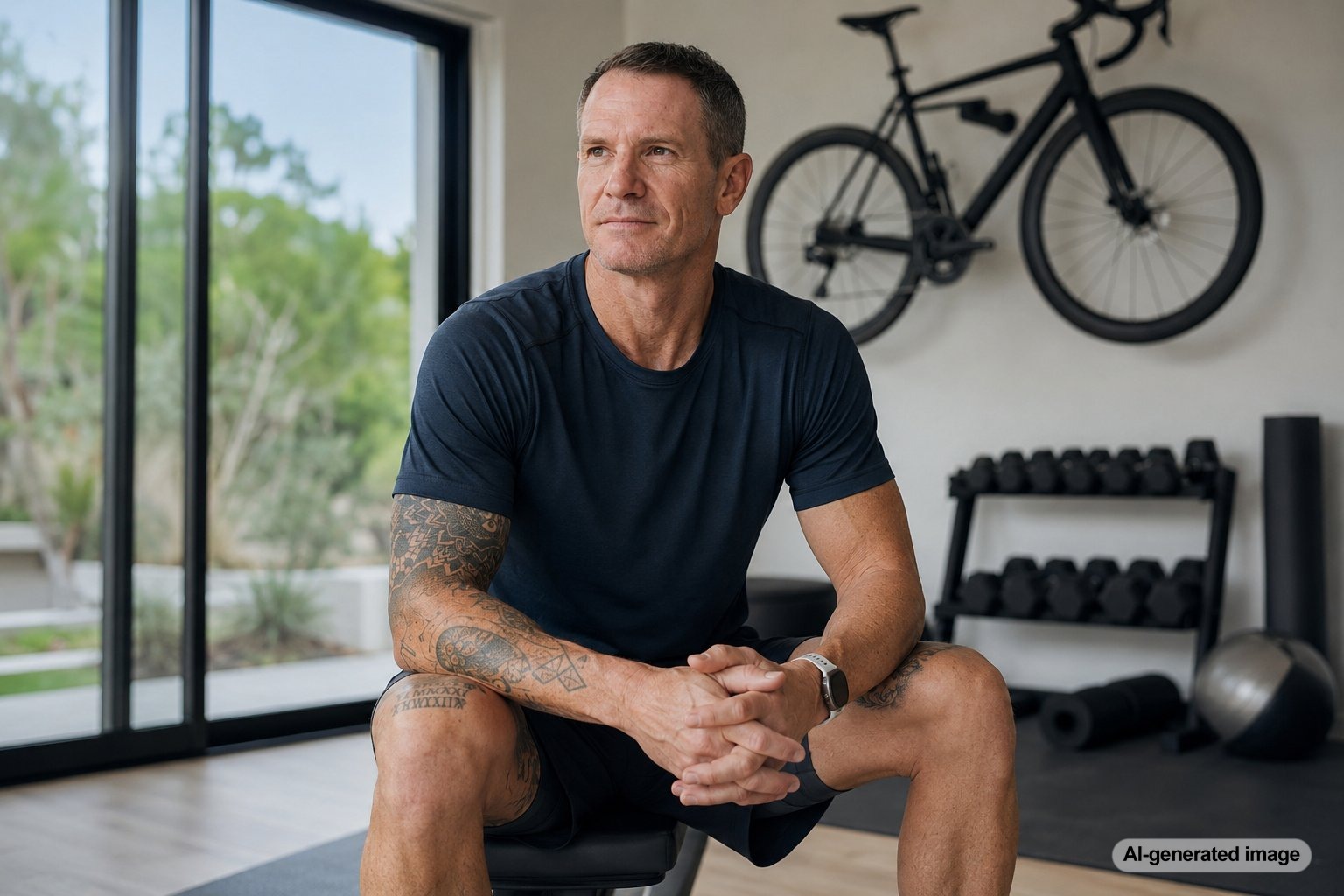
Parkinson’s awareness matters, but awareness alone is not always enough. A ribbon, a campaign month, or a well-meaning social post can open the door, yet the real work often begins when people are willing to have honest conversations about what Parkinson’s actually asks of a person, a family, a workplace, and a community.
For Greg Schaefer, that conversation is not abstract. His story sits at the intersection of family, business leadership, endurance sports, Young-Onset Parkinson’s, and the decision to keep moving forward. Through his work as a speaker and advocate, Greg helps make space for a more useful kind of awareness: the kind that is informed, human, specific, and strong enough to include both difficulty and hope. Learn more about Greg’s story on the About Greg page.
Quick answer: why real conversations matter
- They make Parkinson’s less invisible. Many people only recognize tremor, but Parkinson’s can also involve movement and non-movement symptoms that affect daily life in different ways.
- They reduce isolation. Honest conversation gives people living with Parkinson’s and their families more room to name what is hard without being defined by it.
- They improve support. Friends, coworkers, leaders, and communities can respond more thoughtfully when they understand the lived reality behind the diagnosis.
- They move awareness into action. Better conversations can lead to better care, stronger advocacy, research support, and more compassionate workplaces and communities.
Awareness should be more than recognition
A lot of people have heard of Parkinson’s disease. Far fewer understand the range of ways it can show up. Parkinson’s is often associated with visible movement symptoms, but public education from organizations such as the Parkinson’s Foundation and NINDS also points to a broader reality that can include stiffness, slowness, balance changes, sleep issues, fatigue, mood changes, and other non-movement symptoms.
That matters because simplified awareness can unintentionally leave people feeling unseen. Someone may look fine in a meeting but be dealing with medication timing, fatigue, pain, anxiety, or uncertainty. Someone may continue to train, work, lead, parent, or show up for others while also carrying a diagnosis that changes the texture of ordinary days.
Real awareness does not flatten Parkinson’s into a single image. It creates enough room for the full human being: the parent, spouse, athlete, founder, teammate, friend, advocate, and person still building a meaningful life.
The conversations people often avoid
Parkinson’s can be difficult to talk about because it touches identity. It can affect how someone sees their body, their independence, their future, and their role inside a family or workplace. People may avoid asking questions because they do not want to say the wrong thing. People living with Parkinson’s may avoid sharing because they do not want to be pitied, underestimated, or treated differently.
That silence can become its own burden. More real conversations do not mean pushing someone to disclose more than they want to share. They mean creating a culture where honest language is possible. A better question might sound like, What kind of support is actually useful right now? or Is there anything about your schedule, energy, or environment that would make things easier?
In families, real conversations might include how children understand a diagnosis, how partners carry stress, or how routines may need to adapt. In workplaces, they might include flexibility, privacy, respect, and the difference between support and assumption. In athletic communities, they might include the courage to keep moving without pretending every mile feels the same.
Young-Onset Parkinson’s needs its own language
When Parkinson’s is diagnosed before age 50, it is often described as early-onset or Young-Onset Parkinson’s. The Michael J. Fox Foundation notes that about 10 to 20 percent of people with Parkinson’s experience symptoms before age 50. That reality can surprise people who still think of Parkinson’s only as a disease of older age.
Young-Onset Parkinson’s can collide with the most active seasons of life: raising kids, building a company, carrying financial responsibilities, competing athletically, leading teams, and planning for a future that suddenly feels less predictable. The questions are not only medical. They are personal, professional, emotional, and practical.
That is why the conversation has to become wider. It is not enough to ask, What are the symptoms? People may also need space to ask, How do I talk to my children? What do I tell my team? How do I keep training safely? How do I stay ambitious without denying reality? Those are not small questions. They are the questions that make awareness useful.
Real conversations make support more precise
Support is strongest when it is specific. Vague encouragement can be kind, but it may not meet the moment. A person living with Parkinson’s may need a ride, a flexible start time, a quiet check-in, help navigating an appointment, a training partner who understands pacing, or simply someone who does not disappear when the topic becomes uncomfortable.
Care partners and family members also need recognition. Parkinson’s does not affect only the person with the diagnosis. It often reshapes the rhythm of a household, the emotional load of a partner, and the way loved ones plan for both ordinary days and uncertain ones.
More honest conversations help people stop guessing. They make room for direct, respectful support that does not take over the person’s identity. That distinction matters. The goal is not to make someone with Parkinson’s smaller. The goal is to help them keep living with dignity, agency, and connection.
What people often miss about Parkinson’s awareness
People often miss that resilience is not denial. Continuing to work, race, lead, speak, or serve does not mean Parkinson’s is easy. It means the person is choosing motion in the presence of difficulty.
People often miss that hope needs honesty. Hope is stronger when it can tell the truth. It can hold uncertainty, frustration, adaptation, discipline, love, and purpose at the same time.
People often miss that advocacy is practical. Advocacy can mean funding research, supporting care partners, making workplaces more thoughtful, helping challenged athletes, or simply learning how to listen better.
From awareness to forward motion
Greg’s message, One More Step… Just One More, is powerful because it is not a slogan floating above real life. It is grounded in what it takes to keep moving when the path changes. It carries the discipline of endurance sports, the responsibility of leadership, the love of family, and the reality of living with Young-Onset Parkinson’s.
That spirit also shapes the Forward Motion Fund, which supports mission-aligned work connected to Parkinson’s research, partner and caregiver support, challenged athletes, and youth and education initiatives. It is an example of awareness becoming motion: not just talking about Parkinson’s, but helping build a stronger community around it.
Real conversations are one of the first steps. They make it easier for people to ask better questions, offer better support, and understand that a diagnosis is part of a story, not the whole story.
FAQ
Why is Parkinson’s awareness still important?
Parkinson’s awareness helps people better understand symptoms, diagnosis, support needs, research, and the wide range of lived experiences behind the disease. It can also reduce stigma and help people feel less alone.
What makes a Parkinson’s conversation more helpful?
A helpful conversation is respectful, specific, and led by the person affected. It avoids pity, avoids assumptions, and focuses on listening, learning, and asking what kind of support is actually useful.
Why does Young-Onset Parkinson’s need more attention?
Young-Onset Parkinson’s can affect people during years when they may be raising families, growing careers, building businesses, or staying active in athletics. Those realities create different practical and emotional questions that deserve more public understanding.
How can organizations support more real conversations?
Organizations can bring in credible speakers, educate teams, create space for respectful dialogue, and build cultures where people are not reduced to a diagnosis or expected to hide hard parts of life.
Interested in bringing Greg’s message to your event or organization?
Learn more about Greg’s speaking work or get in touch to start the conversation.
Contact Greg or learn more about the Forward Motion Fund.
This article is for educational purposes only and is not medical advice. For diagnosis, treatment, or personalized medical guidance, please speak with a qualified healthcare professional.


