
Why The Swim Leg Rewards Patience More Than Power
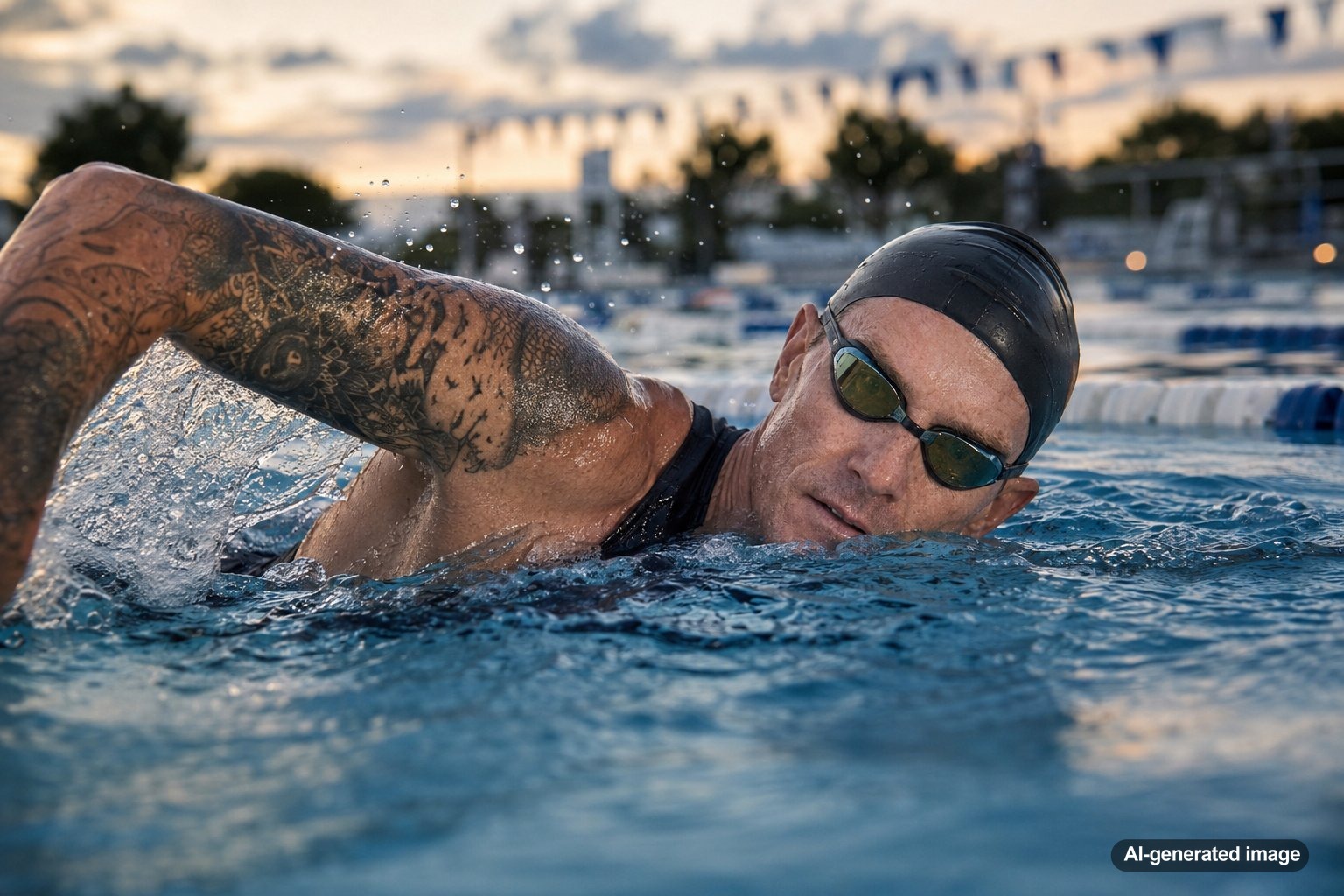
The swim leg can create an urgent feeling before the race has truly settled. The start is loud, crowded, physical, and full of athletes trying to establish position. In that environment, power feels useful. Patience, however, is often what protects the entire day.
Strong swimming still matters, but the most productive effort is rarely the most aggressive effort available. Athletes who control their breathing, find usable water, protect their technique, and resist the temptation to race every nearby swimmer often leave the water better prepared for what comes next. That principle fits the broader endurance perspective behind Greg Schaefer’s story: forward motion is not always dramatic. Sometimes it is the discipline to remain steady when the moment is asking you to panic.
Quick answer
- Power without rhythm can raise effort while reducing efficiency.
- A controlled start helps protect breathing, technique, and decision-making.
- Good positioning can save more energy than repeatedly accelerating.
- Patience makes it easier to respond to contact, waves, and navigation errors.
- The goal is not simply to finish the swim quickly. It is to begin the bike ready to race well.
The Swim Starts Before Your Body Feels Settled
In training, swimmers usually begin with space, clear instructions, and a predictable lane. Race day removes much of that comfort. Athletes may enter cold water, hear a countdown, deal with limited visibility, and immediately encounter feet, elbows, splashing, and uneven movement.
The first instinct is often to fight the environment with more effort. A swimmer feels crowded, so the stroke rate rises. Someone passes on the side, so the swimmer accelerates. The breathing pattern becomes uncomfortable, so the athlete tries to overpower the discomfort.
That response can create a costly cycle. Harder effort increases breathing demand. Rising breathing demand makes the water feel more threatening. Technique begins to shorten. Navigation becomes less precise. The athlete is now working harder without necessarily moving faster.
Patience interrupts that cycle. It does not mean drifting through the opening minutes. It means giving the body enough time to establish breathing, lengthen the stroke, and find a sustainable rhythm before making unnecessary demands.
Power Is Useful Only When It Has Direction
Power can help an athlete clear congestion, bridge to a better group, move through rough water, or complete a short tactical effort. The problem is not power itself. The problem is using it continuously when the situation does not require it.
Open-water speed comes from more than force. It depends on body position, stroke timing, direction, breathing, sighting, and the ability to hold form when the water is imperfect. An athlete who applies force while swimming off course or lifting the head too often may spend significant energy covering unnecessary distance.
A patient swimmer keeps asking a practical question: Where will this effort take me?
If a short acceleration creates clear water, reaches a useful draft, or avoids a congested turn, the effort may be worthwhile. If it only answers another athlete’s pace change or satisfies the urge to feel aggressive, it may have little value.
Patience Protects Technique
Technique often changes under pressure before the athlete realizes it. The stroke becomes shorter. The hands enter with tension. The kick becomes more frantic. The swimmer lifts the head instead of rotating to breathe. Each change may seem small, but together they can make the swim less efficient.
Patience gives the athlete room to notice those changes and correct them. Instead of thinking only about speed, the swimmer can return attention to a few controllable cues:
- Exhale consistently instead of holding the breath.
- Keep the stroke long enough to maintain connection with the water.
- Relax the hands, jaw, shoulders, and neck.
- Sight with purpose rather than lifting the head repeatedly.
- Allow the rhythm to rebuild after contact or disruption.
These are not passive actions. They require awareness and restraint. In a chaotic environment, staying technically organized can be a form of strength.
Positioning Can Matter More Than Winning Every Exchange
The swim leg includes countless small decisions about where to place the body. An athlete can stay directly inside a crowded pack, move slightly wider for cleaner water, follow reliable feet, or choose a line that reduces contact near a buoy.
There is rarely one perfect position for the entire swim. Conditions change. Groups split. Faster swimmers move through. Slower swimmers appear ahead. The patient athlete adjusts without treating every change as an emergency.
Consider two common scenarios. In the first, an athlete is repeatedly bumped while swimming the shortest possible line. Staying there may save a few yards, but the constant disruption damages breathing and form. Moving slightly wider could produce a calmer, more efficient swim.
In the second, a swimmer sees someone pulling away and immediately accelerates to follow. Reaching those feet may provide a useful draft, but only if the pace remains sustainable. Chasing every swimmer can turn the opening leg into a series of expensive surges.
The better choice depends on the athlete, the course, and the moment. Patience creates the mental space to make that choice instead of reacting automatically.
A Calm Response Is Faster Than a Panicked One
Unexpected moments are normal in open water. Goggles may leak. A wave may interrupt a breath. Another swimmer may cross the line. The course may appear unclear for several strokes. An athlete may suddenly feel uncomfortable despite having trained well.
The first response matters. Panic encourages rushed movement, and rushed movement often makes the original problem harder to solve. A controlled response may cost a few seconds but prevent a much larger loss of time and energy.
An athlete with leaking goggles might roll briefly, clear the seal, and restart. A swimmer who misses a breath can focus on a complete exhale before rebuilding pace. Someone who loses the group can sight carefully, choose the next target, and resume swimming without turning the correction into a sprint.
Patience does not eliminate difficulty. It helps keep a manageable disruption from becoming the defining moment of the swim.
The Real Finish Line Of The Swim Is The Start Of The Bike
Triathlon rewards athletes who understand that each discipline affects the next. A swim split can look impressive while still creating problems if the athlete exits the water breathless, tense, disoriented, or depleted.
A strong swim should create a useful starting point for the bike. The athlete should be able to stand, orient, move through transition, take in information, and begin riding without needing an extended physical or emotional reset.
That changes how success is measured. The question is not only, “How fast did I swim?” It is also:
- Did I stay on course?
- Did I protect my breathing?
- Did I avoid unnecessary surges?
- Did I respond well when the water became difficult?
- Did I leave the swim ready to execute the next part of the race?
This is where patience becomes performance. It preserves options. The athlete reaches transition with more control, and control becomes increasingly valuable as the day gets longer.
How To Practice Patience Before Race Day
Patience should not be treated as a personality trait that appears automatically under pressure. It can be practiced like pacing, sighting, or transitions.
Use deliberately controlled starts
Begin selected swim sessions at a firm but manageable effort. Allow the first several minutes to focus on breathing and form before increasing pace. This teaches the body that restraint at the start does not mean a weak performance.
Practice short tactical accelerations
Instead of swimming every hard set at one continuous intensity, practice brief surges followed by a return to rhythm. The goal is to learn how to use power without letting it destabilize the entire swim.
Rehearse contact and imperfect water
When appropriate and safely supervised, train near other swimmers, practice buoy turns, and experience small disruptions. Familiarity can reduce the urge to overreact on race day.
Build a small set of reset cues
Choose two or three simple reminders that can be recalled under stress. Examples might include “long exhale,” “soft hands,” or “find the line.” Short cues are easier to use than complicated instructions when the environment becomes chaotic.
Judge sessions by execution, not only pace
A training swim can be successful even when the pace is not exceptional. Holding form, navigating accurately, recovering from disruption, and finishing with control are meaningful indicators of race readiness.
What Athletes Often Miss
Patience is not the opposite of competitiveness. It is what allows competitiveness to remain useful. The patient athlete still moves with purpose, makes tactical choices, and applies power when it can create an advantage. The difference is that the effort is chosen rather than triggered.
The Lesson Extends Beyond The Water
The swim leg compresses a familiar endurance lesson into a short period of time: the strongest response is not always the most forceful one. Business, leadership, health challenges, family responsibilities, and long races all create moments when urgency can overpower judgment.
Greg’s experience as an entrepreneur, endurance athlete, husband, father, speaker, and Parkinson’s advocate reflects the value of continuing with intention. Moving forward does not always require a dramatic push. It can require accepting the conditions, finding the next reliable action, and taking one more step without wasting energy fighting everything at once.
That perspective is central to Greg’s speaking work with organizations and teams. Sustainable performance is rarely built on intensity alone. It grows from disciplined decisions made when pressure is high and the full finish line is still far away.
Frequently Asked Questions
Should a triathlete start the swim slowly?
The opening effort should be controlled enough to establish breathing and technique, but the right pace depends on the athlete, race format, start style, and water conditions. Controlled does not necessarily mean easy. It means sustainable and deliberate.
When should a swimmer use more power?
Short increases in effort may be useful for clearing congestion, reaching a suitable group, navigating rough water, rounding a buoy, or responding to a tactical need. The athlete should be able to settle again after the effort.
Is drafting always the best strategy?
Drafting can be helpful when the pace, direction, and position suit the swimmer. Following the wrong feet can lead an athlete off course, into repeated contact, or into an unsustainable pace. Drafting is a tool, not an automatic decision.
How can an athlete stay calm after contact?
Returning attention to a complete exhale, relaxed hands, and the next clear sighting target can help restore rhythm. Practicing around other swimmers before race day may also make contact feel less surprising.
What is the main goal of the swim leg?
The goal is to cover the course efficiently while arriving at transition prepared for the bike. A good swim supports the entire race rather than consuming energy needed later.
Interested in bringing Greg’s message to your event or organization?
Learn more about Greg’s speaking work or get in touch to start the conversation.
Contact Greg or learn more about the Forward Motion Fund.
This article is for educational purposes only and is not medical advice. For diagnosis, treatment, or personalized medical guidance, please speak with a qualified healthcare professional.