

Aerobic Exercise and Parkinson’s: Why Movement is More Than Fitness
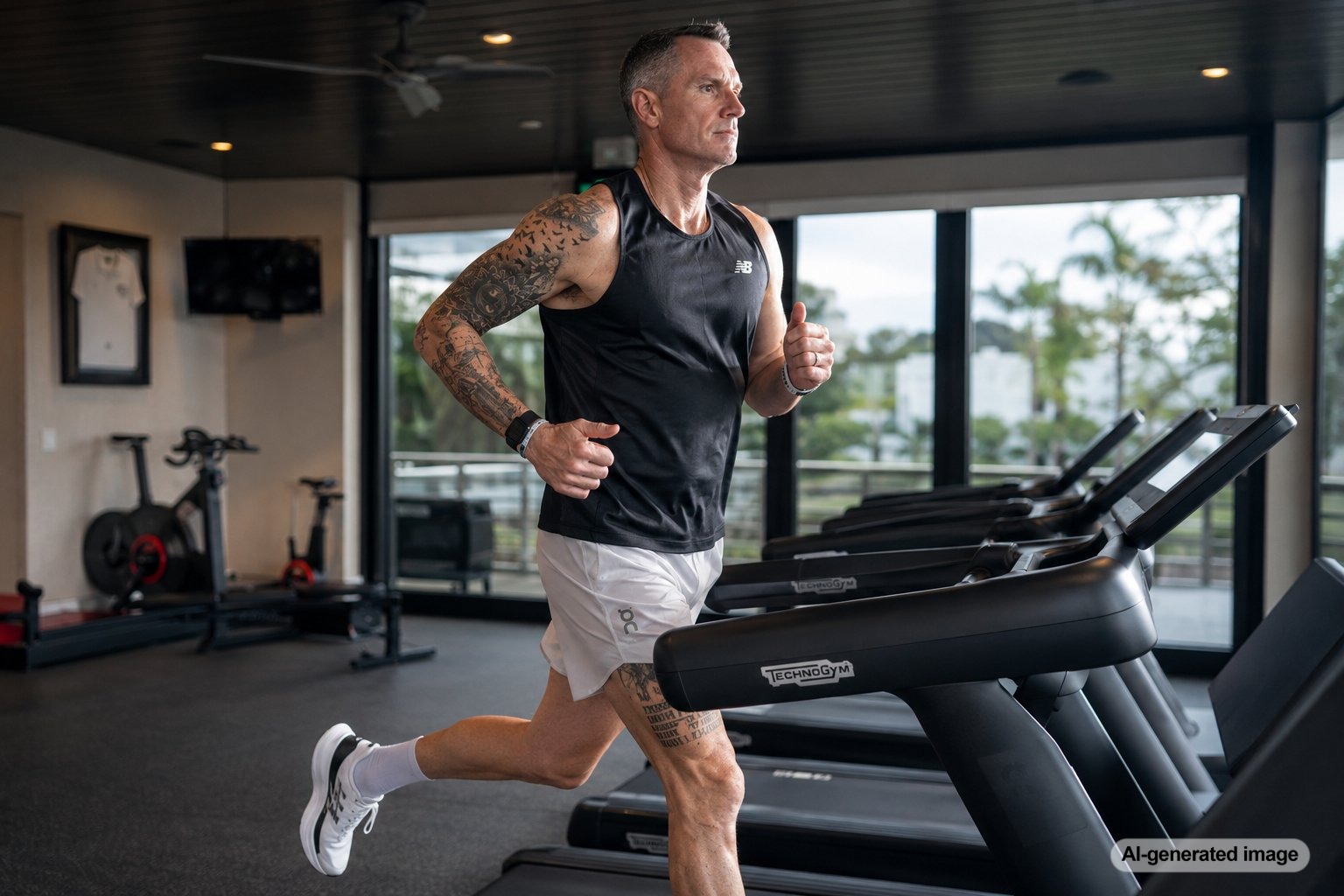
For many people, aerobic exercise sounds like a fitness category: walking, cycling, swimming, jogging, rowing, or anything else that raises the heart rate and breathing in a steady way. For someone living with Parkinson’s, it can become something much larger. It can be a way to practice rhythm, reclaim agency, build confidence, and stay connected to the body when the body is changing.
Greg Schaefer’s story sits at that intersection. He is not only a speaker or a 20-time Ironman, and he is not only a person living with Young-Onset Parkinson’s. His message is shaped by family, endurance, leadership, uncertainty, and the decision to keep moving forward one step at a time. That makes aerobic exercise more than a workout topic. It becomes a practical expression of forward motion.
Quick answer: why aerobic exercise matters with Parkinson’s
- It supports daily function. Regular movement can help many people maintain mobility, balance, flexibility, and confidence in everyday activities.
- It may support non-motor well-being. Exercise can be part of a broader approach to mood, sleep, energy, and quality of life.
- It gives structure to uncertainty. Parkinson’s can make the future feel hard to predict. A repeatable movement routine creates a meaningful action step.
- It is not one-size-fits-all. The right aerobic routine depends on symptoms, fitness history, safety, medications, balance, fatigue, and medical guidance.
- It is more powerful when it is sustainable. The best plan is one a person can keep returning to, not one that looks impressive for two weeks and disappears.
What counts as aerobic exercise?
Aerobic exercise is movement that challenges the heart, lungs, and large muscle groups over a sustained period. It does not have to look extreme. For one person, it may be a brisk walk around the neighborhood. For another, it may be a stationary bike, lap swimming, hiking, rowing, dancing, boxing-inspired footwork, or a carefully managed endurance training plan.
The key distinction is sustained effort. Aerobic work asks the body to keep moving long enough to build endurance, rhythm, circulation, and conditioning. With Parkinson’s, that rhythm matters. Many people experience changes in gait, posture, stiffness, coordination, or initiation of movement. Aerobic exercise can create a repeated practice environment where movement becomes intentional rather than passive.
That does not mean every person with Parkinson’s should train like an endurance athlete. Greg’s Ironman background is part of his story, but the broader lesson is not that everyone needs a finish line. The lesson is that movement can become a personal system for resilience, identity, and momentum.
Why movement is more than fitness
Parkinson’s is often discussed through symptoms, medications, appointments, and progression. Those topics matter. But daily life with Parkinson’s is also about confidence, identity, relationships, work, family, purpose, and the small decisions that shape a person’s sense of control.
Aerobic exercise matters because it can touch several of those areas at once. A walk can be physical conditioning, but it can also be time outside, a way to regulate stress, a conversation with a spouse, a reminder that the body is still capable, or a private promise to keep showing up. A bike ride can be cardiovascular work, but it can also be proof that diagnosis does not erase ambition. A group class can train endurance, but it can also reduce isolation.
That is why the phrase One More Step… Just One More carries weight. It is not a slogan about pretending Parkinson’s is easy. It is a practical frame for doing the next manageable thing, especially when the full road ahead feels too large to solve at once.
The aerobic exercise benefits people often overlook
1. Rhythm and repetition
Many aerobic activities are rhythmic by nature. Walking, cycling, swimming, rowing, and elliptical training all create repeated movement patterns. For people living with Parkinson’s, rhythm can be useful because it gives the body a steady cue. Some people also respond well to music, metronomes, cadence targets, or class formats that provide an external beat.
2. Confidence in public movement
One overlooked part of Parkinson’s is the emotional load of moving in public. Stiffness, tremor, freezing, fatigue, or balance concerns can make ordinary spaces feel different. A consistent aerobic routine can help some people rebuild trust in their body in real-world settings, whether that is a sidewalk, gym, pool, trail, or community event.
3. Emotional regulation
Aerobic exercise does not make hard days disappear. It can, however, become a constructive outlet. Many people use movement to manage stress, process uncertainty, and return to themselves after a difficult appointment, symptom change, or emotionally heavy day. The value is not only in calories burned or miles logged. It is in the reset.
4. A bridge between independence and support
Exercise can be personal, but it does not have to be lonely. A partner, caregiver, friend, coach, therapist, or training group can help make movement safer and more consistent. For families navigating Parkinson’s, shared movement can become a way to support without hovering and encourage without pushing.
How to think about intensity safely
Aerobic exercise exists on a spectrum. Light intensity may feel like an easy walk where conversation is comfortable. Moderate intensity may raise breathing while still allowing short sentences. Higher intensity work may feel more demanding and should be approached thoughtfully, especially for anyone with balance issues, cardiovascular concerns, medication timing considerations, or new symptoms.
For people with Parkinson’s, the smartest question is not, “How hard can I go?” It is, “What level of challenge is safe, repeatable, and useful for me right now?” A qualified healthcare professional, physical therapist, or exercise professional familiar with Parkinson’s can help tailor the answer.
This is especially important for people who were athletic before diagnosis. A strong history can be an asset, but it can also make it tempting to compare the current body to an earlier version. The goal is not to punish the body back into the past. The goal is to train the body you have today with respect, intelligence, and consistency.
Practical ways to build a sustainable aerobic routine
- Start with consistency before intensity. A manageable routine done regularly is usually more valuable than an aggressive plan that breaks down quickly.
- Choose something you can repeat. Walking, cycling, swimming, and fitness classes can all work if they fit your symptoms, schedule, and safety needs.
- Use cues when helpful. Music, cadence, visual markers, or a training partner may help create rhythm and focus.
- Plan around energy and medication patterns. Many people notice better and worse windows during the day. Exercise timing may need to be individualized.
- Track how you feel, not just what you did. Notes about mood, stiffness, sleep, fatigue, confidence, and recovery can reveal patterns over time.
- Build a support system. Movement is easier to sustain when family, friends, clinicians, coaches, or community members understand the goal.
What endurance sports can teach us about Parkinson’s
Endurance sports are often misunderstood as a test of toughness alone. In reality, the best endurance athletes learn pacing, patience, adaptation, nutrition, recovery, humility, and the ability to keep making decisions under stress. Those lessons translate powerfully to life with Parkinson’s.
There are days when the work is not dramatic. It is simply getting out the door. Starting the warmup. Choosing the bike instead of the couch. Taking the walk even when it is shorter than planned. Adjusting without quitting. That is not weakness. That is strategy.
Greg’s platform connects endurance and Parkinson’s because both ask a person to continue without total certainty. In racing, conditions change. In business, markets change. In family life, responsibilities change. In Parkinson’s, the body can change in ways that require flexibility and courage. Aerobic exercise becomes one place to practice that mindset in real time.
What people should avoid
- Avoid treating exercise as a substitute for medical care. Movement can be an important part of living well, but it does not replace diagnosis, medication decisions, therapy, or professional guidance.
- Avoid comparison. Parkinson’s varies widely. What works for one person may not fit another person’s symptoms, stage, fitness level, or safety needs.
- Avoid all-or-nothing thinking. A shorter session is not failure. A modified workout is not failure. Returning after a hard week is part of the process.
- Avoid ignoring fall risk or warning signs. Dizziness, chest pain, unusual shortness of breath, near falls, or sudden symptom changes should be taken seriously and discussed with a clinician.
FAQ
Is aerobic exercise recommended for people with Parkinson’s?
Exercise is widely recognized as an important part of Parkinson’s management and healthy living. The right type, intensity, and frequency should be individualized with appropriate medical or professional guidance.
What is the best aerobic exercise for Parkinson’s?
There is no single best option for everyone. Walking, cycling, swimming, rowing, dancing, and other rhythmic forms of movement may all be useful depending on safety, symptoms, access, and personal preference.
Can aerobic exercise slow Parkinson’s progression?
Research continues to explore how exercise may affect Parkinson’s symptoms and progression, but it is important not to overstate certainty. Exercise can support function, mobility, and quality of life for many people, but it should not be presented as a guaranteed disease-modifying treatment.
How should someone start if they have not exercised in a while?
A good starting point is to speak with a qualified healthcare professional, especially if there are balance concerns, heart health considerations, falls, or significant fatigue. From there, the focus can be on safe, gradual consistency.
How does this connect to Greg’s message?
Greg’s message is not about pretending adversity is simple. It is about choosing forward motion when life changes. Aerobic exercise is one practical example of that choice: one session, one mile, one lap, one step at a time.
Movement as a statement of identity
Parkinson’s may change how a person moves, but it does not get to define the whole person. Aerobic exercise can be one way to protect that broader identity. Parent. Spouse. Leader. Teammate. Athlete. Advocate. Friend. Speaker. Human being still in motion.
For Greg, movement is connected to purpose. Through his story, his speaking work, and the Forward Motion Fund, he points toward a bigger truth: resilience is not built only in big public moments. It is built in repeated private decisions to keep going with honesty, support, and hope that has earned its place.
Organizations looking for a speaker on resilience, leadership, adversity, and purposeful action can learn more about Greg’s speaking work. His story brings together the boardroom, the racecourse, the family table, and the lived reality of Young-Onset Parkinson’s in a way that is grounded, human, and hard to forget.
Interested in bringing Greg’s message to your event or organization?
Learn more about Greg’s speaking work or get in touch to start the conversation.
Contact Greg or learn more about the Forward Motion Fund.
This article is for educational purposes only and is not medical advice. For diagnosis, treatment, or personalized medical guidance, please speak with a qualified healthcare professional.


