

How To Stay Mentally Locked In On The Bike Leg
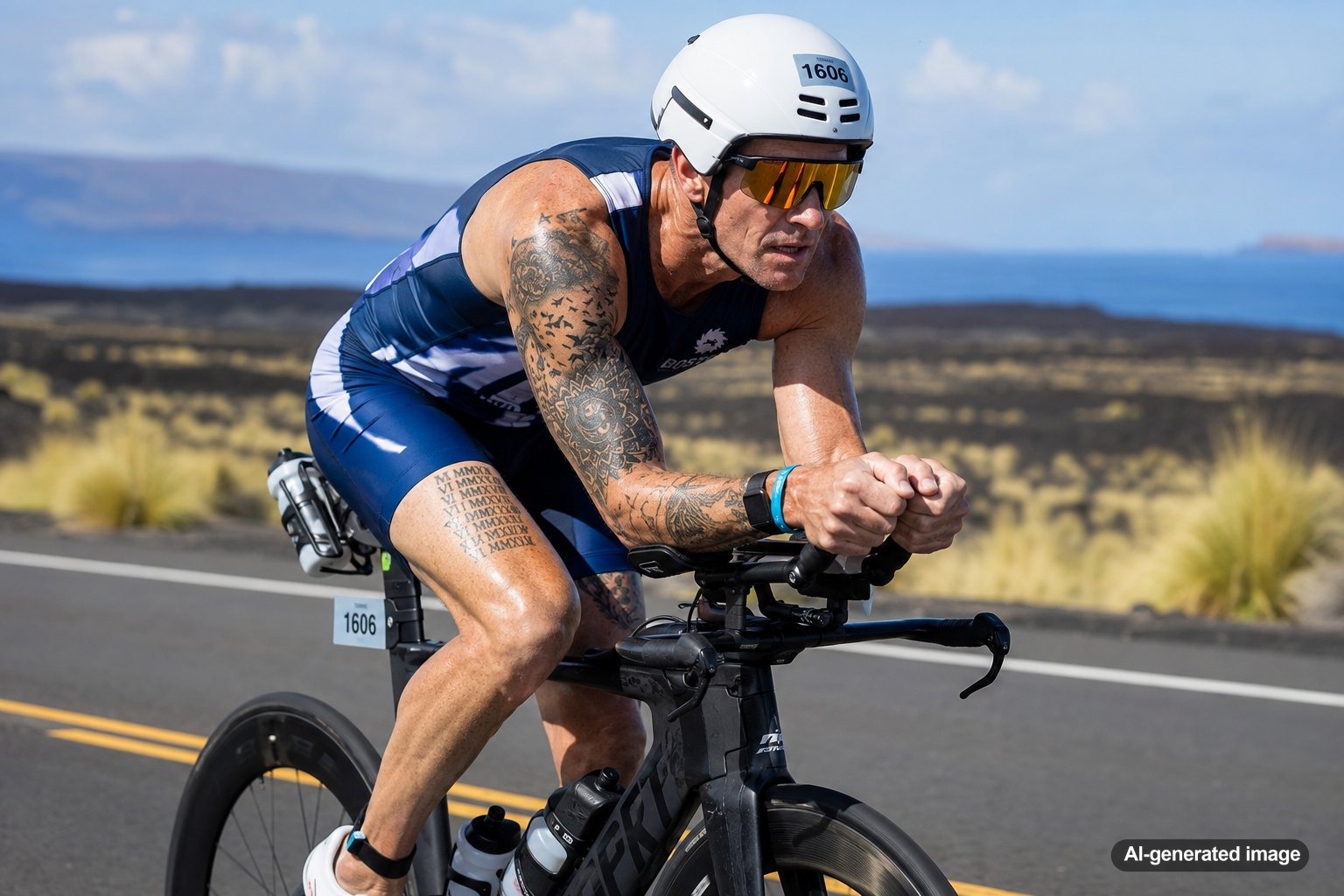
The bike leg can look simple from the outside: settle into position, hold your pace, fuel on schedule, and keep moving. Inside the race, it is anything but simple. The bike is long enough for doubt to get creative, discomfort to get loud, and small mistakes to become expensive later.
For an endurance athlete like Greg Schaefer, the bike leg is not only a physical test. It is a discipline test. It asks whether you can stay present for hours, make smart decisions when you are uncomfortable, and protect the run that is still waiting for you. That same discipline is central to Greg’s broader story as an athlete, entrepreneur, speaker, husband, dad, and Parkinson’s advocate. You can learn more about that full story on the About Greg page or explore how those lessons translate for teams through his speaking work.
Quick answer: how do you stay mentally locked in on the bike leg?
- Break the ride into smaller segments so your mind has a job beyond counting the miles.
- Use repeatable cues for posture, breathing, cadence, fueling, and effort.
- Respect pacing early because emotional riding can destroy the back half of the race.
- Expect mental dips instead of treating them like failure.
- Keep returning to the next right action when discomfort, weather, or doubt starts talking.
The bike leg rewards patience more than emotion
One of the hardest parts of the bike leg is that it often starts with energy. The swim is behind you. The crowd is loud. Other athletes are moving around you. The temptation is to prove something early.
That is where many athletes lose mental control. They surge when someone passes. They chase speed on a section where restraint would serve them better. They skip fueling because they feel fine. They ride the first hour as if the last hour does not exist.
Staying locked in means separating emotion from execution. The goal is not to feel tough for five minutes. The goal is to ride in a way that gives your future self a chance. On the bike, discipline can look quiet: holding back, eating on schedule, staying aerodynamic, keeping your ego out of the pedals, and refusing to let the race around you dictate your decisions.
Give your mind a checklist before it starts wandering
The longer the ride, the more the mind looks for somewhere to go. That is normal. The problem is not that your attention drifts. The problem is having no system for bringing it back.
A useful bike-leg focus checklist can be simple:
- Position: Am I relaxed through my shoulders, stable through my core, and efficient on the bars?
- Breathing: Am I forcing the effort, or am I still in control?
- Cadence: Am I grinding out of frustration, or riding with rhythm?
- Fuel: Am I following the plan before I feel desperate?
- Effort: Am I racing the course I am on, not the fantasy version I hoped for?
Those cues sound basic. That is the point. Under fatigue, simple beats clever. A repeatable checklist gives the brain something useful to do, especially when the race gets monotonous, windy, hot, crowded, or lonely.
Break the course into decisions, not miles
Thinking about the entire bike leg at once can be mentally heavy. The distance becomes too large. The remaining time feels too long. The run starts haunting you before you have earned the right to think about it.
A better approach is to divide the ride into decision blocks. For the next 10 minutes, hold form. At the next marker, check nutrition. On this climb, stay calm. On this descent, ride clean. Through this headwind, keep pressure steady instead of fighting the air like it owes you something.
This is where endurance becomes practical training for life. Big challenges rarely get solved all at once. They get handled through the next responsible action. Greg’s Forward Motion message has that same foundation: One More Step… Just One More. On the bike leg, that might mean one more bottle, one more calm breath, one more smart gear choice, one more refusal to panic.
Expect the mental low point before it arrives
Every long race has a moment when the mind starts negotiating. It may happen after a missed split, a rough patch of wind, a stomach issue, a mechanical scare, or simply the slow grind of time in the saddle. The locked-in athlete is not the one who never has that moment. It is the one who is not surprised by it.
When the low point arrives, the goal is not to make it disappear instantly. The goal is to reduce the drama around it. Name what is happening. Return to the checklist. Eat or drink if the plan calls for it. Loosen the grip. Recommit to the next segment. Let the moment pass without handing it the whole race.
What athletes often miss
Being mentally locked in does not mean being intense every second. It means being available to the task. Sometimes focus feels aggressive. Other times it feels calm, patient, and almost boring. On the bike leg, boring can be a sign that you are doing the right things well.
Protecting the run starts on the bike
A strong bike leg is not only measured by how fast you ride. It is measured by what it leaves available for the marathon. That is why the mental work matters so much. The bike is where athletes can quietly spend more than they realize.
Staying locked in means remembering that the bike leg is not a separate performance. It is part of a larger race. The question is not, “How hard can I ride right now?” The better question is, “What choice gives me the strongest race from here forward?”
That question applies beyond triathlon. Leaders, founders, parents, partners, and people facing real adversity all have moments where early emotion can drain long-term capacity. The discipline is learning to pace effort without losing commitment.
FAQ
What should I think about during a long bike leg?
Think in short, useful loops: posture, breath, cadence, nutrition, effort, and course conditions. The goal is not to overthink every second. The goal is to keep returning your attention to the things you can control.
How do I stop panicking when other riders pass me?
Remember that another rider’s pace is not automatically your plan. Let them go if chasing would cost you later. A disciplined race often requires letting someone else make an emotional decision while you make a strategic one.
What if I lose focus halfway through the ride?
Treat it as normal, not catastrophic. Reset with a small action: drink, check posture, relax your shoulders, settle your breathing, and commit to the next few minutes. Focus usually returns through action, not self-criticism.
Is mental toughness the same as ignoring discomfort?
No. Mental toughness is not pretending discomfort is not there. It is noticing discomfort without letting it make every decision for you. Smart athletes stay aware, adjust when needed, and keep moving with discipline.
The bottom line
To stay mentally locked in on the bike leg, do not wait for motivation to carry you. Build a system before the race gets loud. Ride with cues. Respect your pacing. Expect rough patches. Keep choosing the next right action.
That is where endurance racing becomes more than a finish line. It becomes a rehearsal for resilience, leadership, family, advocacy, and the daily discipline of forward motion.
Interested in bringing Greg’s message to your event or organization?
Learn more about Greg’s speaking work or get in touch to start the conversation.
Contact Greg or learn more about the Forward Motion Fund.
This article is for educational purposes only and is not medical advice. For diagnosis, treatment, or personalized medical guidance, please speak with a qualified healthcare professional.


