What The Best Triathletes Know About Pacing

The best triathletes know pacing is not just about going slower at the beginning so you can go faster at the end. It is about self-control, patience, decision-making, and knowing how to protect your effort before the race exposes every shortcut you tried to take.
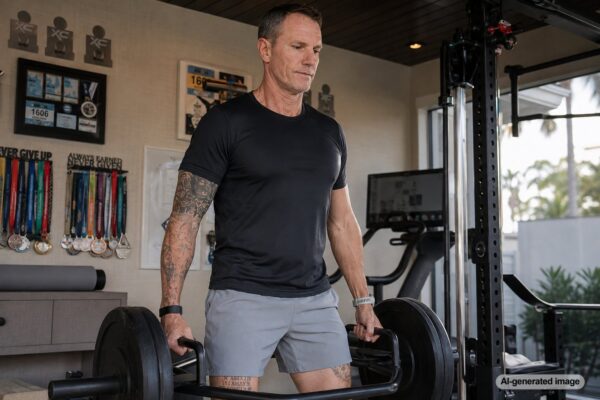
In triathlon, especially long-course racing, the strongest athletes are rarely the ones who win the first few miles of the bike or charge out of transition like they have something to prove. They are the ones who understand that endurance rewards discipline. Greg Schaefer’s life as a 20-time Ironman, entrepreneur, speaker, dad, husband, and Parkinson’s advocate reflects that same lesson: forward motion is not always dramatic, but it is powerful when it is sustained. Learn more about Greg’s story on the About Greg page.
Quick answer: What do the best triathletes know about pacing?
- Pacing is restraint. The early part of the race is where smart athletes save their future selves.
- Effort matters more than ego. Chasing someone else’s pace can ruin your own race plan.
- The bike sets up the run. A fast bike split means little if it leaves you walking later.
- Conditions change the plan. Heat, wind, terrain, nutrition, and stress all affect sustainable effort.
- Pacing is mental. It requires the humility to stay steady when adrenaline tells you to surge.
Pacing begins before the race gets hard
One of the most overlooked truths in endurance racing is that pacing mistakes often happen when everything still feels fine. The water is calm. The legs feel fresh. The crowd is loud. Your watch says you are moving well. The danger is that none of those signals prove the effort is sustainable.
Experienced triathletes learn to respect the first third of the race because it quietly determines the final third. A swim that is too frantic can spike stress before the bike even begins. A bike effort that feels exciting at mile 20 can become a problem by mile 80. A run pace that feels comfortable out of transition can become unsustainable once heat, fatigue, and nutrition gaps show up.
Great pacing is not passive. It is active discipline. It means choosing the effort that serves the whole race, not the effort that flatters you in the moment.
The best athletes pace by effort, not emotion
Race day is emotional. There is nervous energy, competition, personal meaning, and often months or years of training behind one start line. The body may be ready, but emotion can distort judgment.
The best triathletes know the difference between feeling strong and racing smart. Feeling strong can tempt an athlete to push early, skip planned nutrition, attack hills too hard, or match another athlete’s surge. Racing smart means checking in honestly: breathing, cadence, form, heat, hydration, and the ability to repeat the current effort later.
This is where pacing becomes a leadership lesson. In business, family, advocacy, and endurance racing, the loudest moment is not always the wisest one. Sustainable performance often depends on choosing what is right over what is reactive.
The bike is not just the bike
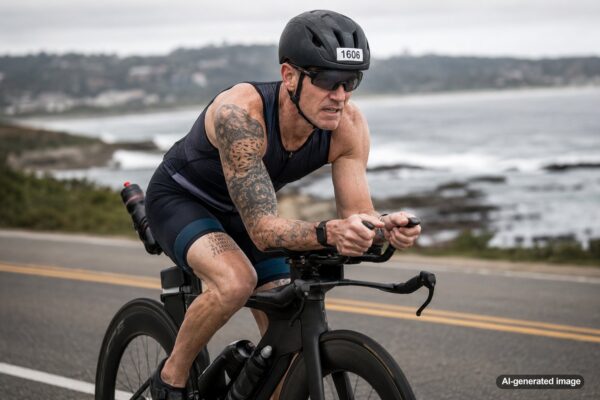
Many triathlon pacing problems are hidden on the bike. The athlete may still look controlled. The speed may look good. The split may even feel like progress. But if the bike effort is too aggressive, the bill often comes due on the run.
Strong triathletes understand that the bike leg is not a separate event. It is the bridge between the swim and the run. That means the question is not simply, “How fast can I ride?” The better question is, “What bike effort gives me the best chance to run with purpose?”
This distinction separates fitness from execution. Plenty of athletes have fitness. Fewer have the patience to use it wisely. The best racers are willing to let people pass if those people are racing outside their own plan. They understand that the finish line does not care who looked strongest halfway through.
Good pacing includes nutrition, temperature, and terrain
Pacing is often treated like a number on a watch, but the real race is more complex. Heat can raise the cost of an effort that felt easy in training. Wind can tempt overexertion. Hills can punish impatience. Poor fueling can make a reasonable pace feel impossible later.
That is why experienced athletes do not pace in isolation. They adjust. They ask better questions throughout the race: Am I taking in what I planned? Is my breathing controlled? Am I fighting the conditions or working with them? Am I protecting my form? Am I making decisions for the final miles, not just the next mile?
The athletes who pace well are not rigid. They are steady, observant, and honest. They know that adapting to reality is not weakness. It is one of the strongest choices an endurance athlete can make.
What people often miss about pacing
- Pacing is not the same as holding back forever. It is spending effort where it matters most.
- A conservative start can be aggressive strategy. It creates the conditions for a stronger finish.
- Passing late is often better than leading early. Late strength usually reflects better decision-making.
- Confidence should not erase humility. Even fit athletes can overreach when adrenaline takes over.
Pacing is a form of resilience
Resilience is often portrayed as a dramatic burst of toughness. In real life, it is often quieter than that. It is returning to the plan after a bad mile. It is taking one more step when the day gets heavy. It is staying composed when the race does not unfold the way you imagined.
That lesson connects deeply with Greg’s broader message of forward motion. Whether he is speaking to a team, racing another endurance event, advocating through the Forward Motion Fund, or navigating life after a Young-Onset Parkinson’s diagnosis, the message is not about pretending hard things are easy. It is about continuing with purpose when the path changes.
The best triathletes know pacing because endurance teaches truth. You cannot fake patience forever. You cannot outrun poor decisions forever. You cannot rely only on motivation when the body starts asking honest questions. The athlete who lasts is the one who respects the long road.
Practical pacing takeaways for athletes and leaders
For triathletes, pacing means knowing your plan, respecting your limits, and leaving enough strength for the part of the race where character starts to matter. For leaders, teams, and mission-driven people, the principle is similar. Burnout is often the result of confusing urgency with effectiveness. Sustainable progress requires rhythm.
Ask yourself where you may be racing too hard too early. Are you pushing to prove something, or moving in a way that supports the bigger goal? Are you listening to feedback, or only reacting to emotion? Are you choosing a pace that can carry you through the hard miles?
The answer may not be glamorous. It may simply be one more steady decision, followed by another. In endurance, leadership, advocacy, and life, that is often where the real strength lives.
FAQ
Why is pacing so important in triathlon?
Pacing matters because triathlon combines multiple disciplines over a long period of time. An effort that feels manageable in the swim or bike can create serious problems later if it leaves the athlete too depleted for the run.
Do the best triathletes always start slow?
Not necessarily. They start controlled. The goal is not to be timid, but to match the effort to the full distance, the conditions, and the athlete’s training.
What is the biggest pacing mistake athletes make?
One common mistake is letting excitement or comparison override the race plan. Chasing another athlete too early can turn a smart race into a survival day.
How does pacing connect to mental toughness?
Mental toughness is not just pushing harder. It is having the discipline to make wise decisions under stress, especially when emotion, ego, or discomfort try to take over.
Can pacing apply outside of sports?
Yes. Pacing applies to leadership, recovery, entrepreneurship, family life, advocacy, and any long-term mission where energy, focus, and resilience have to be managed over time.
Interested in bringing Greg’s message to your event or organization?
Learn more about Greg’s speaking work or get in touch to start the conversation.
Contact Greg or learn more about the Forward Motion Fund.
This article is for educational purposes only and is not medical advice. For diagnosis, treatment, or personalized medical guidance, please speak with a qualified healthcare professional.