

Mobility Drills Every Desk-Bound Executive Needs to Do
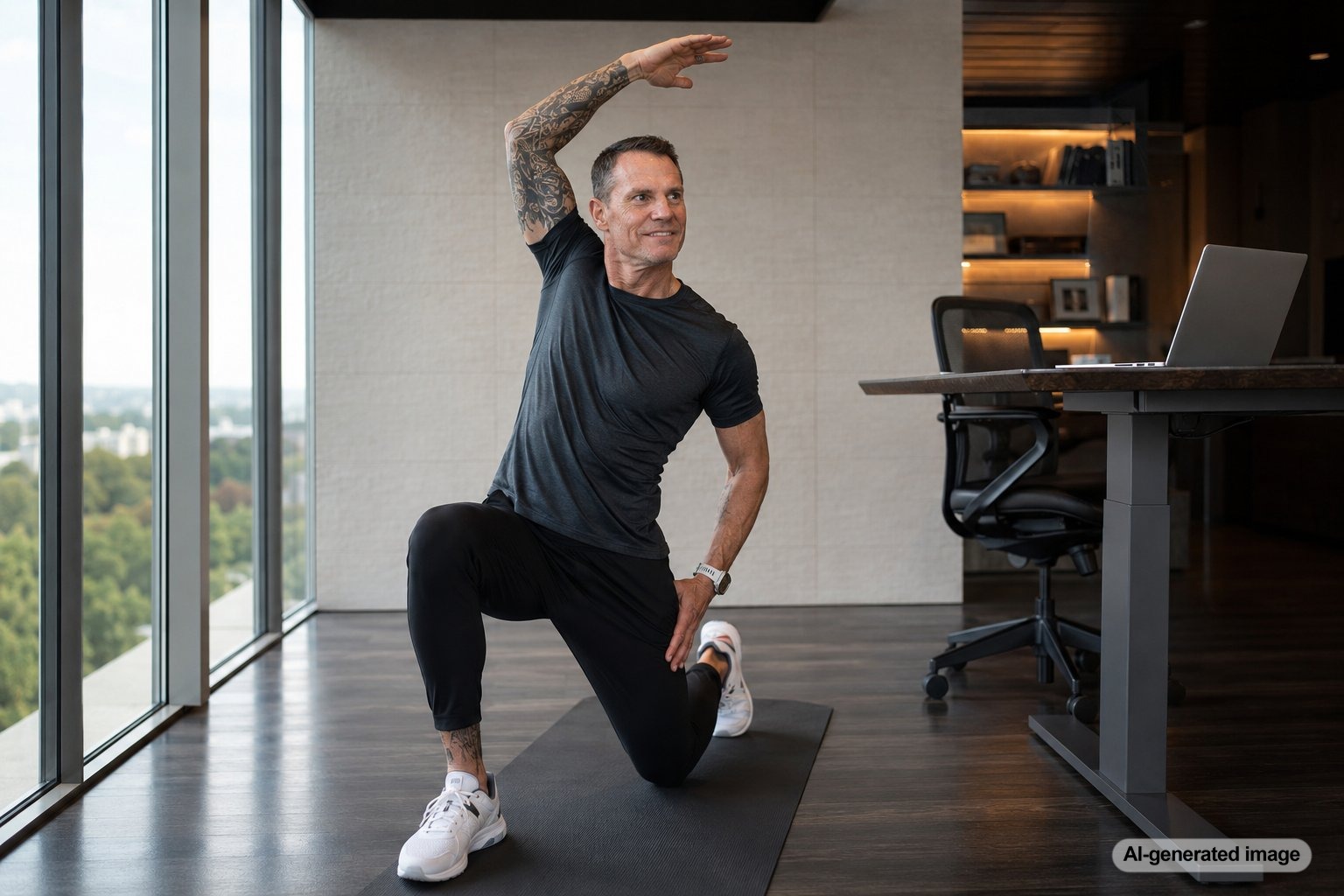
Long hours at a desk can make even the strongest leader feel stuck in their own body. Meetings stack up, travel tightens the hips, stress creeps into the neck and shoulders, and suddenly the day ends with the body carrying the cost of every decision made from a chair.
Mobility does not have to mean a full workout, a yoga class, or a complicated routine. For a busy executive, the goal is simpler: build short, repeatable movement habits that keep the body useful, alert, and ready. Greg Schaefer’s world sits at the intersection of business leadership, endurance, family, and forward motion, and that same principle applies here. You do not need perfect conditions to move better. You need one more intentional step.
Quick answer: the mobility drills that matter most
- Neck resets help release tension from screens, calls, and stress-heavy work.
- Shoulder openers counter the rounded posture that builds during laptop and phone use.
- Hip flexor work addresses the stiffness that comes from sitting for long stretches.
- Thoracic rotations restore upper-back movement that supports posture and breathing.
- Ankle and calf mobility helps the lower body feel less locked down after hours of sitting or travel.
Why desk-bound leaders need mobility, not just exercise
Many executives treat movement as something that happens before work or after work. That mindset can be useful, but it misses the middle of the day, where stiffness quietly builds. A morning workout does not fully erase eight to ten hours of sitting, just like one good meeting does not make up for a week of poor communication.
Mobility is different from general fitness. Fitness often focuses on strength, endurance, or performance. Mobility focuses on the ability to move through useful ranges of motion with control. For desk-bound leaders, that matters because the workday repeatedly places the body in the same positions: seated hips, forward head, rounded shoulders, bent elbows, compressed ribs, and inactive glutes.
The best approach is not dramatic. It is practical. A few minutes of movement between calls can help shift your state, reset your posture, and create a cleaner transition from one demand to the next.
1. Neck resets for screen and stress tension
Start with the area most executives notice first: the neck. Screens, phones, dashboards, and long calls often pull the head forward. Stress can add another layer by making the jaw, traps, and upper neck feel guarded.
Try this simple reset while seated or standing. Sit tall, gently draw your chin straight back as if making a double chin, hold for two seconds, then release. Repeat five to eight times. The motion should be small and controlled, not aggressive. Then slowly turn your head to the right and left, staying within a comfortable range.
The point is not to crack the neck or force a stretch. The point is to remind the head and spine where neutral is. This is especially useful before a presentation, after a long video call, or at the end of a travel day.
2. Shoulder openers for laptop posture
Desk work pulls the shoulders forward. Over time, that posture can make the chest feel tight and the upper back feel tired. A good shoulder opener should reverse the shape of the workday without needing any equipment.
Stand tall, clasp your hands behind your back if comfortable, and gently reach your knuckles down and away while lifting your chest. Hold for two or three slow breaths. If clasping your hands is uncomfortable, place your hands on your lower back and draw your elbows slightly toward each other.
You can also do wall slides. Stand with your back near a wall, bring your arms into a goalpost position, and slowly slide them upward while keeping the ribs from flaring. This drill is harder than it looks because it asks the shoulders, ribs, and upper back to coordinate instead of compensating.
3. Hip flexor resets for too much sitting
The hips pay a heavy price for executive life. Sitting keeps the front of the hips shortened for hours. Travel, back-to-back calls, and working meals can make that position even more dominant.
A simple standing hip flexor reset can fit into almost any day. Step one foot back into a short lunge stance, tuck your pelvis slightly under, and shift forward just enough to feel a gentle stretch in the front of the back hip. Raise the arm on that same side if you want a little more length. Hold for 20 to 30 seconds, then switch sides.
This should not feel like a dramatic split or a deep athletic stretch. For most desk-bound executives, the win is consistency. A small hip reset done twice a day may be more useful than an intense stretch done once a month.
4. Thoracic rotations for upper-back movement
The thoracic spine, or upper back, is one of the most overlooked areas in desk mobility. When it gets stiff, other areas often compensate. The neck works harder. The shoulders feel more restricted. Breathing can feel shallow during stressful moments.
Try a seated open-book rotation. Sit tall with both feet on the floor. Cross your arms over your chest, then rotate your upper body gently to one side while keeping your hips facing forward. Pause for a breath, return to center, and rotate the other way. Repeat five times per side.
The key is to rotate through the upper back instead of yanking with the neck. This drill is excellent between meetings because it changes both posture and attention. The body moves, the breath slows, and the mind gets a brief reset.
5. Calf and ankle mobility for travel and long workdays
Executives often think about the back and shoulders first, but the ankles and calves matter too. Long flights, dress shoes, standing receptions, and long seated blocks can make the lower legs feel stiff and heavy.
Use a wall or desk for support. Step one foot back, keep the heel down, and gently bend the front knee until you feel a stretch in the back calf. Hold for 20 seconds. Then bring the back foot closer, bend both knees slightly, and let the ankle move forward while keeping the heel down. Switch sides.
For a quicker version, do 10 slow heel raises while standing. Rise onto the balls of your feet, pause, and lower with control. This brings circulation and awareness back into the lower body, especially after long seated stretches.
6. Standing hinge drill for hamstrings and posture
A standing hinge teaches the body to fold at the hips instead of collapsing through the spine. This matters for daily life, training, travel, and even how you carry yourself when you are tired.
Stand with feet about hip-width apart. Place your hands on your hips, soften the knees, and push the hips back as if closing a car door with your backside. Keep the spine long. You should feel the back of the legs engage lightly. Return to standing and repeat eight to ten times.
This is not a toe-touch contest. The goal is control. A good hinge wakes up the posterior chain, reinforces better posture, and gives the lower back a break from doing all the work.
7. Desk-supported squat pry for hips and ankles
The squat is a basic human position, but many adults lose access to it because daily life rarely asks for it. A supported squat variation can be a practical way to rebuild comfort without forcing depth.
Hold the edge of a sturdy desk or countertop. Set your feet slightly wider than hip-width, then slowly sit back and down as far as feels comfortable. Keep your chest lifted and your heels grounded if possible. Pause briefly, shift gently side to side, then stand back up.
Depth is not the priority. Control is. This drill can help the hips, ankles, and back work together again after hours of chair posture.
How to fit mobility into an executive schedule
The biggest mistake is waiting for a perfect 30-minute window. For many leaders, that window never arrives. A more realistic system is to attach mobility to moments that already exist.
- Before the first call: Do neck resets and shoulder openers.
- Between meetings: Do thoracic rotations or a standing hinge.
- After lunch: Do a hip flexor reset on each side.
- After travel: Do calf mobility and supported squats.
- Before a keynote, board meeting, or major presentation: Use two minutes of mobility as a physical reset before stepping into the room.
This is where leadership and endurance overlap. You do not need a heroic routine. You need repeatable actions that hold up under pressure. That is also a useful lens for teams, organizations, and culture, which is part of the message Greg brings through his speaking work.
What executives often miss about mobility
Mobility is not just about feeling less stiff. It is a way to interrupt autopilot. When you move with intention, even briefly, you create a small reset in your body and your attention. That can change how you enter the next conversation, decision, or challenge.
Executives are trained to push through discomfort. That trait can build companies, finish races, and carry people through difficult seasons. But pushing through every physical signal is not always strength. Sometimes strength is noticing early, adjusting quickly, and refusing to let small neglect become a bigger limitation.
Mobility drills are not a replacement for training, medical care, physical therapy, or rest. They are a practical layer of self-leadership. They help you stay connected to the body that carries you through the work.
FAQ
How often should desk-bound executives do mobility drills?
A few short movement breaks most workdays is a practical target. Even two to five minutes at a time can be useful when the drills are done consistently and with control.
Do I need equipment for these drills?
No. Most desk mobility work can be done with a wall, a chair, a desk, or no equipment at all. The simpler the routine, the more likely it is to survive a busy calendar.
Should mobility drills hurt?
No. Mild tension can be normal, but sharp pain, numbness, or symptoms that concern you should be evaluated by a qualified professional. Mobility should feel controlled, not forced.
Can mobility replace exercise?
No. Mobility is one piece of a broader movement picture. Strength, cardiovascular fitness, recovery, and daily activity all matter. Mobility helps keep the body prepared for those demands.
What is the best drill to start with?
Start with the area you feel most during the day. For many executives, that means neck resets, shoulder openers, or hip flexor resets. Pick one, attach it to a daily habit, and build from there.
Interested in bringing Greg’s message to your event or organization?
Learn more about Greg’s speaking work or get in touch to start the conversation.
Contact Greg or learn more about the Forward Motion Fund.
This article is for educational purposes only and is not medical advice. For diagnosis, treatment, or personalized medical guidance, please speak with a qualified healthcare professional.


