

Does Strength Training Help Parkinson’s Disease?
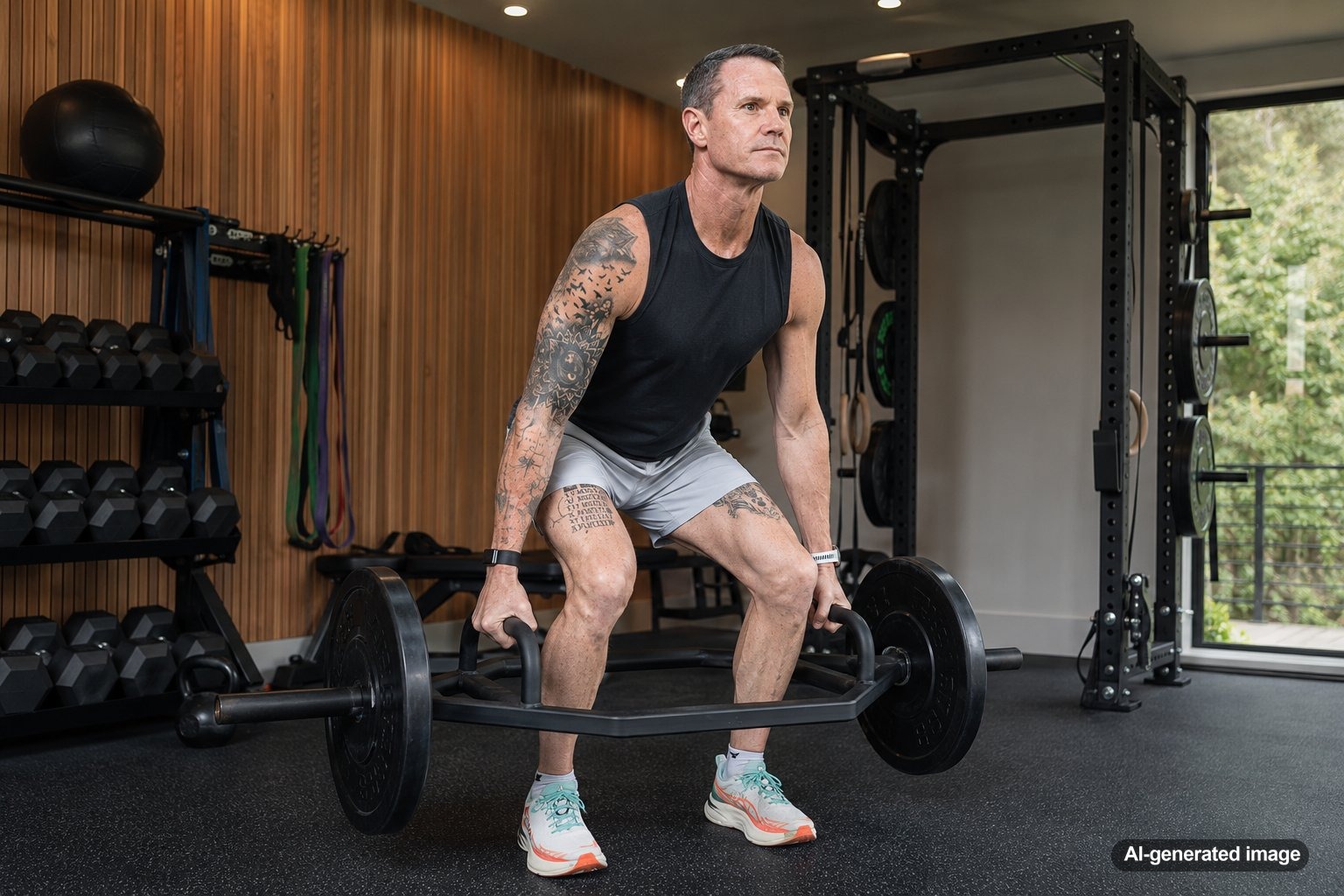
Yes, strength training can help many people living with Parkinson’s disease, especially when it is done consistently, safely, and with guidance that respects the individual’s symptoms, medications, balance, fatigue, and overall health. It is not a cure, and it should not be treated as a replacement for medical care. But resistance training can be a meaningful part of a broader plan to support movement, confidence, independence, and quality of life.
For someone like Greg Schaefer, who lives at the intersection of family, business leadership, endurance sport, and Young-Onset Parkinson’s, movement is not a slogan. It is a daily practice. His message of forward motion is not about pretending the disease is easy. It is about taking one more step with honesty, support, and purpose. You can learn more about that perspective on Greg’s About page.
Quick answer
- Strength training may help with functional strength. That can support daily tasks like standing from a chair, climbing stairs, carrying groceries, or getting in and out of a car.
- It may support balance and stability. Stronger legs, hips, trunk, and postural muscles can help create a more stable foundation for movement.
- It can complement other forms of exercise. A well-rounded Parkinson’s exercise routine often includes endurance, strength, flexibility, balance, agility, and mobility work.
- It should be individualized. Symptoms, fall risk, freezing, pain, fatigue, medication timing, and other health issues can change what is appropriate.
- Professional guidance matters. A neurologist, physical therapist, or Parkinson’s-informed fitness professional can help make training safer and more effective.
Why strength training can matter with Parkinson’s
Parkinson’s disease can affect movement in several ways, including stiffness, slower movement, tremor, changes in posture, walking challenges, and balance concerns. Not everyone experiences the same symptoms, and the timeline can vary widely. But when movement becomes harder, the body can enter a difficult loop: activity decreases, muscles weaken, confidence drops, and everyday tasks feel more demanding.
Strength training helps address part of that loop. It gives the body repeated, structured practice producing force. That can mean lifting a weight, pushing against resistance bands, standing up from a chair, stepping onto a platform, or practicing controlled movements that build lower-body, upper-body, and core strength.
The practical goal is not bodybuilding. For many people with Parkinson’s, the goal is capacity. Can you rise from the floor more confidently? Can you recover from a stumble more safely? Can you keep your posture from collapsing after a long day? Can you move through the world with a little more strength in reserve?
What strength training may help support
Daily function
Functional strength shows up in ordinary moments. Getting out of a low chair, walking up steps, lifting a suitcase, pushing open a heavy door, or carrying laundry all require strength. Parkinson’s can make these tasks feel less automatic, so training can help reinforce patterns that matter in real life.
Posture and trunk control
Many people with Parkinson’s notice changes in posture over time. Strength work that targets the back, hips, shoulders, and core may help support a more upright position. This does not mean forcing a rigid posture. It means building the strength and awareness needed to move with more control.
Balance and fall confidence
Strength is not the same as balance, but the two are connected. Stronger legs and hips can support safer transfers, steadier steps, and better control during turns or uneven surfaces. Balance-specific training is still important, especially for people with fall risk, but strength can be one piece of the foundation.
Energy, mood, and self-trust
Exercise can also support emotional well-being. For many people, the benefit is not just physical. Showing up to train, adapting when needed, and seeing small improvements can help rebuild trust in the body. That matters when a diagnosis has changed the way a person sees the future.
Strength training should not stand alone
A strong Parkinson’s exercise plan is usually broader than lifting weights. The Parkinson’s Foundation and other Parkinson’s organizations commonly emphasize a mix of aerobic exercise, strength work, flexibility, balance, agility, and functional movement. The best plan is often the one a person can do consistently and safely.
That balance matters because Parkinson’s is not only a strength issue. A person may need cardiovascular conditioning for endurance, stretching or mobility work for stiffness, balance drills for stability, and task-specific practice for walking, turning, reaching, or getting up from the floor. Strength training is valuable, but it is one lane in a larger road.
What safe strength training can look like
There is no single template that fits everyone with Parkinson’s. A newly diagnosed athlete, an older adult with fall concerns, a person managing fatigue, and someone with joint pain may all need different approaches. Still, several principles are broadly useful.
- Start with controlled movement. Good form matters more than heavy weight.
- Train major muscle groups. Legs, hips, back, chest, shoulders, arms, and trunk all play roles in daily function.
- Prioritize lower-body strength. Sit-to-stand patterns, step-ups, squats to a safe depth, and hip strengthening can translate directly to everyday movement.
- Use support when needed. A chair, wall, rail, trainer, or physical therapist can make exercises safer.
- Respect fatigue and timing. Some people move better at certain points in their medication cycle. A clinician can help think through timing.
- Progress gradually. More resistance, more repetitions, or harder variations should be added in small steps.
What people often miss
Strength training for Parkinson’s is not about proving toughness. It is about building useful capacity. The person who trains wisely may not be the one lifting the most weight. It may be the one who learns how to move safely, recover well, stay consistent, and adapt on hard days.
It is also easy to overlook the support system. A spouse, partner, coach, physical therapist, trainer, friend, or exercise group can make consistency more realistic. Parkinson’s affects more than the person with the diagnosis. Support, encouragement, and practical help often shape whether a routine actually lasts.
When to seek professional guidance
People with Parkinson’s should speak with a qualified healthcare professional before starting or changing an exercise plan, especially if they have balance problems, falls, freezing episodes, dizziness, heart concerns, pain, osteoporosis, recent surgery, or other medical conditions. A physical therapist with Parkinson’s experience can be especially helpful for assessing gait, posture, fall risk, mobility, and exercise selection.
A fitness professional may also help, but ideally that person should understand Parkinson’s-specific considerations. The right coach knows when to challenge, when to simplify, when to add support, and when to refer back to a medical professional.
FAQ
Can strength training slow Parkinson’s disease?
Exercise is widely considered an important part of Parkinson’s management, and research continues to study how different types of exercise affect symptoms, function, and progression. It is more accurate to say that strength training may support function and quality of life, rather than promising that it will slow the disease for every person.
How often should someone with Parkinson’s lift weights?
Frequency should be individualized. Some people may do resistance training two or three times per week as part of a broader exercise plan, while others may need a gentler starting point. A clinician or physical therapist can help shape a safe schedule.
Are machines, free weights, or bands better?
Each can be useful. Machines can offer stability and clear movement paths. Bands are portable and adaptable. Free weights can build coordination and functional control. The best choice depends on safety, experience, symptoms, goals, and supervision.
Should people with Parkinson’s avoid heavy lifting?
Not always, but heavy lifting is not the right starting point for everyone. Balance, technique, breathing, blood pressure concerns, joint health, and fall risk all matter. Heavier resistance should be approached carefully and with appropriate guidance.
What is the most important exercise for Parkinson’s?
There is no single best exercise for every person. A practical answer is the safest effective routine someone can do consistently. For many people, that includes a mix of aerobic movement, strength, balance, mobility, and activities they actually enjoy.
The bottom line
Strength training can be a powerful part of living well with Parkinson’s disease. It may help support mobility, stability, posture, confidence, and daily independence. It also gives people a concrete way to participate in their own forward motion, not by denying the diagnosis, but by continuing to build strength around it.
Greg’s work as a speaker and advocate sits in that same space: honest about adversity, grounded in discipline, and committed to movement with purpose. For organizations, teams, and communities looking for a message that connects resilience with real life, Greg brings lived experience from business, family, endurance racing, and Parkinson’s advocacy. Learn more about his speaking work.
Interested in bringing Greg’s message to your event or organization?
Learn more about Greg’s speaking work or get in touch to start the conversation.
Contact Greg or learn more about the Forward Motion Fund.
This article is for educational purposes only and is not medical advice. For diagnosis, treatment, or personalized medical guidance, please speak with a qualified healthcare professional.


