
Why Every CEO Should Train for a Triathlon
A CEO does not need another productivity hack. Most leaders already have enough dashboards, meetings, frameworks, and advice. What many need is a harder, quieter classroom: one that exposes impatience, rewards consistency, and reminds them that real progress is built in layers.
Triathlon training does that. Not because every CEO needs to become an elite athlete, but because the sport teaches leadership in a way that is difficult to fake. Swimming, biking, and running demand planning, humility, recovery, pacing, adaptability, and the willingness to keep going when nobody is applauding. Those are not just athletic traits. They are leadership traits.
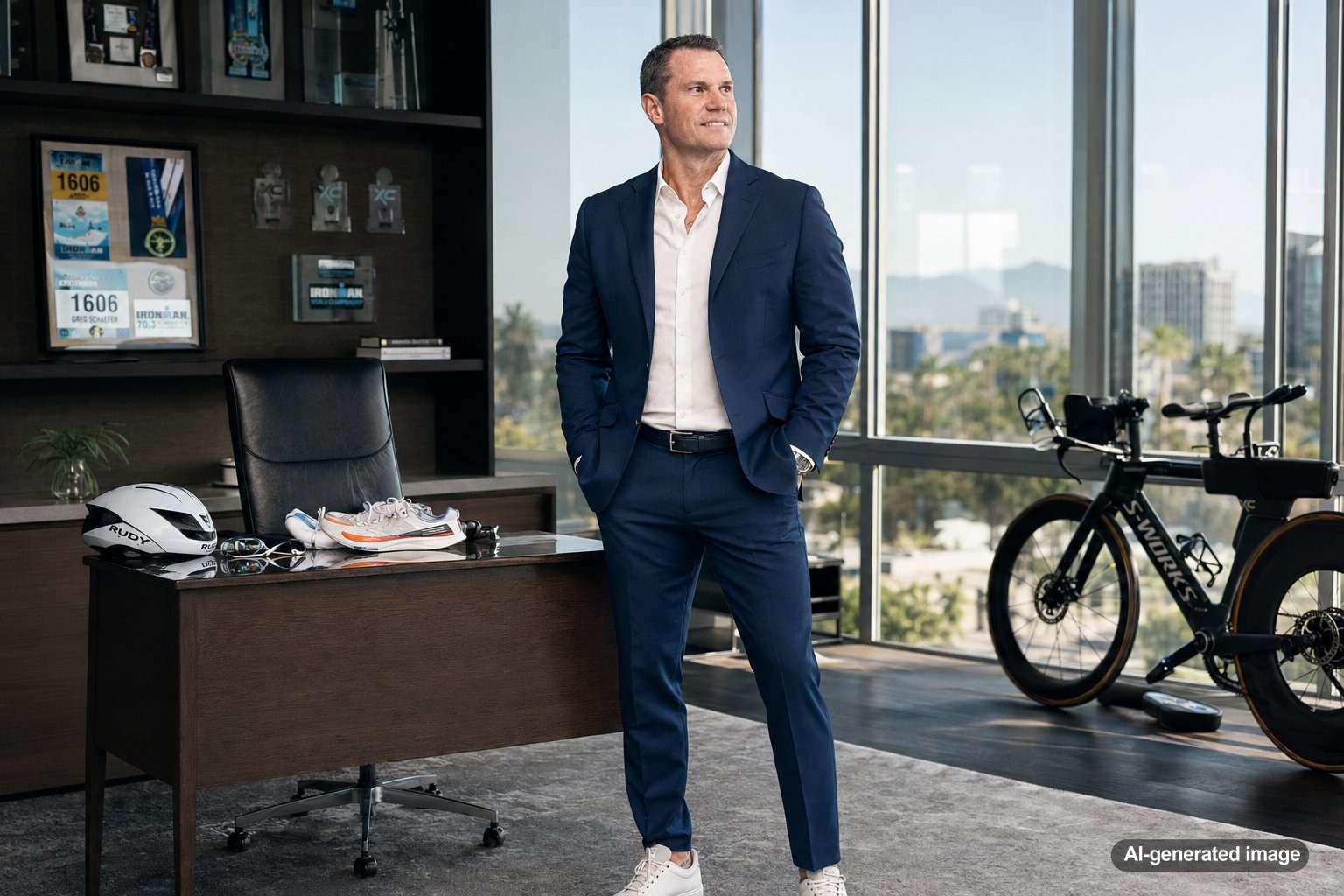
For Greg Schaefer, the intersection of endurance sports, business leadership, family, advocacy, and resilience is not theoretical. It is lived. His work as a speaker, entrepreneur, and 20-time Ironman shows how endurance can become a practical language for leading through pressure.
Quick answer: Why should CEOs train for a triathlon?
- It builds disciplined consistency. A triathlon cannot be crammed for, just like a strong company cannot be built on last-minute intensity alone.
- It teaches pacing under pressure. CEOs learn when to push, when to conserve, and when ego is creating risk.
- It sharpens decision-making. Training forces leaders to balance ambition, data, energy, recovery, and reality.
- It develops resilience without theater. The work is repetitive, humbling, and often uncomfortable, which is exactly why it is useful.
- It reconnects leaders to purpose. A long-term physical challenge can clarify what matters beyond the next quarter.
Triathlon exposes the difference between intensity and consistency
Many CEOs are comfortable with intensity. They can handle long days, urgent decisions, aggressive goals, and high-stakes rooms. Intensity is familiar territory. Consistency is harder.
Triathlon training rewards the leader who can show up repeatedly without needing every session to feel heroic. One workout does not make the race. One strong week does not build the base. The progress comes from stacking the ordinary days: the early swim, the disciplined ride, the run when the schedule is packed, the recovery session that feels too simple to matter but does.
That rhythm has direct leadership value. Companies are not built by one inspiring all-hands meeting. Cultures are not repaired by one offsite. Teams do not trust leaders because of one strong speech. Trust is built through repeated behavior under changing conditions.
Triathlon gives CEOs a physical reminder that the boring work often carries the greatest return.
It teaches leaders how to pace instead of proving a point
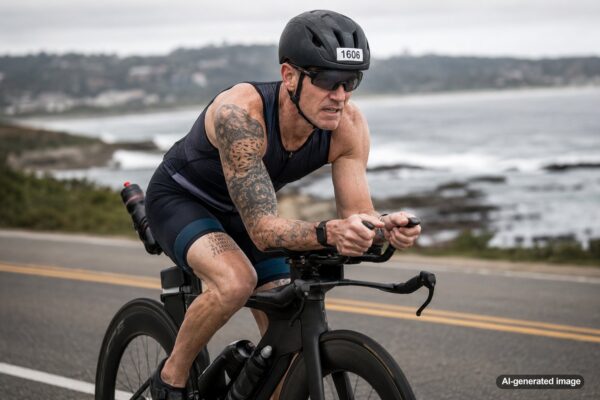
A first-time triathlete often wants to prove something early. Swim too hard. Hammer the bike. Run like the finish line is closer than it is. The race has a way of correcting that quickly.
Leadership has the same pattern. A CEO can overextend a team, rush a strategy, force a timeline, or burn through energy trying to show strength. Sometimes the smarter move is not to push harder. It is to pace better.
Pacing is not weakness. It is strategic restraint. In triathlon, that means knowing the course, monitoring effort, fueling before crisis, and respecting the distance. In business, it means reading the market, protecting the team, sequencing decisions, and knowing when speed is useful versus reckless.
Endurance training helps a CEO feel that lesson in the body. Go too hard too early and the consequence is immediate. Lead with ego too often and the consequence shows up in morale, execution, and trust.
The sport makes feedback impossible to avoid
Triathlon is honest. The watch, the water, the road, the weather, the fatigue, and the finish line do not care about job title. They give feedback whether the athlete wants it or not.
That can be valuable for CEOs, who often operate in environments where people soften the truth. Senior leaders may hear filtered updates. Teams may hesitate to challenge them directly. Success can create distance from honest feedback.
Training changes the dynamic. If sleep is poor, the workout shows it. If nutrition is sloppy, the long ride exposes it. If the athlete ignores mobility, recovery, or technique, the body eventually speaks up. That kind of feedback builds humility, and humility is one of the most underrated leadership skills.
A CEO who can receive feedback without defensiveness is easier to coach, easier to follow, and more likely to make better decisions before problems become expensive.
Triathlon builds calm inside controlled discomfort
Open water can be crowded. Weather can change. A bike course can turn ugly. The run can become a negotiation with doubt. Triathlon places an athlete inside discomfort and asks a simple question: Can you stay clear enough to make the next good decision?
That question belongs in leadership too. CEOs face moments when the room is tense, the numbers are off, the plan has changed, or the pressure is visible on everyone’s face. In those moments, the team does not need panic disguised as urgency. It needs steadiness.
Training does not make a leader immune to stress. It gives the leader practice staying functional inside it. The goal is not to feel nothing. The goal is to keep choosing well when feelings are loud.
It reminds CEOs that recovery is part of performance
High performers often respect work more than recovery. They may understand rest intellectually but resist it emotionally. Triathlon challenges that mindset because adaptation does not happen from effort alone. It happens when effort and recovery are balanced well enough to produce growth.
This is one of the most overlooked lessons for executives. A CEO who treats recovery as optional may be able to operate that way for a season, but not forever. Fatigue changes judgment. Constant urgency narrows perspective. Burnout does not always announce itself dramatically. Sometimes it shows up as impatience, cynicism, reactivity, or poor listening.
Triathlon training forces a leader to ask better questions: What kind of output is sustainable? What needs to be rebuilt before the next push? Where is the system carrying too much load? Those questions apply to the athlete, the company, and the people inside it.
What CEOs often miss about endurance training
It is not about becoming tougher at any cost
The best endurance lesson is not simply to suffer more. It is to become more aware, more prepared, and more disciplined. Toughness without wisdom can become recklessness. Endurance with reflection becomes leadership.
For a CEO, the value of triathlon is not the medal. It is the transfer. Training can make a leader more patient with long cycles, more honest about weak links, more respectful of preparation, and more aware of how energy affects judgment.
It can also reconnect leaders to identity outside the company. That matters. When every part of life is tied to the business, setbacks can feel personal in a way that clouds perspective. A demanding physical goal creates another arena for growth, discipline, and meaning.
Greg’s broader story carries that same lesson. His platform is not only about racing, business, or Parkinson’s advocacy in isolation. It is about moving forward through the full complexity of life: leadership, family, health, purpose, adversity, and the next step in front of you.
Practical lessons CEOs can take from triathlon training
- Build systems before motivation fades. Motivation helps you start. A repeatable schedule helps you continue.
- Respect transitions. Moving from swim to bike to run mirrors business transitions, where small breakdowns can cost more than leaders expect.
- Train weaknesses without ego. The discipline you avoid is often the one with the biggest leadership lesson.
- Measure what matters, but do not worship the numbers. Data helps, but judgment still matters.
- Stay connected to a bigger reason. Long efforts become more sustainable when they are tied to purpose, not just achievement.
FAQ
Does every CEO need to complete an Ironman?
No. The value is not limited to full-distance racing. A sprint triathlon, Olympic-distance race, relay, or structured endurance goal can still teach consistency, pacing, humility, and resilience.
What if a CEO is not athletic?
That may be part of the point. Starting where you are, learning patiently, and respecting a process can be more valuable than chasing an extreme goal. Anyone considering a new training program should choose an appropriate level and seek qualified guidance when needed.
How does triathlon training translate to business leadership?
It teaches leaders to manage energy, plan ahead, adapt under pressure, accept feedback, and keep showing up through long cycles. Those skills matter in boardrooms as much as they do on race day.
Is triathlon training mainly about mental toughness?
Mental toughness is part of it, but not the whole story. The deeper lesson is disciplined self-management: knowing when to push, when to recover, when to adjust, and when to keep moving.
Can endurance training help a leadership team, not just one CEO?
Yes. Shared physical challenges, wellness initiatives, or endurance-inspired leadership conversations can give teams a practical way to talk about resilience, preparation, and performance under pressure.
Interested in bringing Greg’s message to your event or organization?
Learn more about Greg’s speaking work or get in touch to start the conversation.
Contact Greg or learn more about the Forward Motion Fund.
This article is for educational purposes only and is not medical advice. For diagnosis, treatment, or personalized medical guidance, please speak with a qualified healthcare professional.